
Remote fleet management pushes workforce tools to their limits. Workers scattered across different locations, job sites, and time zones need precise task direction, reliable time tracking, real-time communication, and consistent oversight — all from one platform that handles the pressure of large-scale operations without breaking down.
Many businesses start with Connecteam. It offers a clean interface, basic scheduling, and simple task management that works well for small, straightforward teams. But fleet managers who oversee large distributed workforces quickly discover that Connecteam was not built for their level of operational complexity.
That discovery drives the search for Connecteam alternatives that go deeper — tools that deliver real-time monitoring, automatic time tracking, robust data security, and genuine project management capabilities at the scale remote fleet operations actually demand.
This blog breaks down exactly what remote fleet managers need, where Connecteam falls short, and which Connecteam alternatives deserve serious consideration — starting with EmpMonitor at the top of the list.
Listen To The Podcast Now!
What Is Connecteam And Who Is It Actually Built For?


Connecteam is a workforce management platform built primarily for frontline and deskless workers. Its core strengths are mobile-friendly scheduling, basic task checklists, simple communication features, and time clock functionality — making it a reasonable starting point for small retail teams, hospitality businesses, or simple service operations.
The platform targets small to mid-size businesses that need an easy-to-use tool for shift scheduling and basic employee communication. Setup is fast, the mobile app works reliably, and the interface stays clean enough for non-technical users to adopt without significant training.
However, Connecteam’s design philosophy centers on simplicity — and simplicity has a ceiling. Businesses that need deep workforce visibility, advanced project management software, detailed productivity reporting, or enterprise-grade data security quickly find that Connecteam’s simplicity becomes a limitation rather than an advantage.
Remote fleet operations almost always hit that ceiling. The moment a fleet grows beyond basic scheduling needs, the gaps in Connecteam’s capabilities become operational liabilities.
Where Connecteam Falls Short For Remote Fleet Operations?
Fleet managers who push Connecteam beyond basic shift scheduling consistently run into the same critical limitations. Understanding these gaps is essential before evaluating any Connecteam alternatives.
- No real-time activity monitoring. Connecteam tracks clock-in times but cannot show managers what remote workers actually do during their shifts. Live visibility into application usage, active work status, and idle periods is completely absent, leaving fleet managers with no way to verify that logged hours reflect genuine productive work.
- Weak reporting capabilities. Remote fleet operations need detailed, exportable reports that break down productivity by worker, location, project, and time period. Connecteam’s reporting falls significantly short of that standard, making client reporting and internal performance reviews unnecessarily difficult.
- Limited project management software features. Connecteam offers basic task checklists but lacks proper project management depth — no resource allocation, no deadline tracking across multiple projects, and no visibility into project-level time consumption. Fleet operations that run multiple simultaneous client projects cannot manage them effectively through Connecteam alone.
- Insufficient data security. Remote fleets handle sensitive business and client data across multiple locations and devices. Connecteam offers no Data Loss Prevention, application restrictions, or real-time threat detection — creating security gaps that grow more serious as the fleet scales.
- Per-user pricing at scale. Connecteam’s pricing model becomes expensive as headcount grows. Large fleet operations end up paying a premium for a tool that still cannot meet their monitoring, security, or reporting needs — which makes the case for Connecteam alternatives even stronger.
What Remote Fleet Managers Actually Need From a Workforce Tool?
Before selecting from the available Connecteam alternatives for remote teams, fleet managers need a clear picture of what their operations actually require. The right tool must cover several non-negotiable areas:
- Live workforce visibility. Remote fleet managers cannot physically observe their workers. They need real-time data on every team member’s active work status, task progress, and location updated continuously, not delivered in end-of-day summaries.
- Automatic time tracking. Manual time entry creates too many gaps and errors across large fleets. Automatic capture that records every productive minute without employee input protects billing accuracy and gives managers reliable data for workforce planning.
- Project management depth. Fleet operations that handle multiple client projects simultaneously need proper task assignment, deadline tracking, resource allocation, and progress monitoring — not just basic checklists.
- Team collaboration tools. Distributed workers need structured communication and shared task visibility to stay aligned without relying on fragmented external apps that scatter information across multiple platforms.
- Data security controls. DLP, application restrictions, USB blocking, and real-time threat alerts protect sensitive fleet and client data across every remote location.
- Scalable, client-ready reporting. Fleet managers need detailed reports they can share with clients and stakeholders without spending hours compiling data manually.
How The Right Team Collaboration Tools Keep Remote Fleets Aligned
Remote fleets break down when communication fractures. Workers who lack clear task direction, shared project visibility, and reliable feedback channels make more errors, miss more deadlines, and disengage faster than teams with structured collaboration systems in place.
Strong team collaboration tools solve that problem directly. They give every fleet worker — regardless of location — a shared view of assigned tasks, project priorities, and team activity. Managers can assign work, track completion, and address blockers without chasing status updates through email threads or separate messaging apps.
The most valuable team collaboration tools for remote fleets connect directly to time tracking and monitoring data. When task assignments link to automatic time logs, managers see not just what work was assigned but how long each task actually took — giving them the accurate resource data they need to plan future projects with precision and protect margins.
Fleet operations that rely on disconnected communication apps eventually face the same problem: information lives in too many places, accountability becomes unclear, and managers spend more time managing tools than managing work. The right team collaboration tools eliminate that fragmentation.
How Project Management Software Solves Remote Fleet Coordination Problems
Remote fleets without proper project management software operate reactively. Tasks get assigned informally, deadlines slip through communication gaps, and managers spend more time troubleshooting delivery failures than preventing them.
Strong project management software brings structure and visibility to distributed fleet work. Every team member gets a clear view of their assigned tasks, deadlines, and priorities — regardless of their location. Managers can monitor progress in real time, catch bottlenecks before they affect delivery, and reallocate resources based on live data rather than outdated status updates.
For fleets that handle multiple client projects simultaneously, project management software that connects directly to time tracking data is especially powerful. Every hour logged against a project feeds automatically into billing records — eliminating the manual reconciliation that consumes significant admin time in fleets that rely on disconnected tools.
Among the Connecteam competitors that address this need, EmpMonitor stands out by delivering full project management capabilities alongside real-time monitoring, automatic time tracking, and data security — all within one unified platform rather than requiring separate integrations.
How Empmonitor Helps In Monitoring And Managing Remote Fleet Teams?
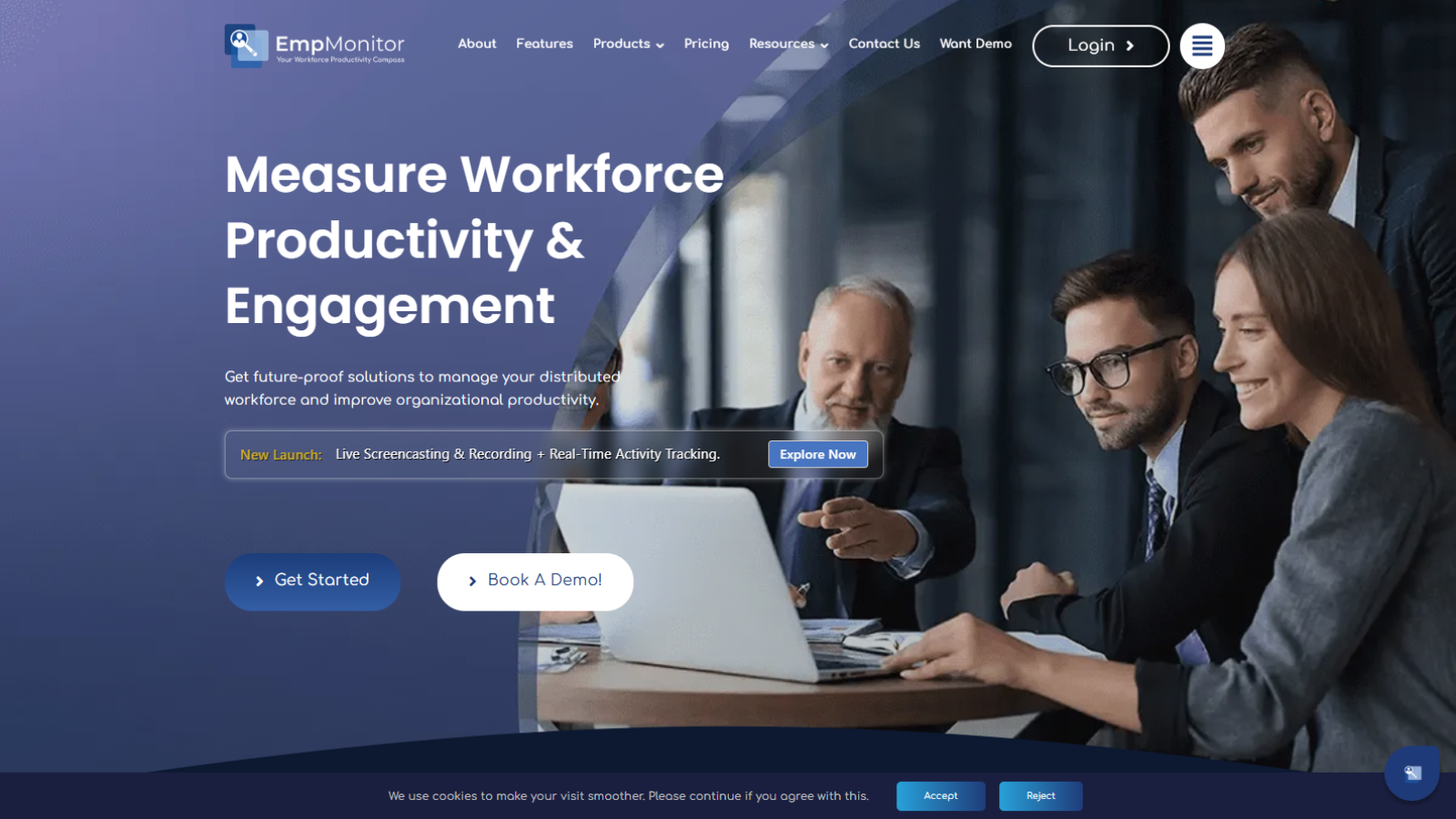

EmpMonitor is a comprehensive workforce monitoring and management platform purpose-built for businesses that need deep, accurate, real-time insight into distributed team operations. For remote fleet managers searching for the most capable Connecteam alternative, EmpMonitor addresses every critical operational requirement from one centralized dashboard.
Here are the key features that make EmpMonitor the right choice for your remote fleet:
- Real-Time Activity Monitoring — Live visibility into every fleet worker’s active applications, websites, and work status across all locations, updated continuously, so managers always know exactly what their team works on at any given moment.
- Automatic Time Tracking — Captures every productive minute without manual input, producing accurate project-level time logs and billing-ready timesheet reports with zero gaps or rounding errors.
- Productive vs Idle Time Breakdown — Separates active work hours from idle periods within total logged time, giving managers a true picture of fleet productivity rather than just raw clock-in totals.
- Project Management — Assign tasks, set deadlines, track progress, and allocate resources across distributed fleet teams from a single dashboard with full project-level visibility.
- Team Collaboration Tools — Structured task assignment, shared project visibility, and real-time status updates keep every fleet worker aligned without relying on fragmented external communication apps.
- Screenshots and Screen Recording — Automatically captures screenshots at custom intervals and records screen activity in time-stamped clips for workflow verification and compliance review.
- Attendance and Shift Management — Tracks login and logout times automatically across all locations, flags deviations from scheduled shifts, and manages leave records from one centralized view.
- Stealth Mode — Runs completely silently in the background with no presence in the worker’s program list or task manager, keeping monitoring seamless and uninterrupted.
- Insider Threat Prevention — Flags restricted platform access and unauthorized file transfer attempts in real time with instant administrator alerts.
- Data Loss Prevention (DLP) — Blocks unauthorized websites, restricts non-approved applications, and prevents USB-based data transfers across all remote fleet locations simultaneously.
- Insightful Reports — Generates detailed, exportable reports on productivity, attendance, time usage, and project progress for client reporting and internal performance review.
- Alerts and Notifications — Customizable alerts for idle time, policy violations, or suspicious activity keep managers informed across the entire fleet without constant manual checking.
- Cloud Storage — All workforce data stored securely in the cloud with role-based access for authorized managers across every location.
EmpMonitor gives remote fleet managers the complete operational visibility they need to run distributed teams with the same level of control and accountability as an in-office workforce — without adding headcount to supervision or piecing together multiple disconnected tools.
Top 6 Connecteam Alternatives For Remote Fleet Management — Ranked
Fleet managers have a strong range of Connecteam alternatives to evaluate. Here is what separates the top six from the rest:
- EmpMonitor: The most complete Connecteam alternative for remote fleets. Delivers real-time monitoring, automatic time tracking, full project management software, team collaboration tools, screen recording, DLP, and detailed reporting in one unified platform. Scales from small distributed teams to large multi-location operations without friction or additional integrations.
- Hubstaff: A solid time tracking and GPS monitoring tool for field-based fleet teams. Hubstaff handles location tracking and basic productivity reporting well but falls short on deep activity monitoring, data security, and advanced project management capabilities that complex remote fleets require.
- Deputy: A strong scheduling and shift management platform that works well for frontline fleet workers. Deputy excels at roster management and compliance tracking but lacks real-time screen monitoring, DLP, and the project-level reporting that larger fleet operations demand.
- When I Work: A straightforward employee scheduling tool with basic team communication features. When I Work suits simple shift-based fleet operations but offers minimal monitoring depth, no data security tools, and limited reporting capabilities beyond basic attendance records.
- Homebase: A reliable option for small fleet businesses that need simple scheduling, time tracking, and payroll integration. Homebase works well at small scale but does not deliver the real-time monitoring, project management software depth, or security controls that growing remote fleets need.
- Buddy Punch: A basic time tracking and attendance tool with GPS punch-in features. Buddy Punch covers fundamental clock-in requirements for remote workers but lacks activity monitoring, team collaboration tools, DLP, and the reporting depth that serious fleet operations require.
EmpMonitor leads this ranking because it is the only Connecteam alternative that addresses the complete operational scope of remote fleet management monitoring, time tracking, project management, security, and reporting all without requiring separate tools for different functions.
Also Read:
8 Powerful Online Collaboration Tools For Your Team
How To Use Project Management Statistics For Better Results?
Key Features To Compare When Evaluating Connecteam Alternatives
Every fleet manager evaluating Connecteam competitors should measure potential tools against the same core criteria. Here are the features that matter most:
- Real-time monitoring that delivers live visibility into every fleet worker’s active status — not delayed logs or manually compiled summaries. Tools that update instantly allow faster decisions and better fleet-wide accountability.
- Automatic time tracking that captures every productive minute without manual input. Any tool that still relies on employee-initiated time logging creates the same gaps and errors that Connecteam leaves unaddressed.
- Project management software depth covering task assignment, deadline tracking, resource allocation, and progress monitoring across multiple simultaneous projects and client accounts.
- Team collaboration tools that centralize task visibility, communication, and status updates — eliminating the fragmentation that comes from relying on separate apps for different collaboration functions.
- Data security controls, including DLP, application restrictions, USB blocking, and real-time threat alerts. Non-negotiable for fleets that handle sensitive client or business data across remote locations.
- Scalable reporting that produces client-ready and management-level performance reports automatically, saving hours of admin time and delivering the evidence that sustains client relationships.
How Remote Fleet Operations Benefit From Smarter Workforce Software?
Fleet operations that upgrade from basic tools to smarter workforce software see consistent improvements across every key performance area. Productivity rises when managers have real-time visibility and can intervene immediately when workers go idle or off-task. Billing accuracy improves when every productive hour gets captured automatically rather than reconstructed from manual logs.
Client relationships strengthen when fleet managers can produce detailed, accurate performance reports on demand rather than compiling data manually before every client review. And data security improves significantly when DLP, access controls, and threat detection replace the complete absence of security features that basic tools like Connecteam leave in place.
The operational gap between basic workforce tools and smarter Connecteam alternatives is not just about features it is about the compounding business impact of having accurate data, live visibility, and proper security across every remote location simultaneously.
Common Mistakes Teams Make When Replacing Connecteam
Teams that switch Connecteam alternatives without a clear evaluation plan consistently make the same avoidable mistakes.
- Choosing based on one feature.
- Ignoring scalability.
- Overlooking data security.
- Skipping team onboarding.
- Underestimating reporting needs.
Conclusion
Remote fleet management demands more than basic scheduling and simple task checklists. It requires real-time visibility, automatic time tracking, strong project management software, effective team collaboration tools, and data security controls that protect business and client information across every remote location simultaneously.
The best Connecteam alternatives for remote teams address all of those needs in one platform — not five. Fleet operations that settle for tools covering only part of that picture end up patching gaps with additional software, creating data silos, and adding administrative overhead that slows operations rather than improving them.
EmpMonitor eliminates every one of those compromises. It gives remote fleet managers the complete operational intelligence they need to run distributed teams with the same precision and accountability as an in-office workforce. For any fleet operation ready to move beyond Connecteam’s limitations the upgrade starts here.
FAQs
Q1. What makes EmpMonitor the best Connecteam alternative for remote fleets?
EmpMonitor covers the full scope of remote fleet management in one platform — real-time monitoring, automatic time tracking, project management software, team collaboration tools, DLP, and detailed reporting. No other Connecteam alternative matches that breadth without requiring multiple integrations or significantly higher costs.
Q2. Why do remote fleet managers switch from Connecteam to other tools?
Fleet managers switch because Connecteam cannot deliver the real-time visibility, deep reporting, data security, and project management depth that growing remote fleets require. As headcount and operational complexity increase, the gaps in Connecteam’s capabilities become direct operational liabilities that Connecteam competitors with deeper feature sets resolve.
Q3. What should remote fleet managers prioritize when choosing Connecteam alternatives?
Prioritize real-time activity monitoring, automatic time tracking, project management software capabilities, team collaboration tools, data security controls, and scalable reporting. The best Connecteam alternatives deliver all six in one unified platform — giving fleet managers one source of operational truth rather than multiple disconnected tools that each address only part of the problem.