
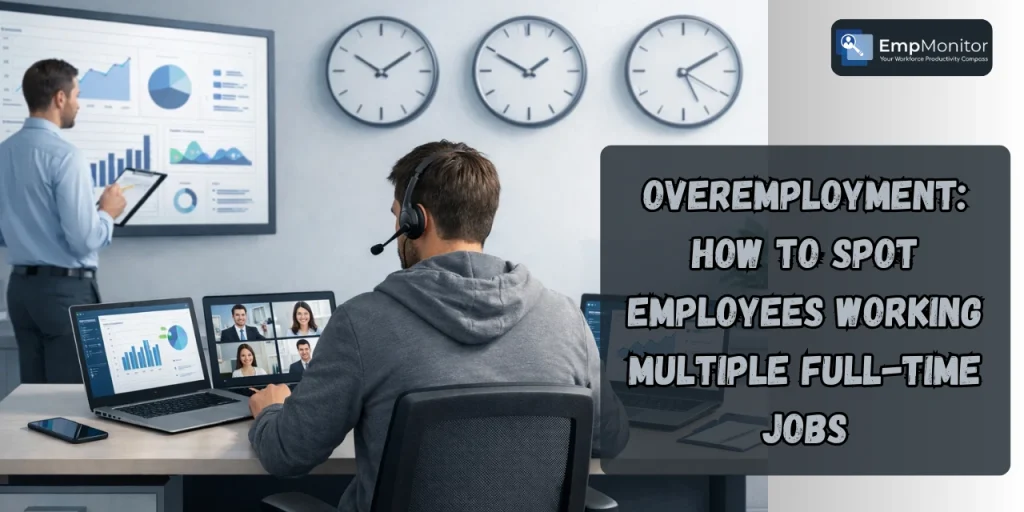
Remote work has reshaped the modern employment landscape. Flexible schedules, digital collaboration tools, and location independence have opened new opportunities for professionals worldwide. As a result, some professionals have become overemployed, managing multiple full-time roles simultaneously across different organizations.
This phenomenon has created intense discussion across industries and raised questions about productivity, ethics, and workplace transparency.
The term overemployed describes individuals who hold two or more full-time remote jobs at the same time, often without informing their employers. While remote work makes this possible, the implications for businesses and employees remain complex.
Organizations must understand the drivers behind this trend and implement structured strategies to manage workforce accountability effectively.
In a hurry? Listen to the blog instead!
What Is Overemployment?
Overemployment refers to a professional maintaining multiple concurrent full-time positions, typically in remote settings, without one employer knowing about the other commitments.
Unlike traditional freelancing or part-time consulting, this arrangement often involves overlapping working hours. The individual attempts to fulfill responsibilities across several employers simultaneously.
The overemployed model has gained popularity due to remote work flexibility, higher earning potential, and digital communication tools that allow professionals to manage tasks asynchronously. However, this trend presents serious concerns for employers regarding performance consistency, compliance, and data security.
Why Is The Overemployet Trend Growing?


Several factors contribute to the rapid increase in professionals juggling multiple full-time roles. While the trend differs from simply having side gigs, it often overlaps with the broader issue of overworked employees who stretch their limits to maximize income and opportunity.
1. Remote Work Accessibility:
Companies now hire talent globally, reducing physical oversight. This environment enables some professionals to accept multiple roles discreetly.
2. Financial Motivation:
Rising living costs and economic uncertainty motivate employees to increase income streams. Being overemployed provides financial security and accelerated wealth building.
3. Asynchronous Work Culture:
Flexible deadlines and reduced real-time collaboration allow individuals to distribute tasks across multiple schedules.
4. Skill Specialization:
Highly skilled professionals in tech, marketing, or consulting often complete assignments efficiently, leaving spare capacity that they leverage for additional roles.
While these drivers explain the rise of the overemployed workforce, they do not eliminate the associated risks.
Is Overemployment Legal?
A common question organizations ask is: is overemployment legal?
The answer depends on employment contracts, jurisdictional regulations, and company policies. In many regions, holding multiple jobs is not illegal by default. However, issues arise when:
- Employment contracts prohibit secondary employment.
- Non-compete clauses restrict working for competitors.
- Confidentiality agreements risk data misuse.
- Overlapping hours violate agreed working terms.
Even if technically legal, being overemployed can breach contractual obligations or create ethical concerns. Employers must review contracts carefully and implement clear policies to prevent misunderstandings.
What Are The Risks Associated With An Overemployed Workforce?
1. Reduced Productivity:
An overemployed professional may struggle to maintain consistent performance across roles. Divided attention can lead to delayed responses, missed deadlines, or reduced quality output.
2. Data Security Concerns:
Managing multiple roles increases the likelihood of accidental data exposure. Sensitive information may overlap between organizations, creating compliance risks.
3. Burnout and Performance Decline:
Handling multiple full-time roles can cause fatigue. Burnout negatively affects long-term productivity and workplace engagement.
4. Ethical and Trust Issues:
Transparency remains essential in professional relationships. Hidden commitments can damage employer trust if discovered.
Organizations must proactively monitor performance patterns to mitigate these risks.
Also Read:
How To Identify & Effortlessly Solve Your Overworked Employees Workloads In 2025?
How Can Employers Spot Signs Of Overemployment?
Companies don’t need to spy on people to figure things out. But sometimes, small patterns can show that someone might be juggling more than one full-time job and could be overemployed. The key is to focus on performance and behavior, not jump to conclusions.
1. Constant Schedule Clashes:
If someone keeps rescheduling meetings, shows up late, or is “unavailable” during normal work hours, that’s worth noticing. Everyone gets busy sometimes, but if it keeps happening, it could mean they’re balancing another job at the same time.
2. Slow Replies During Work Hours:
Taking a little time to respond is normal. But if messages, emails, or urgent tasks regularly go unanswered for hours during the workday, something might be off. An overemployed person may struggle to stay responsive because their attention is split.
3. Zoning Out in Meetings:
If someone rarely speaks, avoids turning their camera on, or seems distracted during calls, it might mean their focus is somewhere else. When people are fully present, they usually share ideas, ask questions, and stay engaged.
4. Always Multitasking:
We all multitask sometimes. But if someone constantly seems to be juggling calls, switching tabs, or handling different things at once, it could be a sign they’re managing more than one role.
5. Inconsistent Performance:
One week they’re doing great, the next week deadlines get missed or the quality drops. That kind of up-and-down performance can happen when someone is stretched too thin.
At the end of the day, none of these signs automatically prove anything. The best approach is open communication and clear expectations. Instead of assuming the worst, employers should focus on results, have honest conversations, and make sure workloads are realistic.
The Role Of Monitoring And Transparency

Modern workforce management requires visibility into performance metrics without micromanagement. Clear expectations, defined KPIs, and transparent reporting reduce ambiguity.
This is where structured workforce analytics platforms become valuable. Tools like EmpMonitor provide organizations with measurable insights into employee activity, time utilization, and project engagement without disrupting workflows.
By analyzing productivity patterns, managers can identify workload imbalances or unusual activity fluctuations that may indicate divided focus.
How EmpMonitor Helps Organizations Manage Workforce Accountability?

EmpMonitor offers a centralized solution to enhance transparency and productivity across remote teams.
Time Tracking:
EmpMonitor monitors working hours, active time, and break periods. Managers can evaluate whether employees dedicate sufficient time to assigned tasks.
Activity Monitoring:
The platform provides insights into application usage and website activity. This helps identify whether employees focus on relevant work tools during scheduled hours.
Attendance Management:
Accurate attendance tracking ensures accountability and simplifies payroll processing. Managers gain visibility into login times, leaves, and shift adherence.
Real-Time Dashboards:
Interactive dashboards allow leaders to assess team performance instantly. Real-time data supports faster decision-making and workload adjustments.
Insider Threat Prevention:
EmpMonitor helps protect sensitive company data by tracking suspicious behavior and restricted platform access. This becomes critical when employees manage multiple responsibilities across different organizations.
By implementing these features, companies can reduce risks associated with overemployed professionals while maintaining fairness and transparency.
Ethical Considerations Around Being Overemployed
The debate around Overemployment extends beyond productivity. Ethical considerations include:
- Commitment transparency
- Fair workload allocation
- Honest disclosure of conflicts
- Respect for contractual terms
Employees involved in Overemployment may justify multiple roles as financial necessity. However, failure to disclose such commitments can undermine professional integrity.
Organizations should communicate clear expectations regarding exclusivity and outside employment.
How Companies Can Prevent Overemployment Risks
1. Clear Employment Contracts:
Define exclusivity clauses, conflict-of-interest policies, and non-compete agreements clearly.
2. Performance-Based Evaluation:
Focus on measurable outputs rather than surveillance. Transparent KPIs discourage divided attention.
3. Foster Engagement:
Employees who feel valued and compensated fairly are less likely to seek multiple hidden roles.
4. Offer Competitive Compensation:
Review salary structures to remain market-competitive and reduce financial motivation for being overemployed.
5. Implement Workforce Analytics:
Data-driven monitoring ensures accountability while respecting privacy boundaries.
How Can Organizations Balance Flexibility And Control In Remote Work?
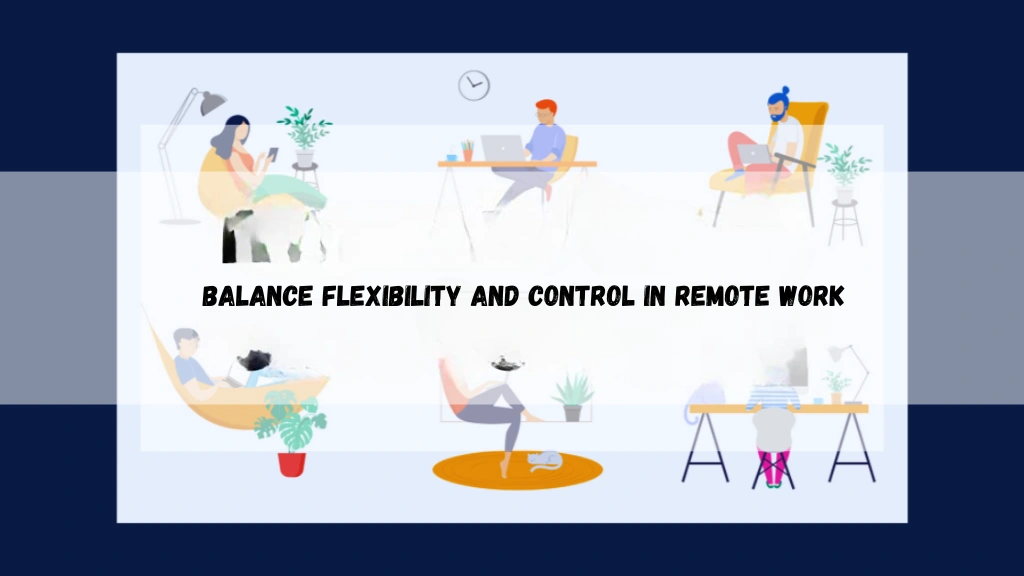
Remote work depends on trust. Too much monitoring lowers morale, while no oversight increases risk.
Organizations can achieve balance through smart workforce management. Clear expectations, defined KPIs, and outcome-based tracking help maintain accountability without micromanaging. Instead of watching every action, managers should focus on productivity trends and deliverables.
EmpMonitor supports this balance by providing workflow visibility and performance insights while allowing employees to work independently.
Long-Term Impact Of Overemployment on Organizations
If left unmanaged, overemployed practices can lead to:
- Reduced team collaboration
- Compromised service quality
- Increased security vulnerabilities
- Reputation damage
Conversely, addressing the issue transparently can strengthen organizational resilience. Companies that invest in structured monitoring, clear policies, and employee engagement maintain stable productivity levels.
The Future Of The Overemployed Workforce
As remote work continues to expand, the overemployed trend may persist. Artificial intelligence, automation, and asynchronous communication tools make juggling responsibilities easier.
However, advanced workforce analytics will also become more prevalent. Organizations will increasingly rely on structured monitoring to ensure accountability and performance alignment.
Platforms like EmpMonitor are already supporting this evolution by offering real-time productivity insights, attendance tracking, and workflow transparency.
Companies that adopt intelligent monitoring while promoting open communication will navigate this shift successfully.
Also Read:
Workforce Management, The Future of the New Era…
Best Practices For Managing Remote Teams Responsibly
- Establish clear communication expectations
- Define measurable performance metrics
- Conduct regular check-ins
- Encourage transparent disclosure of external work
- Implement secure monitoring systems
These strategies reduce the likelihood of operational disruptions caused by overemployed practices.
Conclusion
The rise of overemployment reflects significant shifts in remote work culture and modern economic realities. While it may not always break legal rules, it introduces serious operational and ethical risks that organizations cannot ignore.
Employers should respond with clear policies, defined expectations, and data-driven workforce visibility. Strong governance combined with intelligent analytics helps protect productivity, strengthen compliance, and preserve organizational trust.
EmpMonitor supports this strategy by delivering time tracking, activity monitoring, attendance management, and insider threat prevention within one centralized platform. As remote work continues to evolve, organizations that prioritize accountability, transparency, and structured oversight will remain resilient in a workforce increasingly influenced by overemployment.
FAQs
1. How can companies detect if an employee is managing multiple full-time roles?
Organizations can look for consistent performance inconsistencies, frequent scheduling conflicts, delayed responses during core hours, and reduced engagement in meetings. Using structured performance analytics and activity tracking tools also helps managers identify unusual work patterns without relying on assumptions.
2. What risks do overemployed professionals pose to businesses?
When employees secretly juggle multiple jobs, companies may face reduced productivity, data security risks, conflicts of interest, and compliance concerns. Divided attention can also affect teamwork and service quality.
3. Should companies immediately terminate employees who are overemployed?
Not necessarily. Employers should first review contracts, company policies, and performance records. A discussion focused on transparency, workload expectations, and contractual obligations often leads to better long-term outcomes than immediate disciplinary action.
4. How can businesses prevent employees from becoming overemployed?
Clear employment agreements, competitive compensation, performance-based evaluations, and regular engagement initiatives reduce the likelihood of employees seeking undisclosed additional roles. Transparency and fair workplace culture play a major role in prevention.
5. Can holding multiple jobs ever be acceptable?
Yes, if employment contracts allow secondary work and there are no conflicts of interest. Many organizations permit freelance or consulting work with prior approval, provided performance and confidentiality standards remain intact.