


What is considered overtime? Even if many employees are regularly working during regular hours, confusion about how to obtain the same reward for regular employees’ additional work hours. A clear understanding of overtime helps businesses and employees reconcile the terms in their relationship. Overtime pay is determined based on law, job classification, company rules, and regulations. Without the right system in place, payroll mistakes are made, trust is lost, and potential litigation arises.
For each business, one issue must clearly be addressed: What constitutes overtime, and how is it calculated? A well-defined process will eliminate disputes, create equality, and foster a greater sense of team spirit. This guide describes what constitutes overtime, how overtime pay is paid, and how tools such as EmpMonitor can assist you in accurately tracking overtime.
Listen To The Podcast Now!
Let’s Understand Overtime in the Modern Workplace
Daily business operations often demand flexibility. Employees may stay late to meet deadlines, support clients, or handle urgent tasks. These extra hours raise a crucial concern: what is considered overtime?
In many regions, any work beyond 40 hours a week qualifies as overtime for non-exempt staff. However, rules change based on country, industry, and contract type. Understanding what is considered overtime creates transparency and improves communication between employers and staff.
Some workers assume overtime starts after eight hours in one day. Others believe it begins after weekend shifts. The right answer depends on labor law and job classification. That is why learning what is considered overtime saves time, money, and confusion.
Employers also need to define clear policies. A strong policy explains:
- When overtime begins
- How supervisors approve it
- How payroll handles overtime pay
A company that fails to define what is considered overtime risks legal issues and dissatisfied staff.
What Is Overtime Pay And How Does It Work?


Many people ask: What is overtime pay?
Overtime pay refers to additional money paid for extra work hours beyond the standard work limit.
In most cases, overtime pay equals 1.5 times the regular hourly rate. For example, if an employee earns $20 per hour, overtime pay becomes $30 per hour.
Understanding what is overtime pay starts with knowing both the regular rate and the overtime multiplier. Employers must calculate these values correctly to avoid disputes.
Here is how companies determine overtime pay:
- Confirm what is considered overtime
- Calculate regular hourly rate
- Apply the overtime multiplier
- Add to total wages
Clear knowledge of what is overtime pay protects employee rights and keeps companies compliant.
Many payroll errors occur because managers fail to test what is overtime pay against correct hours. Without an accurate system, extra hours can disappear from reports. That leads to frustration and legal risk.
This is why every HR manager must know what is considered overtime and how to calculate overtime pay correctly.
Exempt vs Non-Exempt Employees: Key Differences
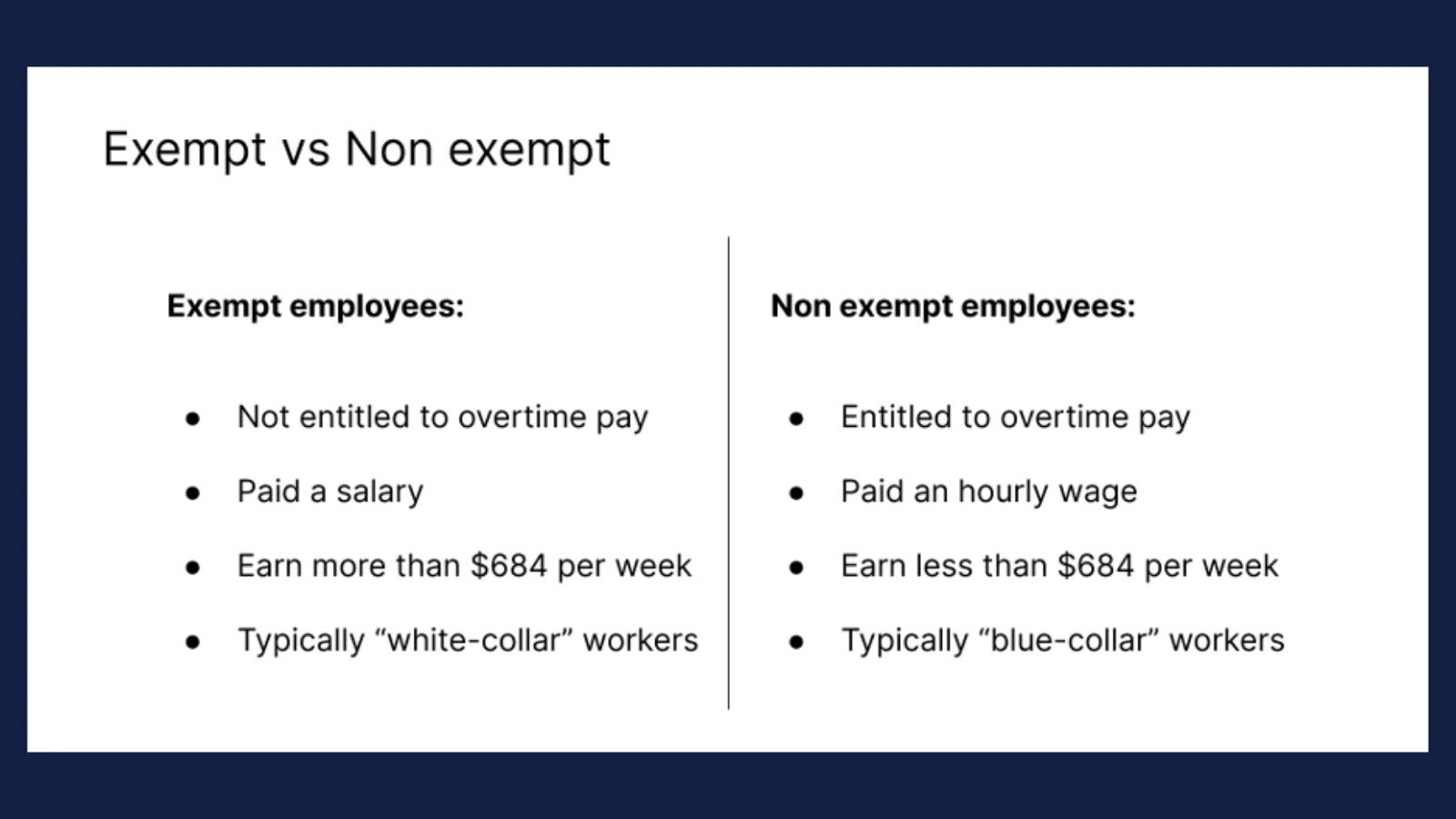
The topic of exempt vs non exempt often decides who receives overtime. These two categories change the entire salary structure.
Non-exempt employees qualify for overtime pay once they cross the legal limit.
Exempt employees do not receive overtime pay due to job duties or salary level.
The difference between exempt vs non exempt depends on:
- Role responsibilities
- Salary threshold
- Level of authority
- Industry rules
For example, a manager with decision-making power usually falls under the exempt category. A customer support agent often falls under the non-exempt category.
Many people still get confused about exempt vs non exempt roles. That confusion causes major payroll errors. Every company must clearly classify staff and update records.
HR teams must check:
- Is the employee on a fixed salary?
- Do they control business decisions?
- Do they supervise others?
Clear answers help HR decide exempt vs non exempt status and confirm what is considered overtime.
What Is Overtime For Part Time Employees?

A very common question appears in HR discussions: What is overtime for part time workers?
Some people believe part-time staff never get overtime. That belief is false. Laws focus on total hours, not job title. The real question always returns to what is considered overtime in that specific region.
In many countries, if part-time employees cross the set weekly hour limit, they qualify for overtime. That means what is overtime for part time depends on actual time spent on tasks.
For example:
- A part-time worker usually works 20 hours.
- One week, they work 45 hours.
- Now, they crossed the legal threshold.
- That extra time becomes overtime.
So again, what is overtime for part time depends on total hours, not contracts.
To avoid misunderstandings, companies must track time precisely and compare it with legal standards for what is considered overtime.
Are Part Time Employees Eligible for Overtime?
Another popular question: Are part time employees eligible for overtime?
The answer in many situations is yes.
If part-time workers exceed the legal weekly limit, overtime rules apply. The law focuses on actual hours, not full-time or part-time labels. Therefore, are part time employees eligible for overtime depends on work duration.
This often surprises employers. Without the right system, companies miss overtime obligations for part-time staff. That creates both legal and financial risk.
Clear time records and correct systems ensure full compliance. A business that understands what is considered overtime avoids such mistakes and protects its reputation.
Common Situations That Trigger Overtime Pay
Several situations regularly create overtime obligations:
Emergency projects
Emergency projects arise after system failure, cyber threats, or urgent client issues. Teams work beyond normal hours to restore stability, meet safety standards, and protect business continuity under strict time pressure.
Seasonal demand
Seasonal demand occurs during festivals, sales periods, or peak industry cycles. Businesses require extra staff hours to handle a surge of orders, customer inquiries, and deliveries, which often crosses the standard work limit.
Client deadlines
Client deadlines require rapid completion of tasks within a limited time frame. Teams extend work hours to meet contracts, maintain client trust, and avoid penalties that may affect brand reputation or revenue flow.
Weekend or night shifts
Weekend or night shifts support businesses that operate beyond traditional schedules. Employees work after standard hours to manage operations, assist customers, or handle critical workloads that demand constant availability.
Staff shortages
Staff shortages occur due to illness, resignations, or unplanned absences. Remaining workers take additional hours to maintain productivity, meet deadlines, and prevent backlogs that affect overall business performance.
In all these cases, managers must review what is considered overtime before assigning extra hours. If workers exceed the legal limit, overtime pay becomes mandatory. Ignoring this rule creates long-term damage to business credibility.
Accurate systems help confirm what is considered overtime in each scenario and calculate the right overtime pay accordingly.
Also Read:
The Undeniable Link Between Overtime Pay And Equalization
Having A Hard Time With Unpredicted Overtime Pay? Look At The Top 03 Alternatives To Prevent!
Challenges Companies Face in Managing Overtime
Many businesses struggle with overtime control due to:
- Manual time sheets
- Inaccurate records
- Lack of real oversight
- Disputes over work hours
- Payroll errors
These issues affect profits and weaken employee trust. Without a proper tool, managers fail to identify what is considered overtime in real time.
A strong solution must give:
- Live data
- Accurate reports
- Clear attendance logs
- Secure records
This is where EmpMonitor becomes essential.
How EmpMonitor Helps In Monitoring And Managing Overtime?
EmpMonitor provides a complete workforce control system that helps companies define and measure what is considered overtime with complete accuracy.
It goes far beyond basic features. The platform gives 360-degree support for workforce operations.
Real-Time Time Tracking for Accurate Overtime Records
EmpMonitor records each minute of work through automated time logs. Managers can see exact start and end times for every shift. This level of detail ensures no confusion around what is considered overtime.
It also shows idle and productive periods so an employer pays only for real work.
Activity Monitoring to Verify Extra Working Hours
EmpMonitor gives full visibility of employee screens and app usage. Supervisors can review activity and confirm that extra hours include actual tasks and not just extended logins. This feature supports fair overtime pay and stops false claims.
Automated Timesheets for Payroll Transparency
The platform generates accurate timesheets based on real data. These sheets show regular hours and overtime separately. Payroll teams use them to calculate what is overtime pay without guesswork.
Attendance Logs to Prevent False Overtime Claims
Login and logout records create a reliable timeline of work hours. No one can alter these logs. This transparency protects companies from overpayment and ensures only valid overtime pay gets approval.
Productivity Reports for Smarter Workforce Planning
EmpMonitor provides visual reports for managers. These insights reveal workload patterns and show when teams often cross normal limits. Managers use this data to plan better schedules and reduce unnecessary overtime.
All these features help an organization track what is considered overtime with clarity and fairness.
Benefits Of Using Employee Monitoring Software For Overtime Control
A strong employee monitoring system provides important advantages:
Eliminates disputes over hours
Accurate tracking removes confusion about start times, break periods, and end times. Employees and managers see the same verified data, which prevents arguments over extra hours. This clarity builds trust, reduces conflicts, and ensures that all parties agree on what is considered overtime in every case.
Ensures accurate overtime pay
Precise records show exact work duration, approved extra hours, and policy limits. Payroll teams use this data to calculate overtime pay without errors. Employees receive the correct amount on time, and companies maintain consistency, transparency, and fairness in all salary processes.
Improves project planning
Clear data on workloads and time use helps managers schedule tasks with greater accuracy. They identify team capacity, balance responsibilities, and reduce workload gaps. Better planning lowers unnecessary overtime, improves deadline control, and supports smarter use of available resources.
Supports legal compliance
Reliable monitoring provides documented proof of work hours and overtime use. This record helps companies follow labor laws and meet audit requirements. In case of disputes or inspections, businesses present clear evidence that confirms compliance with legal overtime standards.
Protects company resources
Strong monitoring discourages time misuse, false claims, and unauthorized access. Managers gain clear visibility into productivity trends and employee behavior. This control reduces financial loss, prevents inefficiency, and ensures that every paid hour supports real business goals.
By using EmpMonitor, companies gain real-time awareness of work patterns, which strengthens overtime control and improves trust. When managers know what is considered overtime, they plan shifts better and protect employee well-being.
Best Practices For Managing Overtime Effectively
Follow these steps for better overtime control:
- Define a clear policy for what is considered overtime
- Educate staff on overtime rules
- Assign overtime only when required
- Review reports every week
- Use tools like EmpMonitor for accuracy
Good planning and good software remove confusion. Everyone stays informed, and teams work with confidence.
Conclusion
Clarity around what is considered overtime helps companies avoid payroll errors, legal risk, and employee dissatisfaction. When businesses define clear policies, understand exempt vs non-exempt roles, and track hours correctly, overtime control becomes simple. Knowing what is overtime for part-time employees and answering whether part-time employees are eligible for overtime removes confusion in workforce planning. With accurate data from EmpMonitor, employers protect resources, ensure fair overtime pay, and build a transparent, trustworthy work culture that supports stability and long-term growth.
FAQs
- What is considered overtime in most jobs?
In most jobs, what is considered overtime means any work beyond forty hours weekly for non-exempt employees. - What is overtime pay usually based on?
Overtime pay depends on the regular hourly rate and usually equals one and a half times that amount. - Are part-time employees eligible for overtime?
Yes, part-time employees are eligible for overtime when their total weekly work hours exceed legal limits set by law. - What is overtime for part-time workers exactly?
Overtime for part-time workers depends on total hours worked and specific labor regulations in that location. - How does exempt vs non-exempt status affect overtime?
Exempt vs non exempt status decides whether an employee receives overtime pay based on job role and salary conditions.