

In the fast-paced work environment, mastering time management methods has become essential for professional success. Whether you’re juggling multiple projects, leading a team, or trying to maintain work-life balance, the right approach can transform how you work. This comprehensive guide explores proven techniques that help busy professionals accomplish more without burning out.
Listen Podcast Now!
Why Time Management Matters for Professionals?


We’ve all had those days where we’re busy from morning till night but feel like we accomplished nothing. Before diving into specific techniques, it’s worth understanding why this happens. Studies show that professionals waste nearly 21.8 hours per week on unproductive activities.
That’s more than half of a typical workweek! Poor time management leads to missed deadlines, increased stress, and work that doesn’t reflect your true capabilities. But here’s Boosting Productivity Using Time Management Tools can help you reclaim those lost hours, sharpen your focus, and achieve better results without working longer hours.
The Pomodoro Technique: Work in Focused Bursts:

The Pomodoro Technique is one of the most popular time management methods, and once you try it, you’ll understand why. Developed by Francesco Cirillo in the 1980s, this approach breaks work into 25-minute focused intervals called “pomodoros,” followed by 5-minute breaks.
Here’s how it works:
- Pick a task you need to complete
- Set a timer for 25 minutes
- Work with complete focus until the timer rings
- Take a 5-minute break
- After completing four pomodoros, reward yourself with a longer 15-30 minute break
What makes this so effective? It creates a sense of urgency while preventing burnout. The frequent breaks keep your mind fresh, and knowing a break is just around the corner makes it easier to maintain intense focus. Think of it like interval training for your brain.
Time Blocking: Design Your Perfect Day:

Time blocking ranks among the most powerful time management methods for professionals who juggle multiple responsibilities. The concept is straightforward: instead of having a loose to-do list, you schedule specific blocks of time for different activities throughout your day.
Here’s how to get started:
- Review your regular tasks and commitments
- Figure out when you’re most alert and focused (your peak productivity hours)
- Block out time for deep, challenging work during these golden hours
- Schedule meetings and collaborative work for when your energy naturally dips
- Build in buffer time between blocks because things always take longer than expected
- Treat these blocks as unmovable appointments with yourself
Successful entrepreneurs like Elon Musk and Bill Gates are famous for using this approach. Being brutally honest about how long tasks actually take and protecting your blocks like you’d protect a meeting with your most important client.
The Eisenhower Matrix: Prioritize What Matters:

Named after President Dwight Eisenhower, this framework helps you distinguish between what’s urgent and what’s actually important. It’s one of those time management methods that can completely shift how you think about your workload.
The matrix has four quadrants:
- Quadrant 1 (Urgent & Important): Crisis mode, do these immediately
- Quadrant 2 (Not Urgent but Important): Schedule these for focused attention later
- Quadrant 3 (Urgent but Not Important): Delegate these if you can
- Quadrant 4 (Neither Urgent nor Important): Honestly? Just eliminate these
Here’s the thing most professionals get wrong: we spend way too much time in Quadrants 1 and 3, constantly putting out fires. The real secret to long-term success? Investing more time in Quadrant 2 activities like strategic planning, building relationships, and developing new skills. These are the things that prevent future crises.
Tackle Your Hardest Task First:

Mark Twain supposedly said, “If it’s your job to eat a frog, it’s best to do it first thing in the morning.” This quirky advice has become one of the most straightforward time management methods you can use. The idea is simple: identify your most challenging or dreaded task each day and knock it out before anything else.
Why does this work so well?
You tackle difficult work when your energy and willpower are at their peak, you get an immediate sense of accomplishment, and you eliminate the stress of procrastination that would otherwise hang over your entire day. Many professionals push back on this because starting the day with easy wins feels better.
But here’s what actually happens: those who commit to “eating the frog” consistently report feeling less stressed and more productive throughout the day.
The Two-Minute Rule: Handle Small Tasks Immediately:

Productivity expert David Allen introduced this brilliant principle as part of his Getting Things Done system. The rule is dead simple: if something takes less than two minutes, do it right now instead of adding it to your to-do list.
This is one of those time management methods that sounds almost too easy to be effective, but trust me, it’s a game-changer. Think about it: responding to a quick email, filing a document, or making a brief phone call actually takes less time to complete than it does to write down, track, and reschedule.
Perfect situations for the two-minute rule:
- Processing emails and quick messages
- Simple administrative tasks
- Brief clarifications or follow-ups
- Straightforward decisions that don’t need deep analysis
The trick is being honest with yourself about what genuinely takes two minutes versus what you wish took two minutes. If it’ll actually take longer, schedule it properly.
Batch Processing: Group Similar Tasks Together:

Batch processing means grouping similar tasks and tackling them all in one dedicated time block. Why does this matter? Because constant context-switching can drain up to 40% of your productive time. Every time you jump between different types of work, your brain needs time to refocus.
Great tasks for batching:
- Responding to emails (try checking just 2-3 times daily instead of constantly)
- Making phone calls
- Creating social media content
- Reviewing and approving documents
- Data entry or routine administrative work
Instead of scattering these activities throughout your day like confetti, designate specific times for each category. You’ll work faster, make fewer mistakes, and maintain better focus on important projects during your non-batch periods. It’s like doing laundry—you wouldn’t wash one shirt at a time, right?
The 80/20 Rule: Focus on High-Impact Work:
The Pareto Principle states that 80% of your results come from 20% of your efforts. When it comes to time management methods, this principle helps you cut through the noise and identify what actually moves the needle.
Look at your tasks and ask yourself: “Which 20% of my activities produce 80% of my desired outcomes?” Then focus relentlessly on those high-impact activities. This might mean spending more time nurturing client relationships and less on internal reports, or prioritizing product development over administrative tasks.
Time Tracking: Measure to Improve:

Here’s an uncomfortable truth: you can’t improve what you don’t measure. Time tracking is one of those foundational time management methods that provides objective data about how you actually spend your day versus how you think you spend it.
Start by tracking your time for just one week without making any changes. You’ll discover your biggest time-wasters, reveal patterns in when you’re most productive, and identify your true peak performance hours.
Most professionals are shocked by what they find: that “quick check” of social media is actually 45 minutes, and those “few emails” are eating two hours of your morning.
The 1-3-5 Rule: Set Realistic Daily Goals:
This simple framework prevents overwhelm by limiting your daily commitments. Each day, aim to accomplish one big task, three medium tasks, and five small tasks. That’s it.
Why this actually works:
The structure forces you to prioritize while staying realistic. You’re not trying to do everything, you’re committing to what matters most. This is one of those time management methods that’s incredibly easy to start using today and adjust based on your specific role.
On crazy days, you might only nail your big task and a couple of small ones. On lighter days, you might exceed your goals. The point isn’t perfection, it’s having a clear, manageable framework for planning each day.
Also Read:
How To Boost Productivity Using Time Management Tools?
How To Improve Your Time Management Goal With Examples In 2025
How EmpMonitor Can Help You With Time Management?
Implementing time management strategies becomes significantly easier with the right tools backing you up. EmpMonitor is a comprehensive productivity and time tracking solution built specifically for busy professionals and teams who want to optimize their workday.
Key features that support better productivity:
1. Automatic Time Tracking: EmpMonitor runs quietly in the background, accurately recording how you spend every minute. Unlike manual time tracking, where you constantly forget to hit “start” and “stop,” you get completely objective data without any extra effort.
2. Productivity Analysis: The platform categorizes your activities as productive, unproductive, or neutral based on rules you can customize. You’ll quickly see which approaches are working and which need adjustment. The detailed reports show exactly where your time goes throughout the day, no more guessing.
3. Real-Time Tracking: The visual dashboards give managers a clear, real-time view of employee activities, while employees can effortlessly monitor their own work hours and productivity, creating transparency and accountability for everyone.
4. Break Reminders: Regular breaks are essential for staying sharp. EmpMonitor sends customizable reminders to take breaks, helping you implement effective approaches that prevent burnout instead of causing it.
For teams, EmpMonitor gives managers insights into team productivity without the micromanagement vibe. You can spot bottlenecks, optimize workflows, and make sure resources are going to the right places. The platform respects privacy while providing the data needed to improve organizational time management skills.
Whether you’re using the Pomodoro Technique, time blocking, or any other approach from this guide, EmpMonitor provides the data and structure to make these techniques actually work. The combination of automated tracking, insightful analytics, and focus-enhancing features creates a complete ecosystem for getting more done.
Creating Your Personal System:
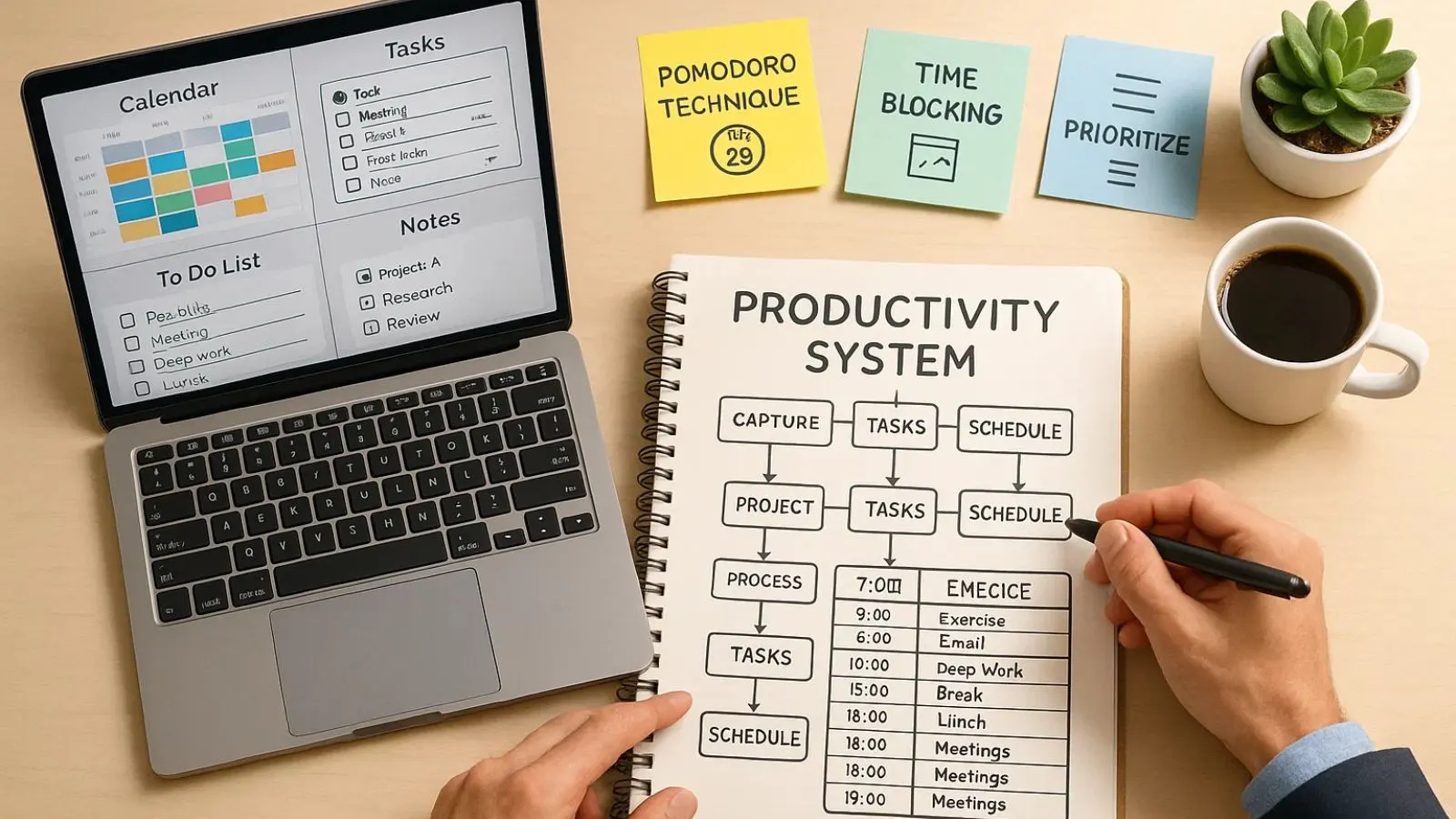
No single approach works perfectly for everyone. The most effective strategy? Combining multiple time management methods tailored to your specific situation. Start by tracking your time for one week without changing anything. Just observe and identify your biggest time-wasters, when you’re most productive, and what keeps interrupting you.
Based on what you discovered, pick 2-3 primary time management methods that address your specific challenges. Don’t try to implement everything at once, that’s a recipe for burnout.
Commit to using your chosen time management tips consistently for 21 days, which is roughly how long it takes to form a new habit that sticks. After three weeks, honestly evaluate what’s working and what isn’t, then adjust accordingly. Once your initial approaches become second nature, gradually add more techniques to further optimize your productivity.
Conclusion:
Mastering time management methods isn’t something that happens overnight; it’s a journey. The techniques we’ve covered have helped thousands of professionals reclaim their time, reduce stress, and achieve better results.
Start by picking one or two approaches that resonate with you, track your progress honestly, and adjust as you go. Remember, the goal isn’t cramming more into your already packed day. It’s about making sure you’re spending time on what genuinely matters.
With consistent practice, the right tools, and a bit of patience, you’ll transform from constantly busy to genuinely productive. That’s the difference that counts.
FAQ’s:
Q1: How long does it take to see results from time management methods?
Ans: Most people notice improvements within 1-2 weeks of sticking with it consistently. Real, significant changes typically show up after 3-4 weeks as new habits become automatic.
Q2: Can I combine multiple time management methods?
Ans: Absolutely! In fact, combining several techniques usually works best. You might use time blocking with the Eisenhower Matrix for prioritization and throw in the Pomodoro Technique during your deep work blocks.
Q3: What if my job involves constant interruptions?
Ans: Build buffer time into your schedule, communicate your focused work periods to colleagues, and use batching techniques to handle interruptions more efficiently when they do happen.
Q4: How do I choose which approaches to try first?
Ans: Start with time management methods that target your biggest pain points. Struggling with procrastination? Try “Eat the Frog.” Can’t stay focused? The Pomodoro Technique might be your answer.