
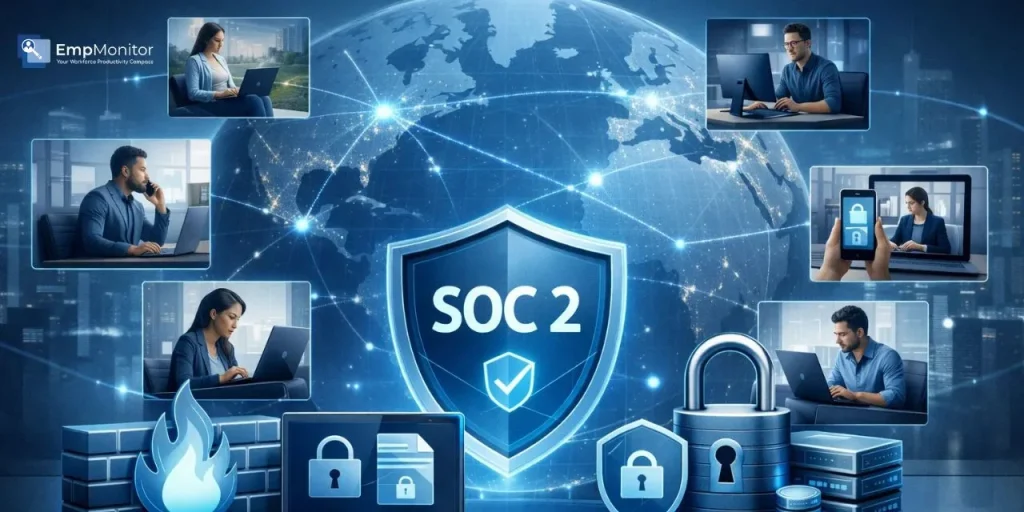
Managing SOC 2 compliance for remote teams is no longer optional; it’s a business necessity. As organizations increasingly rely on distributed workforces, maintaining tight security controls across multiple locations, devices, and time zones becomes a real challenge. SOC 2 compliance for remote teams requires a clear strategy, the right tools, and a culture of accountability.
Effective Network File Transfer Monitoring is crucial to ensure that sensitive data is securely transferred within and outside your organization. Without these tools, even a single weak link in your remote setup can put your entire compliance posture at risk. This guide walks you through everything you need to know, from understanding SOC 2 basics to implementing controls that work effectively in a distributed environment. Whether you’re just starting or strengthening an existing program, you’ll find practical, actionable steps ahead that make the compliance journey far less overwhelming than it might initially seem.
Listen To The Podcast Now!
What Is SOC 2 Compliance?
Before diving into remote-specific challenges, it helps to understand what SOC 2 compliance is at its core. SOC 2 (System and Organization Controls 2) is a framework developed by the American Institute of Certified Public Accountants (AICPA). It evaluates how organizations manage customer data based on five Trust Service Criteria: Security, Availability, Processing Integrity, Confidentiality, and Privacy.
SOC 2 compliance for remote teams means demonstrating that your systems, people, and processes meet these criteria, even when your workforce is spread across cities, countries, or continents. There are two types of SOC 2 reports: Type I evaluates your controls at a single point in time, while Type II evaluates how those controls perform over a defined period, typically six to twelve months. Most enterprise clients and partners specifically request Type II because it reflects sustained operational rigor rather than a one-time snapshot, making it the gold standard for demonstrating trustworthiness to prospective customers.
Why SOC 2 Compliance Is Harder With A Distributed Workforce?
SOC 2 compliance for remote teams introduces layers of complexity that simply don’t exist in a traditional office environment. When employees work from home, co-working spaces, or different countries, the attack surface expands dramatically. Personal devices, unsecured home networks, shadow IT, and inconsistent security habits have become serious and ongoing concerns for compliance teams. Visibility is another major problem. In an office, IT teams can physically monitor hardware and network traffic.
Remotely, they must depend entirely on software-based solutions to track access, activity, and behavior across dispersed endpoints. Without centralized oversight, ensuring consistent policy enforcement across every team member becomes nearly impossible. SOC 2 compliance for remote teams demands that organizations bridge this gap deliberately, using the right combination of policy, training, and technology. The good news is that with planning and the right tools, achieving and maintaining compliance in a distributed environment is very much within reach for organizations of all sizes.
Key SOC 2 Compliance Requirements For Remote Teams:
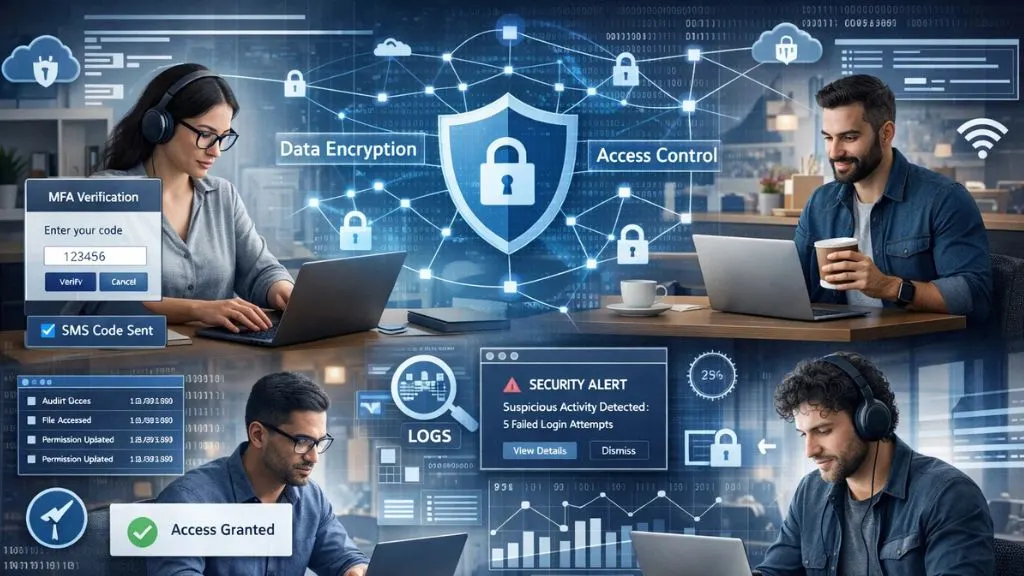

Understanding the core soc 2 compliance requirements helps you build a practical framework for distributed operations. Here is what matters most when your workforce is remote.
- Access Controls: Every remote employee should access only the systems and data required for their role. Implement role-based access controls (RBAC) and enforce least privilege across all platforms.
- Multi-Factor Authentication (MFA): MFA is non-negotiable for SOC 2 compliance for remote teams. All logins to sensitive systems must be protected with a second verification layer to prevent unauthorized access.
- Audit Logging and Monitoring: Maintain detailed logs of who accessed what, when, and from where. SOC 2 compliance for remote teams requires continuous user activity monitoring to detect anomalies before they escalate.
- Encryption: Data must be encrypted both in transit and at rest. Remote employees using home or public internet connections present real interception risks without strong encryption.
- Incident Response Planning: A documented, tested response plan is essential. All employees, not just IT staff, must know their role when a security incident occurs.
How To Get SOC 2 Compliance: A Step-By-Step Approach?
Wondering how to get soc 2 compliance without overwhelming your team? Breaking it into clear stages makes the process far more manageable for everyone involved.
Step 1: Define Your Scope: Identify which systems, services, and data are in scope. For remote teams, this includes cloud platforms, collaboration tools, SaaS applications, and employee endpoints.
Step 2, Conduct a Readiness Assessment: Perform a gap analysis before bringing in an auditor. SOC 2 compliance for remote teams often surfaces gaps in endpoint security and access logging at this stage, giving you a clear remediation roadmap.
Step 3, Implement Controls: Put technical and administrative controls in place. SOC 2 compliance for remote teams depends on monitoring software, access management, and written policy documentation.
Step 4: Train Your Team: Every remote employee should understand their responsibilities. Documented policy acknowledgments and training logs are essential audit evidence.
Step 5, Engage a SOC 2 Auditor: Work with an accredited CPA firm experienced in distributed environments.
Step 6, Maintain Continuous Compliance: SOC 2 compliance for remote teams demands ongoing monitoring and regular control reviews between audits.
Best SOC 2 Compliance Tools For Remote Teams:
Choosing the best soc 2 compliance tools for remote teams can make or break your compliance program. The right technology stack reduces manual effort, improves visibility, and keeps your evidence collection audit-ready at all times.
- Endpoint Detection & Response (EDR): Tools like CrowdStrike monitor all remote devices in real time, flagging suspicious activity before it escalates into a reportable incident.
- Identity & Access Management (IAM): Platforms like Okta or Azure Active Directory enforce access controls consistently across locations. SOC 2 compliance for remote teams relies heavily on this layer.
- SIEM Solutions: These aggregate logs from across your entire infrastructure, making audit trails comprehensive and easily searchable for auditors during assessment.
- HR & Activity Monitoring Software: SOC 2 compliance for remote teams requires visibility into employee system usage. Tools that track app activity and active time generate the documentation auditors expect.
- Policy Management Platforms: Tools like Drata or Vanta streamline evidence collection, reducing manual compliance workload significantly.
The right soc 2 compliance software stack brings all these capabilities together, giving your team the control and documentation needed to satisfy auditors confidently.
Also Read:
Network File Transfer Monitoring: Who Moved The Client List?
How EmpMonitor Supports SOC 2 Compliance For Remote Teams?

When it comes to maintaining SOC 2 compliance for remote teams, a reliable monitoring platform is critical, and EmpMonitor is purpose-built for exactly that. Trusted by 15,000+ companies across 100+ countries, EmpMonitor gives distributed organizations the real-time visibility and documented audit trails that compliance auditors expect.
Here is how EmpMonitor directly supports your compliance efforts:
- Real-Time Activity Monitoring: Tracks application and URL usage across remote devices with time-stamped behavioral records.
- Live Screen Monitoring & Recording: Captures screenshots and supports live screen viewing for visual audit evidence.
- User Activity Logs: Logs login times, active hours, idle periods, and application access, directly meeting SOC 2 audit trail requirements.
- Insider Threat Prevention: Identifies unusual behavioral patterns before they escalate into security incidents.
- Attendance & Time Tracking: Maintains accurate activity records to support policy enforcement documentation.
- Data Security & Privacy Protection: All data is stored securely in a system-created database before server transfer.
EmpMonitor makes SOC 2 compliance for remote teams measurably more manageable.
Managing Vendor Risk In A Remote-First Environment:
One often-overlooked aspect of SOC 2 compliance for remote teams is third-party vendor risk. When your workforce is remote, the number of external tools, SaaS platforms, and cloud services your team relies on tends to multiply quickly. Each of these vendors becomes a potential point of exposure if their own security controls are weak. SOC 2 compliance for remote teams requires a formal vendor management program.
This means maintaining a current inventory of all third-party tools, reviewing each vendor’s security posture at least annually, and ensuring that contracts include appropriate data protection language. Request SOC 2 reports from vendors who handle sensitive data on your behalf. This is not just good practice; it is something auditors actively look for during your assessment. Building this habit early saves considerable time and avoids surprises when your formal audit begins.
Building A Security-First Culture In A Remote Environment:
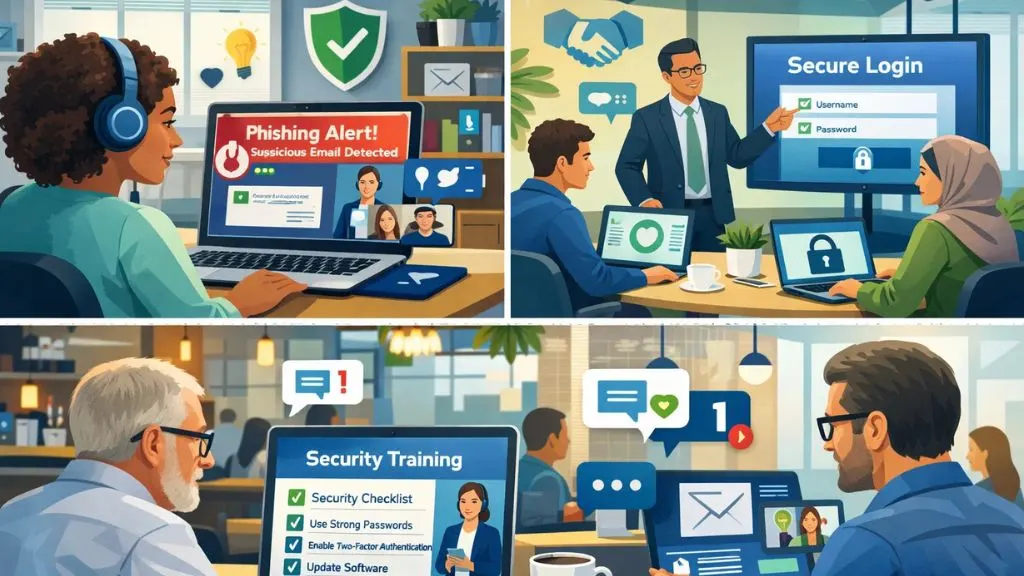
Technology alone cannot sustain SOC 2 compliance for remote teams; culture plays an equally important role. When employees genuinely understand why security matters, compliance becomes a shared responsibility rather than an IT-imposed mandate that people work around. Start by making security training a regular, engaging part of onboarding and ongoing professional development.
Use real-world scenarios to illustrate what a phishing attack looks like or how a misconfigured sharing setting can expose sensitive customer data. SOC 2 compliance for remote teams genuinely thrives when employees feel informed and empowered rather than surveilled and mistrusted. Establish clear channels for reporting security concerns so that remote employees know exactly who to contact and feel safe doing so. Fast, confident incident reporting dramatically improves your response time. Leadership must also visibly champion security practices. When managers follow the same protocols they enforce, it reinforces consistent behavior across your entire distributed team and strengthens your compliance posture from the top down.
Common Mistakes To Avoid During SOC 2 Preparation:
Even well-intentioned teams make avoidable mistakes when working toward SOC 2 compliance for remote teams. Knowing what to watch for saves significant time, money, and frustration down the road. One of the biggest mistakes is scoping too broadly. Trying to include every system and tool in your audit scope makes the process overwhelming and inefficient.
Start with core systems that handle sensitive customer data and expand incrementally from there as your program matures. Another common error is neglecting documentation. SOC 2 compliance for remote teams is as much about evidence as it is about actual controls. If a control exists but is not documented, it effectively does not exist from an auditor’s perspective.
Regular policy reviews, signed employee acknowledgments, and logged training completions form the paper trail that keeps your audit on track. Finally, many organizations treat SOC 2 as a project with a fixed end date. SOC 2 compliance for remote teams demands continuous monitoring, regular risk assessments, and a genuine commitment to improving controls even after the audit report has been issued.
Continuous Monitoring: The Backbone Of Long-Term Compliance:
Once you have achieved initial certification, maintaining SOC 2 compliance for remote teams becomes an ongoing operational responsibility rather than a seasonal project. Auditors evaluating a Type II report want to see that your controls performed consistently over time, not just during the weeks leading up to the assessment.
Continuous monitoring means setting up automated alerts for unusual login attempts, unauthorized access, or unexpected data transfers. It also means reviewing user access permissions regularly as team members change roles or leave the organization. SOC 2 compliance for remote teams requires periodic internal audits where you test your own controls before an external auditor does, catching and fixing issues on your own timeline rather than being surprised during the formal review.
Keeping a compliance calendar helps. Schedule quarterly policy reviews, bi-annual training refreshers, and monthly log reviews as recurring team commitments. When compliance activities are built into your regular operating rhythm, they stop feeling like burdens and start feeling like standard practice. This mindset shift is what ultimately separates organizations that struggle with compliance from those that own it confidently.
Conclusion:
Achieving SOC 2 compliance for remote teams is genuinely challenging, but it is absolutely within reach when you approach it with clarity and the right resources. By understanding the framework, implementing strong controls, leveraging quality soc 2 compliance software, managing vendor risk, and building a security-minded culture, distributed organizations can meet and maintain compliance with confidence.
FAQ’s:
Q1. What does SOC 2 compliance mean for a remote company?
Ans: It means your organization has implemented and maintains controls that protect customer data across all remote devices, networks, and employees, as defined by the AICPA’s Trust Service Criteria.
Q2. How long does it take to achieve SOC 2 compliance for remote teams?
Ans: SOC 2 Type I typically takes 2–3 months of preparation, while Type II requires at least 6–12 months of demonstrated control operation before the formal audit begins.
Q3. Is employee monitoring software allowed under SOC 2?
Ans: Yes,s it is often expected as part of your audit logging and access control requirements, provided employees are made aware of monitoring policies.
Q4. Can small remote teams achieve SOC 2 compliance?
Ans: Absolutely. With the right tools, a focused scope, and consistent documentation practices, even lean remote teams can achieve and maintain SOC 2 compliance effectively.