


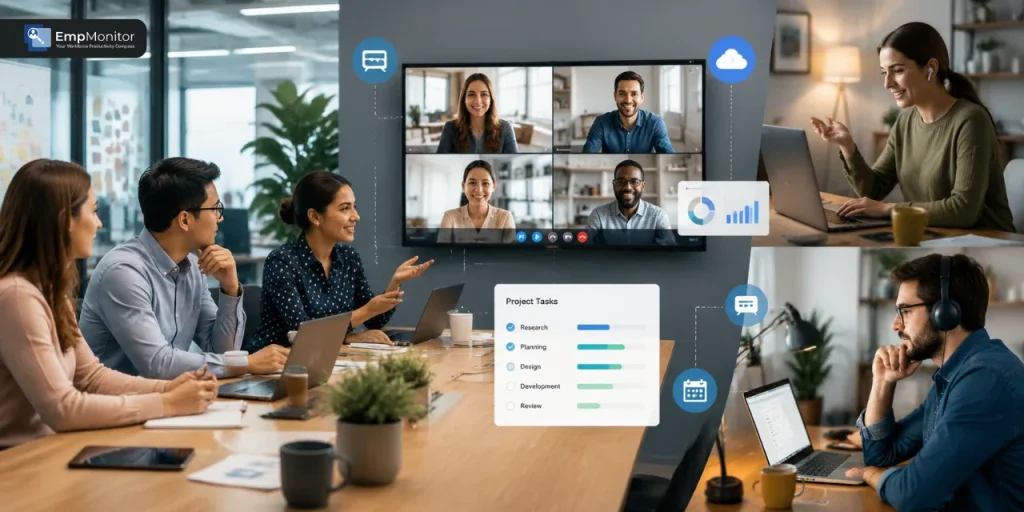
Hybrid working has changed how teams collaborate, communicate, and manage daily responsibilities. Instead of following a fixed office routine, companies now combine remote and in-office work to create a more flexible workplace. But making this model successful requires more than allowing employees to work from different locations.
Businesses need the right processes, communication methods, and technology to maintain productivity. Understanding the meaning of hybrid work helps organizations create better strategies for managing distributed teams.
While flexibility improves employee satisfaction, poor planning can lead to confusion, reduced collaboration, and performance gaps. This guide explains hybrid working, its challenges, practical solutions, and how businesses can build a productive environment where employees and companies both succeed.
Listen To The Podcast Now!
Understanding the Modern Workplace Model:
Many businesses are moving away from traditional office-only structures because employees now expect more flexibility. A successful hybrid working approach combines remote work with scheduled office interaction, allowing teams to choose where they can perform best.
The concept is not simply about letting employees stay home occasionally. It involves creating a structured system where communication, accountability, and teamwork remain strong regardless of location.
Companies need clear policies about working hours, meetings, availability, and performance expectations. Without these guidelines, employees may experience uncertainty, while managers may struggle to understand workload distribution.
A well-designed hybrid working environment focuses on outcomes rather than physical presence. It encourages employees to deliver results while giving them more control over their schedules.
What Is Hybrid Working and Why Is It Growing?
Many organizations ask what hybrid working is because the term has become common after the rise of remote work. In simple terms, it is a workplace model where employees divide their time between working remotely and working from a physical office.
The popularity of this model has increased because businesses discovered that productivity does not always depend on employees being present in one location. Technology has made collaboration, project management, and communication easier across different environments.
The benefits of hybrid working include improved employee satisfaction, reduced commuting stress, access to wider talent pools, and better work-life balance.
However, success depends on planning. Organizations must create systems that support both remote and office-based employees equally. Without proper tools and processes, teams may face communication issues and inconsistent performance.
Create Clear Hybrid Work Policies:
A major reason why hybrid working fails is the absence of clear expectations. Employees need to understand when they should work remotely, when office presence is required, and how their performance will be evaluated.
A strong policy should define:
- Remote and office working schedules
- Core availability hours
- Communication guidelines
- Meeting expectations
- Performance measurement methods
- Data security practices
Clear policies prevent confusion and ensure everyone follows the same standards. Managers should also review these policies regularly because team requirements and business goals can change over time.
Flexibility does not mean a lack of structure. The best hybrid working systems balance employee freedom with organizational accountability.
Focus on Results Instead of Physical Presence:
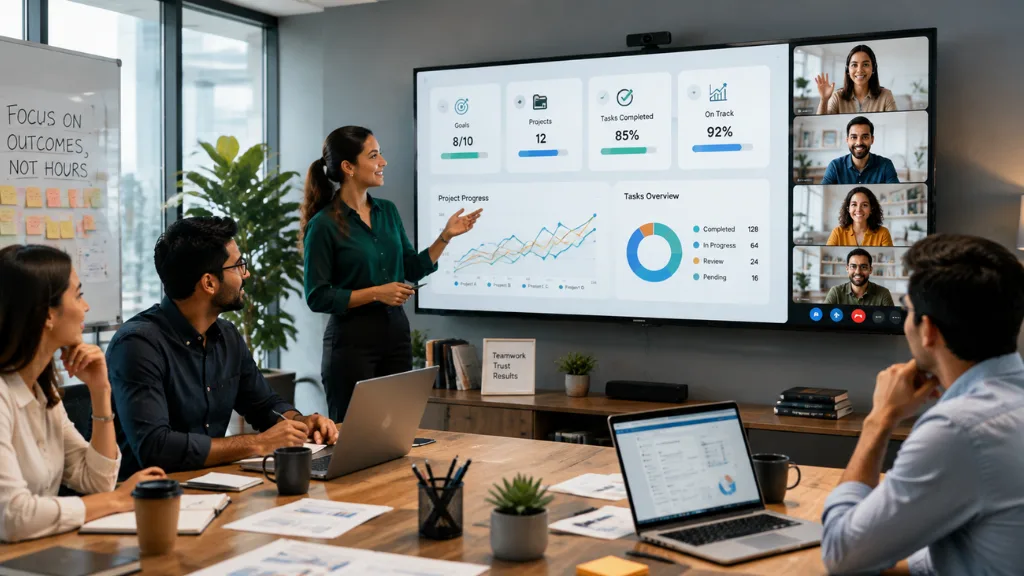

Traditional workplaces often measure productivity by observing employees at their desks. This approach does not work effectively in a flexible environment.
Successful hybrid working requires businesses to focus on measurable outcomes instead of monitoring physical attendance alone.
Managers should define clear goals, deadlines, and performance indicators. Employees should know what success looks like and how their contributions impact business objectives.
This shift creates a culture based on trust and responsibility. Teams become more independent because they understand expectations clearly.
Companies that focus only on hours spent online may miss important productivity insights. Instead, evaluating completed tasks, project progress, collaboration quality, and business results provides a more accurate picture.
Build Strong Communication Systems:
Communication is one of the biggest challenges in hybrid working environments. When some employees are in the office while others are remote, information gaps can easily develop.
Businesses should establish communication rules that make collaboration easier. For example:
- Use shared project management platforms
- Document important decisions
- Schedule regular team meetings
- Encourage transparent updates
- Create clear communication channels
Not every discussion needs a meeting. Teams should balance real-time conversations with written communication to avoid unnecessary interruptions.
Managers also need to ensure remote employees receive the same information and opportunities as office-based employees. Equal access helps prevent employees from feeling disconnected.
Strong communication creates a workplace where everyone can contribute effectively, regardless of their location.
Invest in the Right Technology:
Technology plays a central role in making hybrid working successful. Without reliable digital tools, employees may struggle with collaboration, task management, and information sharing.
Businesses should provide tools that support:
- Video meetings
- File sharing
- Project tracking
- Employee communication
- Time management
- Security management
Cloud-based platforms allow teams to access important information from anywhere. This reduces dependency on physical offices and improves workflow continuity.
The right technology should not create unnecessary complexity. Companies should choose solutions that employees can easily adopt and integrate into their daily routines.
A technology-first approach helps organizations maintain productivity while giving employees the flexibility they expect from modern workplaces.
Maintain Employee Connection and Company Culture:

One challenge of hybrid working is maintaining a strong company culture when employees are not always together.
Remote employees may sometimes feel disconnected from workplace conversations, team activities, or decision-making processes. Businesses need intentional efforts to create belonging.
Companies can improve connection through:
- Regular team meetings
- Virtual social activities
- Office collaboration days
- Recognition programs
- Open feedback sessions
Managers play an important role in maintaining engagement. They should regularly check employee well-being, workload, and challenges.
Culture is not created only inside an office. It develops through shared values, communication, and employee experiences.
A thoughtful approach ensures that flexibility does not reduce teamwork or employee connection.
Solve Productivity Challenges with Better Tracking:
One common concern with hybrid working is understanding how employees manage their time when working from different locations. Managers may struggle to identify workload issues, project delays, or productivity gaps without proper visibility.
The solution is not excessive monitoring but creating transparency. Businesses should use tools that provide useful insights while respecting employee privacy.
Productivity platforms can help organizations understand:
- How much time is spent on different projects
- Whether tasks are progressing as planned
- Where workflow improvements are needed
- How teams are managing workloads
These insights allow managers to provide better support instead of making assumptions. When employees understand that tracking is designed to improve workflows rather than control them, adoption becomes easier.
A balanced approach helps companies maintain accountability while creating a supportive workplace environment.
Support Equal Opportunities for Remote Employees:
A major challenge in hybrid working is ensuring that remote employees receive the same opportunities as employees who regularly visit the office.
In traditional workplaces, employees who are physically present may naturally receive more visibility. This can create unfair advantages in promotions, recognition, and career growth.
Companies should create systems where:
- Performance is measured through results
- Information is accessible to everyone
- Meetings include remote participants equally
- Recognition is based on contribution
Managers should actively involve remote employees in discussions and decision-making processes.
A fair workplace does not depend on where employees work. It depends on how effectively businesses create equal access to resources, communication, and growth opportunities.
Train Managers for Flexible Team Leadership:
Managing a flexible workforce requires different skills compared to managing a traditional office team.
Many managers struggle because they are used to measuring productivity through direct observation. In a flexible workplace, leadership must focus more on communication, trust, and measurable outcomes.
Managers should learn how to:
- Set clear expectations
- Provide regular feedback
- Identify employee challenges
- Manage workloads effectively
- Build team engagement
Leadership training is essential because technology alone cannot solve management problems.
A successful hybrid working model depends heavily on managers who can support employees regardless of their location. When leaders understand how to manage flexibility effectively, teams become more productive and engaged.
Measure and Improve the Hybrid Work Strategy:
Implementing hybrid working is not a one-time decision. Businesses need to continuously evaluate whether their approach is meeting employee and company needs.
Organizations should collect feedback and analyze important areas such as:
- Employee satisfaction
- Productivity levels
- Collaboration quality
- Project completion rates
- Workplace engagement
Regular reviews help companies identify problems before they become bigger challenges.
For example, if employees feel disconnected, businesses can improve communication strategies. If workloads become uneven, managers can adjust resource allocation.
The best workplace strategies evolve over time. Companies that regularly improve their systems can create a flexible environment that benefits both employees and business performance.
How EmpMonitor Helps Businesses Manage Hybrid Teams:

Managing distributed teams requires visibility, productivity insights, and better workforce coordination. EmpMonitor helps businesses improve hybrid working by providing tools that help managers understand productivity patterns while maintaining transparency.
EmpMonitor offers features such as:
- Automatic time tracking to understand work hours and productivity trends
- Application and website monitoring to analyze work activity
- Project and task management for better workflow visibility
- Real-time dashboards and reports for informed decisions
- Attendance tracking for remote and office teams
- Productivity analytics to identify improvement opportunities
With these insights, businesses can manage flexible teams more effectively without depending only on physical presence. EmpMonitor helps organizations create a structured approach where employees have flexibility while managers maintain the visibility required for better planning, performance management, and operational efficiency.
Encourage Employee Feedback Regularly:
Employees experience workplace policies differently, especially in a flexible environment. A strategy that works for one department may not work for another.
Organizations should create regular feedback opportunities to understand employee experiences. Surveys, one-on-one discussions, and team meetings can reveal challenges that managers may not notice.
Feedback can help businesses improve:
- Office scheduling
- Communication methods
- Technology usage
- Workload distribution
- Employee support systems
Listening to employees also increases trust. When workers see that their opinions influence workplace decisions, they become more engaged.
The goal of hybrid working should be creating a system that works for both business requirements and employee needs. Continuous improvement ensures that workplace flexibility remains effective over the long term.
Avoid Common Mistakes in Hybrid Work Implementation:
Many companies struggle with flexible work because they focus only on location flexibility and ignore operational planning.
Some common mistakes include:
- Lack of clear expectations
- Poor communication practices
- Unequal treatment of remote employees
- Too many unnecessary meetings
- Limited technology support
A successful approach requires preparation before implementation. Businesses should evaluate their current processes and identify areas that need improvement.
Employees should also receive proper training on tools and communication practices. Without preparation, flexibility can create confusion instead of improving productivity.
The goal is not simply allowing employees to work remotely. It is building a workplace system where collaboration, accountability, and performance remain strong.
The Future of Flexible Workplaces:
The workplace continues to evolve as businesses discover better ways to combine flexibility with productivity. Hybrid working is becoming an important part of modern workforce strategies because it provides employees with greater control while allowing companies to access wider talent.
Future workplaces will likely focus more on digital collaboration, employee experience, and outcome-based performance.
Businesses that adapt successfully will not only improve productivity but also create stronger employee relationships.
However, flexibility must be supported by clear processes, effective leadership, and the right technology. Without these elements, companies may struggle to achieve the expected results.
The future of work is not about choosing between remote and office environments. It is about creating a balanced model that supports collaboration, innovation, and business growth.
Conclusion:
Successful hybrid working requires more than allowing employees to work from different locations. It needs clear policies, strong communication, reliable technology, and a culture built on trust. Companies that focus on results instead of physical presence can create a more productive and engaged workforce.
By understanding hybrid work meaning and implementing the right strategies, organizations can overcome common challenges and build a workplace that supports both employees and business goals.
FAQ’s:
Q1. What is hybrid working?
Ans: It is a work model where employees divide their time between remote work and office work.
Q2. What are the benefits of hybrid working?
Ans: The benefits include better flexibility, improved work-life balance, reduced commuting stress, and access to wider talent.
Q3. How can companies improve hybrid work productivity?
Ans: Businesses can improve productivity through clear policies, communication tools, performance tracking, and employee support systems.
Q4. Is employee monitoring useful for hybrid teams?
Ans: When used transparently, productivity tools can help businesses understand workflows and improve team efficiency.