


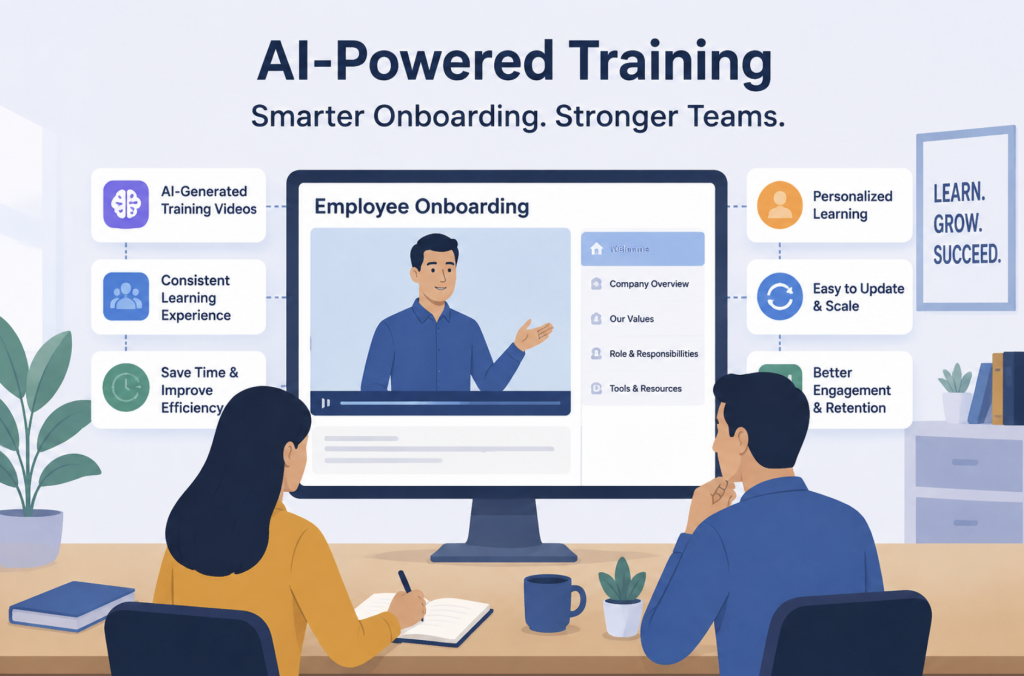
Employee training has always been a key part of building effective teams. The first few weeks of an employee’s journey can influence how quickly they understand their role, adapt to company processes, and contribute to business goals.
However, the way companies work has changed significantly. Remote teams, global hiring, and fast-changing technologies have made traditional training methods harder to maintain. A process that works for a small team may become difficult to manage when hundreds of employees need the same information across different locations.
AI is helping businesses rethink how they create and deliver training. Instead of relying only on documents, meetings, and repeated presentations, companies can now build more flexible learning experiences using AI-powered tools.
One of the biggest changes is the use of AI-generated videos. Companies can transform complex information into visual learning materials that are easier to understand, update, and share across teams.
Why Traditional Training Methods Are Becoming Difficult to Scale
Traditional employee training often depends on managers, HR teams, and subject experts delivering information repeatedly. While this approach can work for smaller organisations, it becomes challenging as companies grow.
A new employee joining from another location may not have the same access to trainers or resources as someone working from headquarters. Similarly, when company policies, software tools, or internal processes change, updating every training resource can become time-consuming.
Businesses need training systems that can provide consistent information while adapting quickly to change.
AI helps solve this challenge by making it easier to create, update, and distribute learning content without requiring companies to restart the entire training process every time something changes.
How AI Is Changing Employee Onboarding
Onboarding is more than introducing employees to company policies. It is about helping people understand how the organisation works, what is expected from their role, and where they can find support.
AI is helping companies create more engaging onboarding experiences by turning information into different learning formats. Instead of sending new employees long documents, organizations can create visual explanations, product walkthroughs, and role-specific training materials.
For example, a software company can create onboarding videos explaining its platform, internal tools, customer communication process, and company culture. New employees can revisit these resources whenever they need clarification.
This creates a more flexible learning experience while reducing the pressure on managers to repeat the same information.
Why AI-Generated Videos Are Becoming Important for Workplace Learning
Video has become one of the most effective formats for explaining information because it combines visuals, audio, and storytelling.
A complicated workflow that may require several pages of written instructions can often be explained more clearly through a short video.
AI video tools are helping companies create training content faster by supporting different stages of production, from planning and scripting to visual creation and editing.
Businesses can use AI-generated videos for areas such as onboarding, product education, internal announcements, and employee tutorials.
For example, a company introducing a new internal software system can create a step-by-step video guide instead of relying only on written instructions. Employees can watch the training at their own pace and return to specific sections whenever needed.
Creating Consistent Training Experiences Across Teams
One of the biggest challenges for growing companies is maintaining consistency.
When different managers train employees independently, the information shared may vary. Some teams may receive additional context, while others may miss important details.
AI-assisted workflows help organizations create standardized learning materials that can be shared across departments and locations.
Invideo Agent can support this type of workflow by helping teams move from ideas, scripts, and reference materials to complete video projects. Instead of managing every stage separately, teams can develop training videos through a more connected process that brings together planning, visual development, generation, and refinement.
For companies creating onboarding videos, product tutorials, or internal learning resources, this approach helps maintain consistency in messaging and presentation across different materials.
With Invideo Agent Two, organisations managing larger training initiatives can coordinate more complex creative workflows involving visual planning, storytelling, and production elements while keeping learning content aligned as teams expand.
Turning Internal Knowledge Into Learning Content
Many companies have valuable knowledge spread across documents, presentations, meetings, and internal resources.
The challenge is making this information easy for employees to access and understand.
AI can help transform existing company knowledge into more engaging learning formats. A product document can become a training video, a process guide can become a visual explanation, and internal instructions can become easier-to-follow learning materials.
This allows businesses to make better use of the knowledge they already have while creating resources that employees can understand faster.
AI Makes Training More Personalised
Not every employee needs the same type of training. A new salesperson, a developer, and a team manager may require completely different learning resources.
AI helps companies create more personalised training experiences by adapting content based on employee roles and responsibilities.
For example, a sales team may need product demonstration videos and customer communication guidance, while technical teams may require deeper explanations of systems and workflows.
Personalised learning helps employees focus on the information most relevant to their work instead of going through unnecessary content.
Keeping Training Materials Updated With AI
Modern workplaces change quickly. Software updates, new policies, and evolving business processes mean training materials can become outdated faster than before.
Updating traditional training resources often requires significant time and coordination.
AI-powered workflows make it easier for companies to revise and recreate learning content when changes happen. A company launching a new product feature, for example, can quickly update training videos instead of rebuilding an entire training programme from scratch.
This helps employees stay informed and reduces the gap between business changes and employee knowledge.
Supporting Remote and Hybrid Learning Environments
Remote work has changed how companies approach employee development. Teams are often spread across cities, countries, and time zones, making traditional classroom-style training less practical.
AI-powered learning content helps businesses create training experiences that employees can access whenever they need them.
A remote employee joining a company can watch onboarding videos, learn internal processes, and understand team workflows without waiting for a scheduled session.
This flexibility helps organisations support employees regardless of location.
What Businesses Should Consider When Using AI for Training
Choosing the right AI training workflow depends on the company’s needs. Businesses should consider whether they need simple educational content, detailed product training, or a larger system for managing learning resources.
The most effective AI training solutions should support consistent messaging, easy updates, and the ability to scale content as the organisation grows. For manufacturers, frontline workforce learning software can help connect role-based training with day-to-day production work.
Companies should also remember that technology is only one part of effective training. Clear communication, strong learning goals, and human guidance remain important for helping employees succeed.
The Future of AI-Powered Employee Learning
AI is moving employee training from static resources toward more dynamic learning experiences.
Future workplace training will likely become more personalised, interactive, and accessible. Employees will be able to receive learning materials designed around their roles and needs, while companies will have faster ways to update and distribute knowledge.
AI will not replace HR teams, managers, or trainers. Instead, it will help them create better learning systems and spend more time focusing on employee growth.
Read More!
Best AI Tools for Creating Employee Training Videos in 2026
Why Employee Monitoring Deployments Backfire
Final Thoughts
AI is transforming employee training and onboarding by making workplace learning more scalable, consistent, and engaging.
From AI-generated training videos to personalised learning resources, businesses now have more ways to support employees throughout their journey.
As companies continue to adopt flexible work models, AI-powered training workflows will become an important part of building knowledgeable, connected, and productive teams.