

Such is the pace of change in today’s world that learning and developing a willingness to adapt is mandatory. Artificial intelligence has instilled a fear of being replaced in professionals worldwide, regardless of whether they work in a creative or automation-ready field.
A 2025 World Economic Forum report indicates that these trends will drive both growth and decline in roles. Specialized skills and technological literacy will be essential to navigate the changes in information processing and day-to-day operations.
Learning new things does not come easily when you’re tucked away in a career comfort zone. It is also challenging to navigate work-life balance and devote additional time to something that does not seem pressing. Your job’s already hard enough.
However, continuous learning is likely the only strategy that can strengthen your skillset and make you irreplaceable, thanks to your quintessentially human values. Use the three ideas below to integrate learning time into your everyday life with a little more ease.
1. Seek Mentorship and Peer Support at the Workplace


What do you think is the biggest barrier to learning while working? If you said time, you are hardly alone. A 2025 Gallup report found that 41% of employees feel that time away from responsibilities is the top obstacle to pursuing training. If only this time were integrated into paid working hours, it is likely that more of us would be dedicated to upskilling.
One effective way for learning for employees is through mentorship programs in the workplace. Many contemporary organizations offer training to interested employees. Some of these programs also prepare candidates for managerial and leadership positions. They may be led by an in-house group of mentors or be driven by peers.
If you work for a company that does not prioritize upskilling, try advocating for role-specific programs that can yield demonstrable returns on investment. Simple techniques like starting with a single 20-minute task, tracking small wins, or using a distraction-free environment can help you stay motivated when studying alongside work – without relying on willpower alone. Even courses that teach time or workload management can inspire top leadership confidence compared to run-of-the-mill compliance training.
2. Explore Asynchronous and Hybrid Programs

The increasing recognition of the importance of continuing learning has given rise to various course formats. Traditional full-time, in-person courses are no longer necessary to earn prestigious degrees that can advance your professional capacity. Instead, employees can now opt for asynchronous and hybrid formats that allow them to balance their work hours with learning.
For example, online MSW degree programs can help social workers obtain a multistate license. This allows them to practice in several states without having to apply for licensure or reciprocity. It can be a tremendous professional boost that does not require workers to compromise with their current jobs.
According to MSW Degrees, professionals should check the appropriate certification while selecting an asynchronous or hybrid learning program. In the social work sphere, accreditation from the Council on Social Work Education (CSWE) will be crucial.
These learning formats are worth exploring for their multiple professional benefits, from developing a familiarity with virtual classrooms to building motivation and discipline.
3. Include Learning Goals in Your Self-Appraisal
Not all the barriers to further education come from the organization or the society we live in. Some may emanate from within you.
You may feel an impetus for learning on the job when it comes with well-established financial rewards. You will be more motivated to learn, even with family responsibilities or personality limitations, if you know that incentives are around the corner.
A 2025 Frontiers in Psychology study showed that positive emotions (such as a sense of achievement) while pursuing online learning can improve performance. This finding is particularly relevant for mid or late-career professionals, since the adverse impact of negative emotions tends to worsen with age.
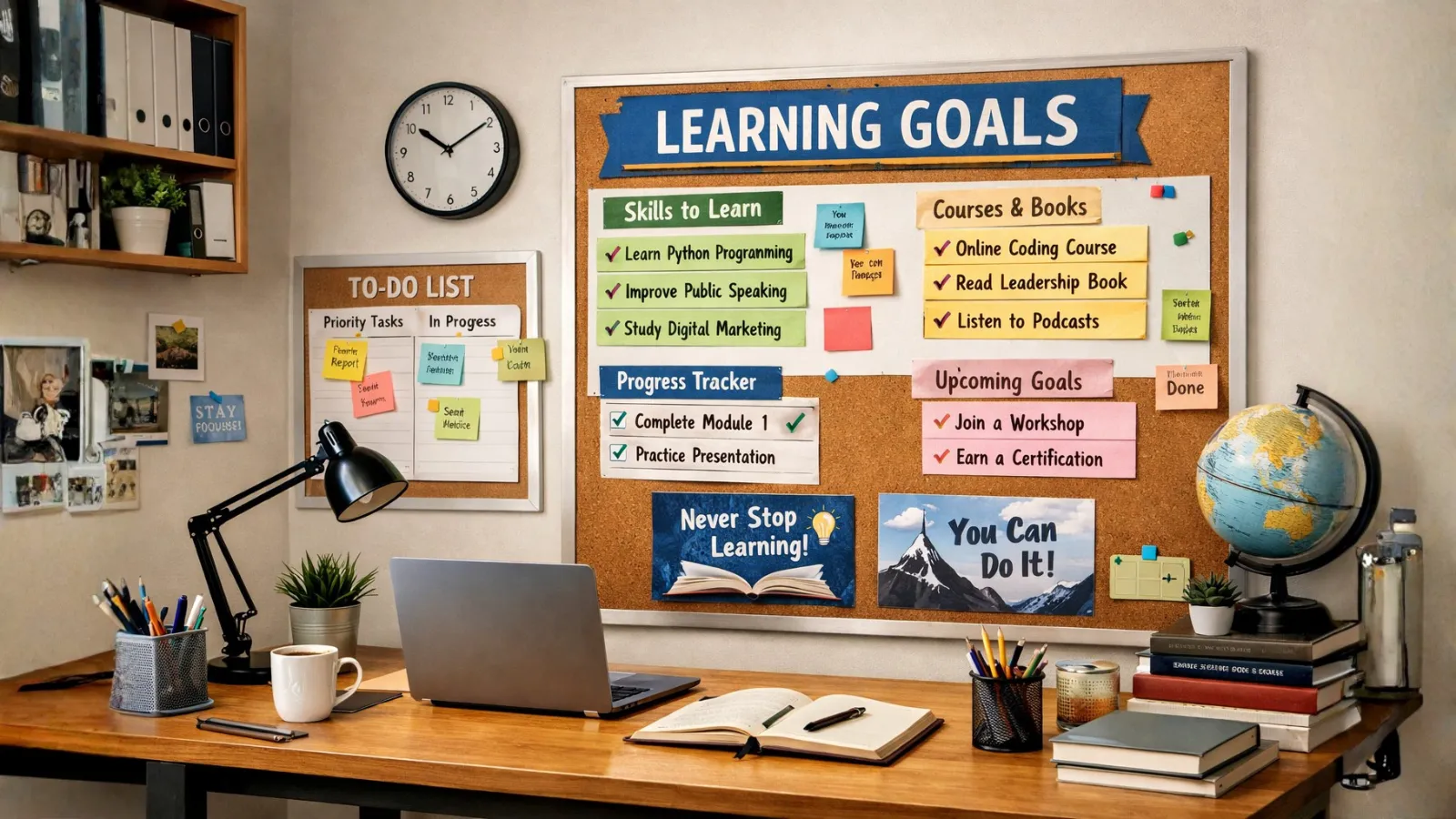
Many businesses now include a section for learning efforts in employee self-appraisal forms. Including learning for employees as a key focus in self-appraisals encourages professional growth and development. Showcasing the initiatives you have taken to this end can help you earn more incentives or a greater raise.
A recent McKinsey report on performance management highlights that compensation (financial) remains crucial in appraisals, but career progression and development opportunities are also gaining significance. A forward-facing appraisal system must emphasize and reward the efforts employees have taken to build their skills.
The Takeaway
When it comes to acquiring fresh skills and competencies, the beginning is always trickier. You may find yourself stretched to your limits, and your patience may run thin. But tell yourself that the effort you are putting in will reap rewards in personal and career advancement.
Adopting a balanced approach to learning through workplace initiatives and asynchronous or hybrid programs is an excellent starting point. Don’t hesitate to spotlight these activities in your appraisals because you feel they come across as “tryhard.” Sincere efforts will speak for themselves in the way you conduct your daily tasks and work with your team members.
When in doubt, remember that most continuous learning programs also foster interpersonal and time management skills. These are sure to prove helpful in handling demanding routines. In that sense, these programs are a direct investment in your future: not only from a career perspective but also for personal growth.