
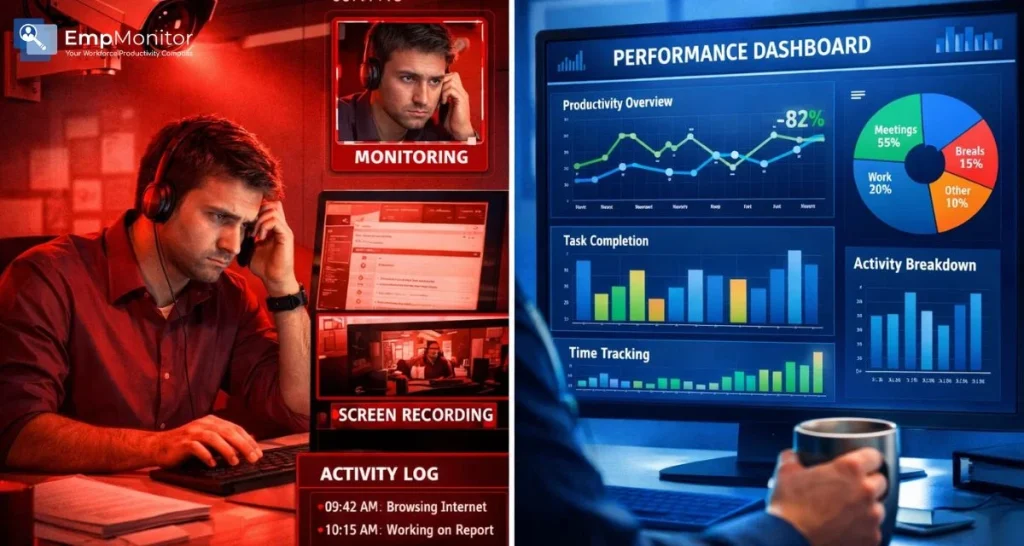
Understanding how employees work is essential for maintaining productivity, security, and efficiency in any organization. The concepts of surveillance vs monitoring are often used interchangeably, but they represent very different approaches to employee management. A clear understanding of surveillance vs monitoring helps businesses avoid confusion and implement the right strategy.
Surveillance focuses on observing behavior, often in real time, to prevent potential issues, while monitoring emphasizes tracking performance, productivity, and activity over time. Knowing the distinction in surveillance vs monitoring allows businesses to choose the right strategies and tools for effective workforce management.
With the growing trend of remote and hybrid work, manual supervision alone is no longer sufficient. This guide will explore the differences between surveillance vs monitoring, discuss their uses and best practices, and explain how tools like EmpMonitor can streamline employee management while ensuring efficiency and accountability.
You can listen to this Blog here.
What is Surveillance?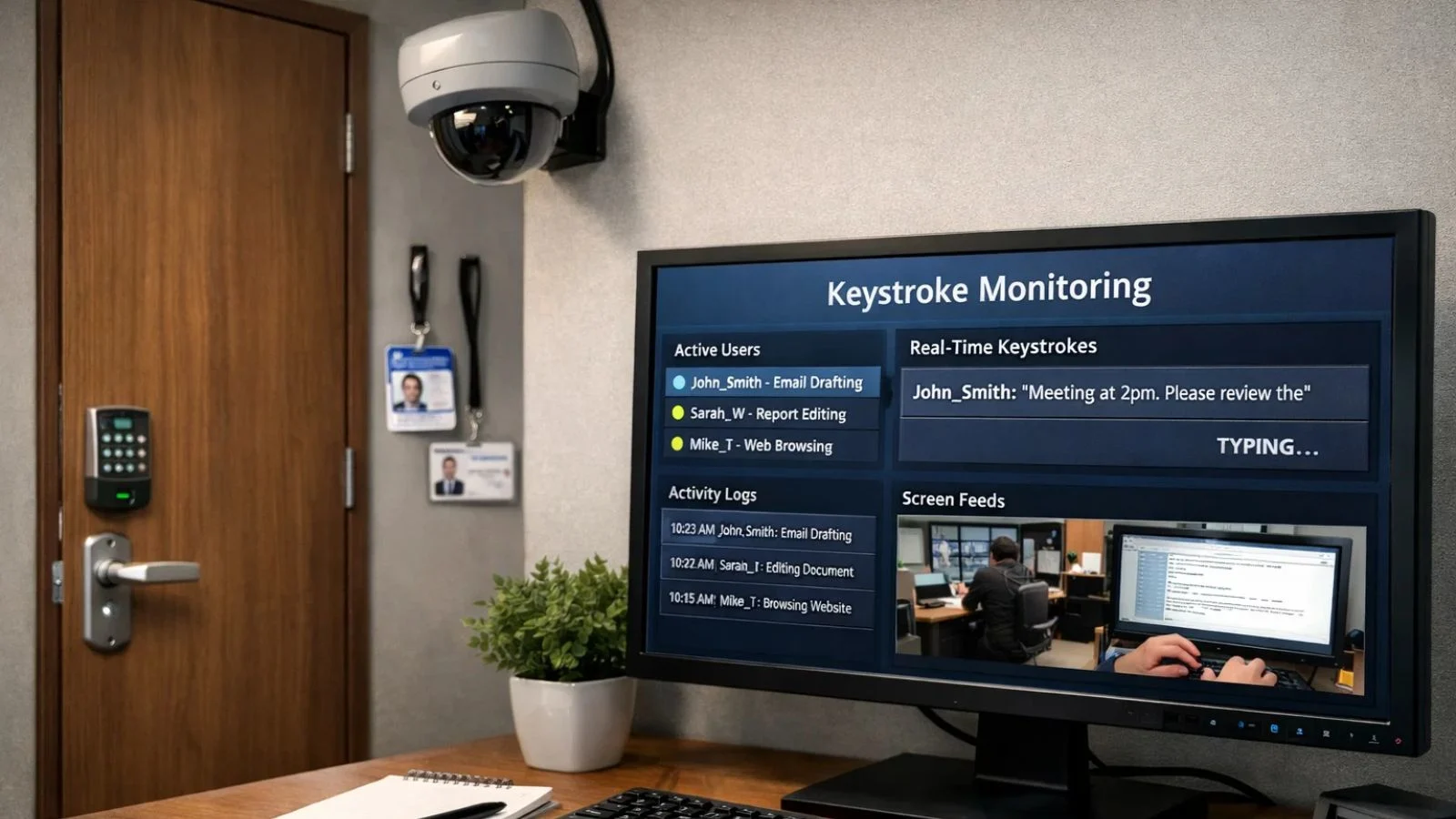

Surveillance in the workplace refers to observing employees’ actions and behavior, often in real time, to ensure security, compliance, or policy adherence. When discussing surveillance vs monitoring, surveillance is primarily focused on prevention and control.
The primary goal of surveillance is to prevent issues before they escalate, such as unauthorized access, theft, or workplace misconduct.
What is Monitoring?
Monitoring in the workplace focuses on tracking employee performance, productivity, and activity over time rather than just observing behavior. Unlike surveillance, which is often reactive, monitoring is proactive, helping managers identify trends, optimize workflows, and support employee development.
Common Methods of Employee Monitoring
- Employee monitoring software: Tracks computer activity, app usage, and websites visited.
- Performance metrics: Measures task completion, productivity, and output quality.
- Screenshots and activity logs: Records work progress to ensure accountability.
- Time tracking tools: Monitor hours worked and time spent on tasks.
Pros of Monitoring
- Provides actionable insights to improve productivity
- Helps managers identify skill gaps or bottlenecks
- Supports remote and hybrid work with objective data
- Enables data-driven decision-making
Cons of Monitoring
- Over-monitoring can make employees feel pressured
- Requires clear policies to avoid privacy concerns
- May be seen as intrusive if not communicated properly
Monitoring emphasizes performance and results rather than merely observing behavior.
Surveillance vs Monitoring: Key Differences
Although surveillance and monitoring are often used interchangeably, they serve very different purposes in the workplace. Understanding the key differences can help organizations choose the right approach for employee management.
1. Approach
- Surveillance: Reactive – focuses on observing behavior to prevent potential issues.
- Monitoring: Proactive – tracks performance and productivity trends over time.
2. Data Collected
- Surveillance: Behavior-based data such as employee movements, communications, or actions.
- Monitoring: Performance-based data such as task completion, time spent on projects, and software usage.
3. Impact on Employees
- Surveillance: Can create a sense of being watched, potentially affecting morale and trust.
- Monitoring: Encourages accountability while offering insights for improvement if implemented transparently.
4. Purpose
- Surveillance: Security, policy enforcement, and compliance.
- Monitoring: Productivity optimization, performance evaluation, and workflow improvement.
By understanding these differences, businesses can design strategies that balance oversight with employee autonomy and productivity.
Why Businesses Use Surveillance and Monitoring
Organizations implement surveillance and monitoring for several practical reasons, aiming to improve productivity, security, and overall workplace efficiency. While the methods differ, both serve to provide insights and maintain standards in the workplace.
1. Security and Compliance
- Surveillance ensures physical security through CCTV cameras and access control systems.
- Monitoring helps track digital activity to maintain compliance with company policies and industry regulations.
2. Productivity and Performance
- Monitoring allows managers to identify bottlenecks, measure task completion, and optimize workflows.
- Surveillance alone doesn’t provide actionable insights for performance improvement but can deter misconduct.
3. Remote and Hybrid Work Management
- With remote work, monitoring software helps ensure employees remain productive even outside the office.
- Surveillance in a physical office setting can complement digital monitoring for security purposes.
4. Risk Mitigation
- Both approaches help reduce risks, including data breaches, theft, and policy violations.
- Monitoring tools offer data-driven insights that allow companies to address issues before they escalate.
By using surveillance and monitoring strategically, businesses can safeguard assets, improve efficiency, and create a productive work environment while balancing employee trust and privacy.
Tools for Employee Monitoring
To implement effective monitoring, businesses often rely on employee monitoring software. These tools track productivity, workflows, and digital activity, providing insights that help managers make informed decisions.
Common Types of Monitoring Tools
- Activity tracking software: Records app usage, websites visited, and time spent on tasks.
- Time tracking tools: Help measure hours worked and efficiency.
- Performance dashboards: Provide visual reports on employee productivity trends.
- Screenshots and session recordings: Captures work progress for accountability and review.
Benefits of Using Monitoring Tools
- Identify areas where employees may need additional support
- Optimize workflows and project management
- Enhance accountability without continuous manual oversight
- Provide data-driven insights for HR and management decisions
Using the right tools allows businesses to focus on results rather than micromanaging employees, creating a more productive and structured work environment.
How EmpMonitor Bridges the Gap
While traditional surveillance can feel intrusive and basic monitoring may lack depth, EmpMonitor offers a balanced solution for modern workforce management. It combines the benefits of employee monitoring with actionable insights, helping businesses improve productivity without compromising trust.
Key Features of EmpMonitor
- Comprehensive Activity Tracking: Monitors applications, websites, and time spent on tasks to provide a clear picture of daily productivity.
- Screenshots and Logs: Optional screenshots and session logs ensure accountability while maintaining transparency.
- Reports and Analytics: Generates detailed reports to help managers identify trends, bottlenecks, and high-performing employees.
- User-Friendly Interface: Simple dashboards make it easy to access insights without overwhelming managers or employees.
- Flexibility for Remote Teams: Supports hybrid and remote work environments, allowing managers to stay connected with distributed teams.
Benefits of Using EmpMonitor
- Improves productivity by tracking work patterns and highlighting inefficiencies
- Reduces the need for invasive surveillance while still maintaining oversight
- Helps managers make data-driven decisions to enhance team performance
- Ensures compliance and policy adherence through monitored activity logs
By providing a structured and transparent approach, EmpMonitor bridges the gap between surveillance and monitoring, enabling businesses to manage their workforce effectively and ethically.
Employee Privacy Considerations
While surveillance and monitoring can boost productivity and security, respecting employee privacy is critical. Overstepping boundaries can lead to mistrust, low morale, and even legal issues.
Key Privacy Concerns
- Transparency: Employees should be informed about what data is collected and how it is used.
- Scope: Monitoring should be limited to work-related activities; personal communications and private data must remain confidential.
- Consent: Clear policies and agreements help ensure employees understand and accept monitoring practices.
- Data Security: Collected information should be securely stored and protected against unauthorized access.
Balancing oversight with trust is essential. Properly implemented monitoring policies help employees feel respected while allowing managers to maintain accountability and efficiency.
Best Practices for Implementing Surveillance and Monitoring
To maximize the benefits of surveillance and monitoring while maintaining employee trust, businesses should follow clear guidelines and best practices.
1. Establish Clear Policies
- Define what activities are being monitored and why.
- Set expectations for acceptable use of company devices and systems.
2. Communicate Transparently
- Inform employees about monitoring practices upfront.
- Explain the purpose of monitoring to emphasize productivity and security rather than control.
3. Limit Monitoring to Work-Related Activities
- Focus on tasks, applications, and systems relevant to work.
- Avoid tracking personal communications or unrelated activities to respect privacy.
4. Use Tools Responsibly
- Choose monitoring software that provides actionable insights rather than just data collection.
- Regularly review collected data to improve workflows and support employees, not just for oversight.
5. Review and Update Policies
- Regularly assess monitoring practices to ensure compliance with legal regulations and organizational goals.
- Adjust monitoring scope as work environments evolve, especially with remote and hybrid teams.
Following these best practices helps businesses balance oversight and privacy, ensuring monitoring and surveillance are effective, ethical, and well-received by employees.
Surveillance vs Monitoring in Remote Work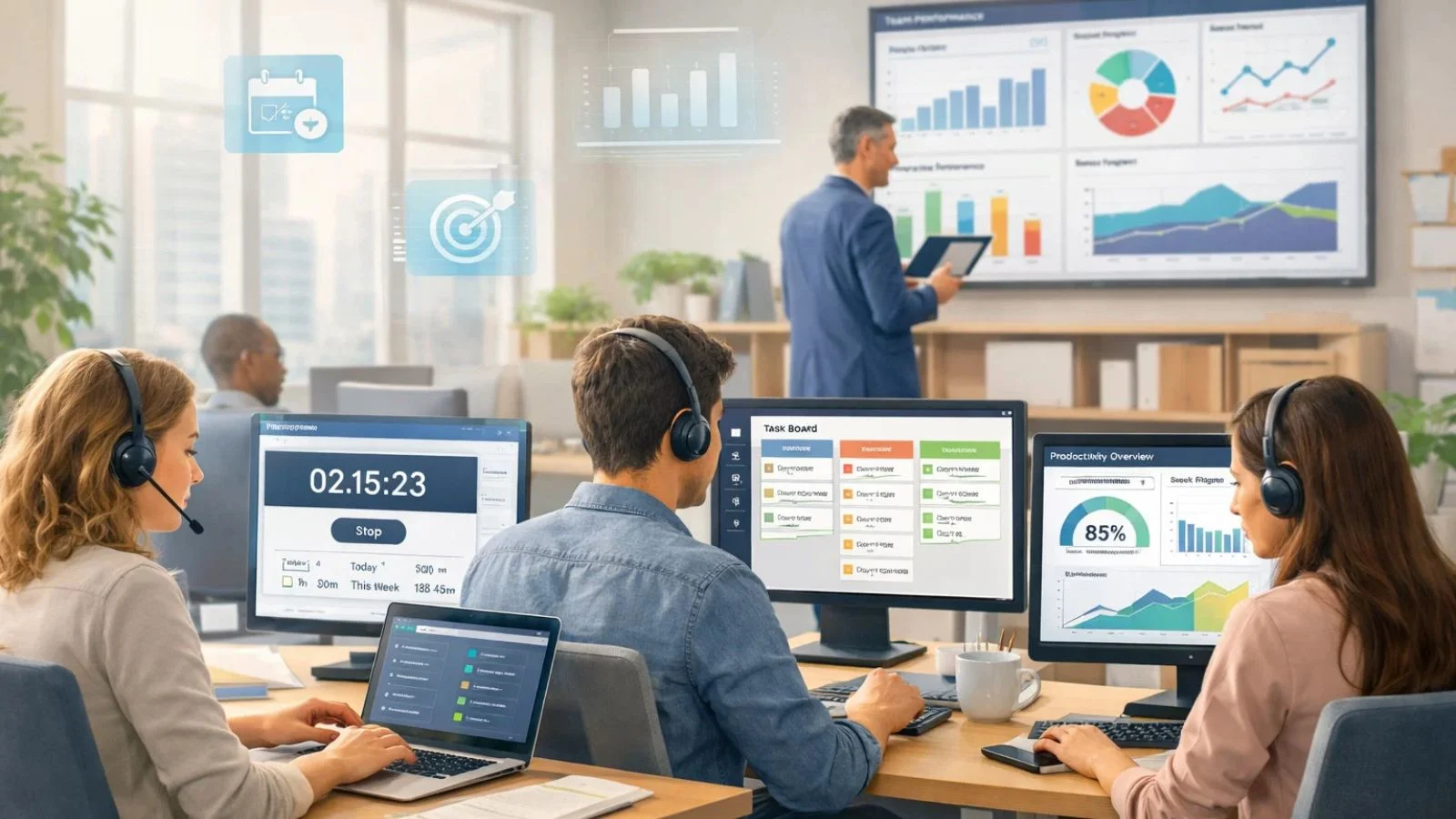
Remote work has transformed how organizations manage employee productivity. Without a physical office, traditional surveillance methods like CCTV are no longer practical, making digital monitoring essential.
Challenges of Remote Work
- Difficulty in observing employees’ daily activities
- Risk of reduced productivity without oversight
- Potential security concerns with sensitive company data
Role of Monitoring in Remote Teams
- Tracks work hours, application usage, and task completion
- Provides performance insights and identifies bottlenecks
- Helps managers ensure accountability without micromanaging
Benefits Over Traditional Surveillance
- Less intrusive than constant observation
- Focuses on results and outcomes rather than just behavior
- Enables flexible and transparent oversight, fostering trust among remote employees
In remote and hybrid environments, monitoring becomes a crucial tool for maintaining productivity while respecting employee autonomy, unlike traditional surveillance, which is largely impractical outside a physical office setting.
Employee Management Software: Choosing the Right Tool
Selecting the right employee monitoring software is crucial for balancing oversight, productivity, and employee trust. Not all tools are created equal, and businesses should consider several factors before implementation.
Key Considerations
- Features: Look for activity tracking, reporting, analytics, and time management capabilities.
- Usability: The software should be intuitive for both managers and employees.
- Scalability: Ensure it can support a growing workforce or remote teams.
- Compliance: Check that it aligns with legal regulations regarding employee privacy.
- Integration: The ability to integrate with other tools, like project management or HR systems, can improve workflow efficiency.
By carefully evaluating these factors, businesses can choose software that supports productivity while maintaining transparency and fairness in monitoring practices.
Surveillance and Monitoring in Different Industries
The approach to surveillance vs monitoring varies across industries, depending on the nature of work, regulatory requirements, and organizational priorities.
1. IT and Tech Companies
- Focus on monitoring digital activity and software usage.
- Surveillance is minimal; productivity tracking is more important.
2. Manufacturing and Warehousing
- Physical surveillance like CCTV is crucial for safety and security.
- Monitoring software tracks workflow efficiency and machine operation metrics.
3. Remote and Hybrid Workforces
- Heavy reliance on monitoring software to track task completion, online activity, and project progress.
- Surveillance is largely impractical; digital monitoring ensures accountability.
4. Financial and Healthcare Sectors
- Regulatory compliance drives both surveillance and monitoring.
- Ensuring data security, policy adherence, and productivity requires a balance of both approaches.
By tailoring surveillance and monitoring strategies to specific industry needs, organizations can optimize productivity, maintain security, and comply with legal requirements without unnecessarily burdening employees.
Common Misconceptions About Surveillance and Monitoring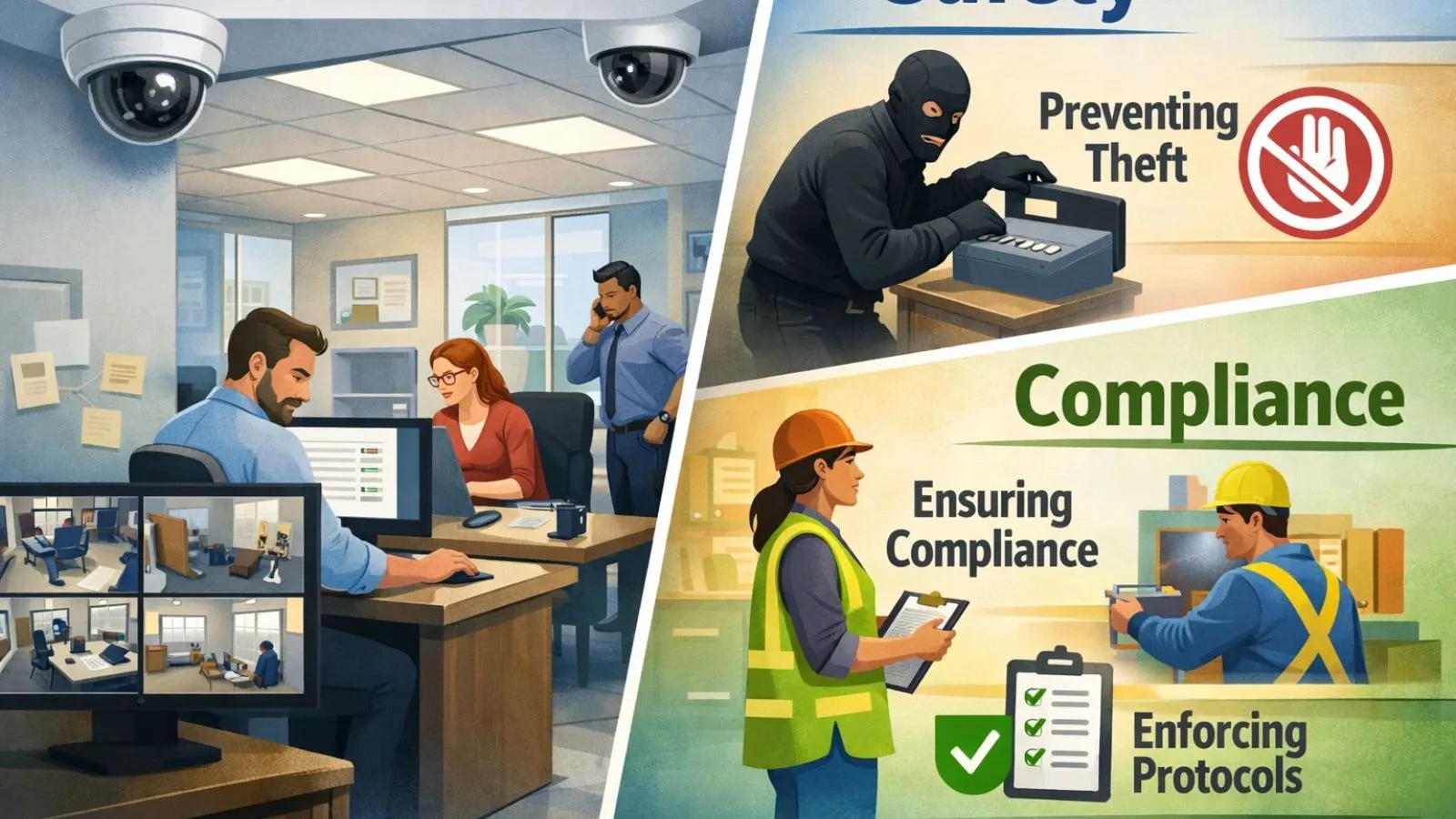
Despite their growing use, many organizations and employees have misunderstandings about surveillance vs monitoring. Clearing up these misconceptions helps improve acceptance and effectiveness.
1. “Monitoring Means Spying.”
- Reality: Monitoring focuses on work performance and productivity, not personal activities.
- Proper tools track tasks and applications rather than private conversations.
2. “Surveillance Is Always Negative”
- Reality: When implemented responsibly, surveillance ensures workplace safety and compliance.
- It can prevent theft, unauthorized access, and policy violations.
3. “Monitoring Replaces Managers”
- Reality: Monitoring provides data-driven insights but cannot replace human judgment.
- It supports managers in identifying trends, optimizing workflows, and coaching employees.
4. “Employees Will Resist All Monitoring”
- Reality: Transparent communication and clear policies help employees understand the purpose of monitoring.
- When employees see monitoring as a tool for support and growth, resistance decreases.
5. “Surveillance and Monitoring Are the Same”
- Reality: Surveillance observes behavior, often reactively, while monitoring focuses on productivity and performance proactively.
- Recognizing the difference helps businesses choose the right approach for their workforce.
Addressing these misconceptions ensures businesses can implement surveillance and monitoring ethically, effectively, and with employee buy-in.
Also read,
The Role Of Employee Monitoring Software In Successful Workplaces
Getting Employee Time Management On Track And Why It Matters?
Conclusion
Understanding the distinction between surveillance vs monitoring is essential for effective employee management. While surveillance focuses on observing behavior and ensuring security, monitoring emphasizes tracking performance, productivity, and workflow efficiency. Both approaches serve important roles, but their application depends on the organization’s goals, workforce structure, and industry requirements.
By implementing monitoring strategies thoughtfully through clear policies, transparent communication, and the right tools, businesses can enhance productivity, maintain accountability, and respect employee privacy. For companies seeking a comprehensive solution that balances oversight with actionable insights, advanced employee monitoring software provides an effective alternative to traditional surveillance.
Choosing the right approach ensures a productive, secure, and transparent work environment, helping organizations meet their operational goals while supporting employee engagement and trust.
FAQs
1. What’s the difference between employee surveillance and monitoring?
Surveillance focuses on observing employee behavior, often in real time, to prevent security or policy issues. Monitoring, on the other hand, tracks performance, productivity, and workflow over time to provide actionable insights.
2. Is employee monitoring legal?
Yes, employee monitoring is generally legal if it is work-related, transparent, and complies with local labor and privacy laws. Companies should communicate policies clearly and ensure personal data is not accessed without consent.
3. Can monitoring replace traditional surveillance?
Monitoring cannot fully replace physical surveillance in areas like security or compliance. However, digital monitoring tools provide detailed insights into productivity and workflows, often reducing the need for invasive surveillance practices.