


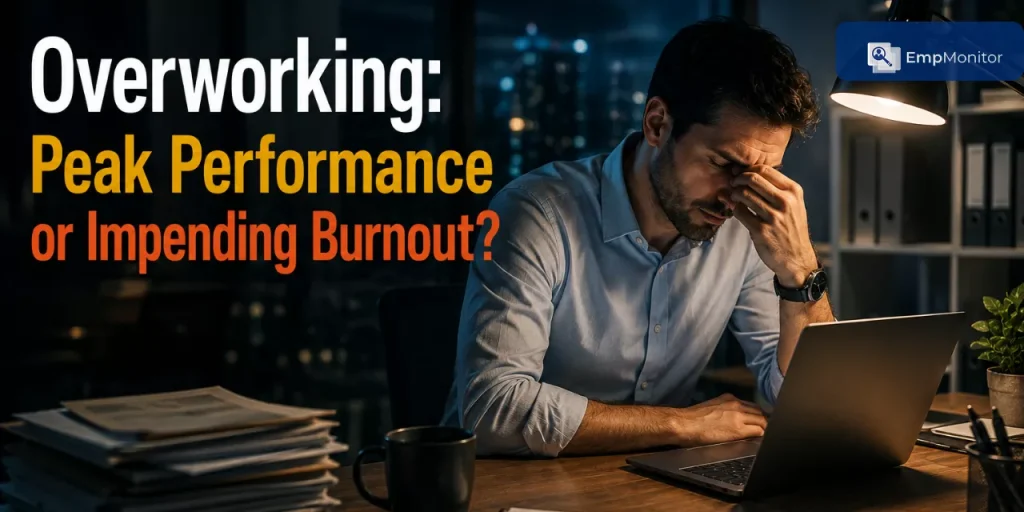
The midnight Slack notification isn’t a sign of a thriving “hustle” culture anymore. It is the sound of a system breaking. For years, the corporate world operated under the delusion that more hours at a desk automatically equated to more value created. We now know that the opposite is true. When a team falls into a cycle of overworking, the quality of their output doesn’t just plateau: it plummets.
True leadership in 2026 is no longer about how much you can squeeze out of your staff. It is about how well you can protect their focus and energy. Overworking employees is a structural failure that creates a “productivity debt” which eventually has to be paid back through sick leave, turnover, and poor decision making. To build a company that lasts, you have to move beyond the myth of the eighty hour work week and embrace a data driven approach to human energy management.
In this guide, we will break down the subtle signs of overworking, analyze the physical and mental overworking symptoms, and provide a clear framework for how to avoid overworking employees while actually increasing your organization’s total output.
Listen To the Podcast Now!
The Global Crisis of Chronic Overwork


To understand the gravity of the situation, we must look at the numbers. Recent data from the Health and Safety Executive (HSE) reveals that the UK alone lost 17.1 million working days to stress, depression, and anxiety in a single year. The average length of absence for these issues is nearly 20 days. This isn’t just a minor “rough patch” for businesses; it is a systemic drain on global capital and human potential.
The World Health Organization (WHO) has gone as far as to link long working hours to three-quarters of a million deaths annually due to heart disease and stroke. In Japan, they even have a specific word for this: Karoshi, which literally translates to “death by overwork.” While most cases aren’t that extreme, the day-to-day erosion of mental health is real. When an individual consistently works more than 55 hours a week, their mental health begins to erode linearly, regardless of how much they claim to “love their job.”
Identifying the Red Flags: 7 Signs of Overworking Employees
For a manager, spotting overworked employees before it turns into burnout is a critical skill. It requires looking beyond the “hours logged” and observing behavioral shifts. Here are the most common signs of overworking that you should never ignore:
1. Persistent Fatigue and Cognitive Fog
One of the most immediate overworking symptoms is a state of exhaustion that sleep cannot fix. Employees may start working more slowly, struggling to find words in meetings, or taking much longer to complete simple tasks. This is the brain’s way of saying it has run out of glucose and needs a reset.
2. The Irony of “Always-On” Behavior
Ironically, the most overworking employees are often the ones who refuse to step away. If you notice a team member responding to emails at 11:00 PM and again at 6:00 AM, they are not being “extra productive.” They are working overtime and sacrificing their recovery time, which will inevitably lead to a crash in work quality.
3. Increased Irritability and Social Withdrawal
Stress changes personality. An employee who was previously collaborative and friendly might become short-tempered, sensitive to feedback, or start avoiding team huddles altogether. This withdrawal is a defense mechanism against a world that feels overwhelming.
4. A Sharp Decline in Work Quality
When the brain is tired, it makes mistakes. If a high-performer starts missing deadlines, producing error-ridden reports, or showing a lack of attention to detail, it is rarely a performance issue. Usually, it is a sign that they are juggling too much for too long.
5. Frequent Physical Ailments
Chronic stress manifests in the body. Frequent headaches, back pain, or a sudden increase in sick days for colds and infections are classic overworking symptoms. The immune system weakens when the body is in a constant state of “fight or flight.”
Also Read
How To Recognize Signs Of Overworked Employee In 2025?
Working Overtime: How To Know It Is Working For You In 2025?
6. Skipping Breaks and Working Weekends
The disappearance of a lunch break is often the first sign of a looming crisis. When an employee feels they “don’t have time” for a 15-minute walk or a proper meal, they have lost control over their workload.
7. Contagious Pessimism
If a team member who was once enthusiastic starts criticizing leadership or expressing doubt about every project, they have likely reached the stage of emotional exhaustion. This negativity can quickly spread, damaging the morale of the entire department.
Why Managers Struggle to Spot the Symptoms

Furthermore, many employees suffer from perfectionism or the fear of being seen as “lazy.” They will hide their struggles until they can no longer function. This is why relying on self-reporting is dangerous. To truly understand the health of your workforce, you need objective data that shows how work is actually happening.
Leveraging EmpMonitor to Protect Your Team

By using an integrated platform, you can move from “guessing” to “knowing.” You can identify the patterns that lead to burnout before they become permanent. Here is how specific features of EmpMonitor can help you implement strategies for how to avoid overworking employees.
#### Real-Time Monitoring
To prevent overworking, you first need to see it happening in the moment. You can get instant visibility into all employees’ activity and see live app or web usage, along with active or idle status, all from a single, centralized dashboard. This allows a manager to notice if an employee has been “active” for ten hours straight without a single idle period, serving as a prompt to check in on their well-being.
#### Screen Recordings
Sometimes, the reason for overwork isn’t the volume of tasks but the complexity of the process. You can access recorded sessions of employee screens to review activities, ensure compliance, and maintain complete visibility across the team. By reviewing these sessions, you might discover that a specific software tool is causing frustration and delays, forcing the employee to work longer hours just to keep up.
#### Screencast
One of the biggest causes of stress is feeling “stuck” on a task. With the screencast feature, you can securely connect to employee devices to troubleshoot problems, provide real-time support, resolve issues, and guide tasks with ease. Providing this “hands-on control” reduces the time an employee spends spinning their wheels in frustration, which is a major factor in overworking.
#### Live Screen Monitoring
Transparency builds trust and accountability. You can monitor the live screen of all employees from one unified panel, enhancing visibility, accountability, and workflow efficiency. This “live feed” helps managers ensure that the workload is distributed evenly across the team, preventing one person from being buried while others have capacity.
#### Time Tracking
The most direct way to spot overworking employees is to look at their hours. You can effectively track every minute of the employee’s working hours to weed out all the unnecessary time gaps and increase productivity. By seeing the “clear insight” of where time is spent, managers can encourage employees to log off once their core hours are completed, rather than letting work bleed into the night.
#### Screenshots
Workflow details are essential for evaluation. You can get automated screenshots at customized intervals to get workflow details under a single dashboard for better evaluation. These “real-time updates” allow you to see if an employee is struggling with a specific project, allowing you to intervene and offer help before they feel forced to overwork to meet a deadline.
#### Chat Monitoring
Constant communication is often a distraction that leads to longer workdays. You can increase the focus of your team by keeping track of the total time spent on chat and social apps during working hours. “Messaging vigilance” ensures that employees aren’t losing their focus to “ping-pong” conversations, helping them finish their work faster so they can enjoy their personal time.
#### Insightful Reports
Long-term health requires long-term data. You can visualize employee engagement and perform a flawless team analysis with the graphic-rich analytical reports and automated timesheets. These reports make it easy to see trends over weeks or months, highlighting who is consistently exceeding their hours so you can proactively discuss workload adjustments.
How To Avoid Overworking Employees: A Strategic Framework
Technology provides the data, but leadership provides the solution. Once you have used EmpMonitor to identify the signs of overworking, you must act. Here is a framework for creating a sustainable work environment.
1. Redefine “Urgent”
In most companies, every email is treated as a priority. This creates a state of constant high-alert for employees. Leaders should establish clear guidelines on what truly constitutes an emergency. If it isn’t a crisis, it can wait until Monday morning.
2. Encourage “The Power of the Pause”
Taking a break isn’t a sign of weakness; it is a biological necessity. Encourage your team to take a 15-minute break every 90 minutes. Use the data from your Time Tracking tools to see who isn’t taking breaks and gently remind them that their brain needs a rest to perform at its best.
3. Normalize “Clocking Out”
With remote work, the office is always just a laptop away. Managers should lead by example by not sending messages after hours. If you must write an email at night, use the “schedule send” feature so it arrives during business hours. This removes the pressure for employees to stay “always-on.”
4. Regularly Audit Workloads
Roles change over time. An employee might have started with a manageable list of tasks that has slowly grown into an impossible burden. Use Insightful Reports to compare the output of different team members. If one person is consistently working 20 percent more than the rest of the team, it is time to redistribute the tasks.
5. Focus on Outcomes, Not Hours
High-performing employees can often finish a task in four hours that might take someone else eight. If you reward them with “more work” just because they finished early, you are punishing their efficiency. Focus on whether the goals were met, not how many hours they sat at their desk.
The Legal and Ethical Duty of Care
Employers have a legal duty to ensure a safe working environment, and in the modern world, “safety” includes mental health. The landmark case of Hatton v Sutherland established that while no job is inherently too stressful, an employer is liable if they are “on notice” that an employee is at risk of harm and they do nothing about it.
By using tools like EmpMonitor, you are effectively putting yourself “on notice” in a positive way. You are gaining the visibility needed to step in and save an employee from burnout. Ignoring the signs is no longer an option, both for the health of your people and the legal safety of your company.
Creating a Culture of Psychological Safety
To truly prevent overworking, employees must feel safe saying “I have too much on my plate.” If they feel that admitting to a heavy workload will lead to them being passed over for a promotion, they will keep quiet and continue to suffer.
Leadership must foster an environment where transparency is valued. When you use Real-Time Monitoring, explain to your team that it is a tool for their protection. It is a way for you to see when they are being stretched too thin so you can help. When data is used for support rather than punishment, the entire team thrives.
Conclusion: Sustainable Productivity with EmpMonitor
Overworking is not a badge of honor; it is a failure of process. While the short-term rush of a deadline can be exhilarating, chronic overwork is a slow-motion disaster for both the individual and the organization. By learning to recognize the signs of overworking and the subtle overworking symptoms, you can intervene before a valued team member becomes another burnout statistic.
The secret to how to avoid overworking employees lies in the combination of human empathy and digital intelligence. With the suite of tools provided by EmpMonitor, you gain the “messaging vigilance” and “visual trail” needed to understand your team’s reality.
Frequently Asked Questions
How can I tell if my remote employees are overworking?
Remote overwork often shows up as digital presenteeism. If an employee is constantly active on chat apps at all hours but their task completion rate is dropping, they are likely struggling. EmpMonitor’s time tracking and insightful reports can help you see these patterns objectively.
Is working 50 hours a week considered overworking?
While the “legal” limit varies, medical studies suggest that working more than 55 hours per week leads to a linear erosion of mental health. However, even 40 hours can feel like overwork if the job involves high-stress hazards and low autonomy.
Can overworking actually lead to better results in the short term?
Yes, but it is a “productivity debt.” You might hit a deadline today by overworking your team, but you will pay for it tomorrow with increased errors, decreased creativity, and eventually, a higher turnover rate.
What are the most common physical symptoms of overworking?
Chronic fatigue, persistent headaches, back and neck pain, and a weakened immune system are the most common signs. If an employee is taking more sick days than usual, it is a major red flag for burnout.