

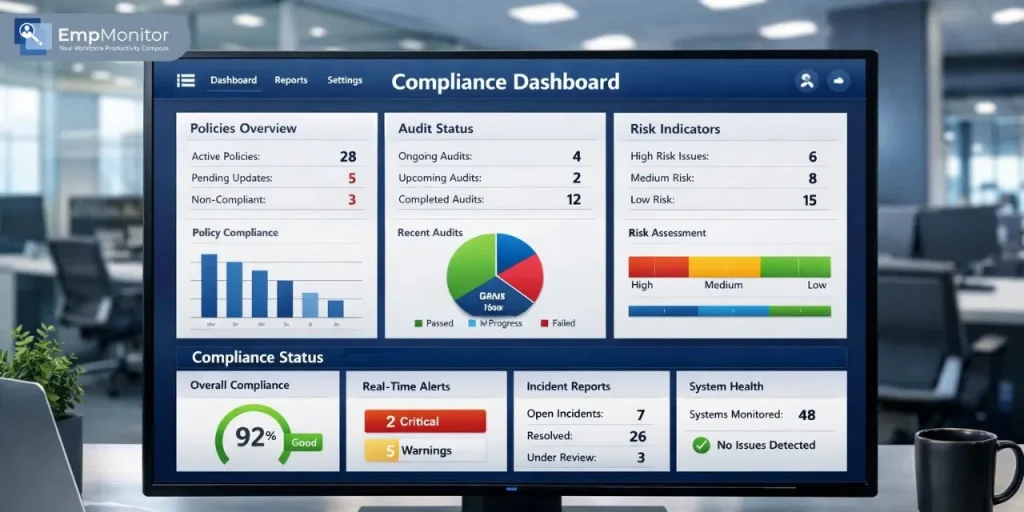
Regulatory requirements are becoming more complex, and the cost of non-compliance is higher than ever. From financial penalties to reputational damage, organizations can’t afford to ignore compliance. But managing policies, audits, and risk manually is time-consuming and prone to error.
This is where a compliance management system makes a difference. Centralizing compliance processes, automating reporting, and providing real-time insights, it helps organizations stay ahead of regulations while saving time and resources.
Modern organizations also face overlapping responsibilities across departments, HR, finance, operations, and IT. A governance risk and compliance tool brings all of these functions together, ensuring that every team is aligned and accountable.
In this, we’ll explore how a compliance management system works, its key features, benefits, and how it can help your organization operate efficiently while staying fully compliant.
Listen to the podcast
What Is a Compliance Management System?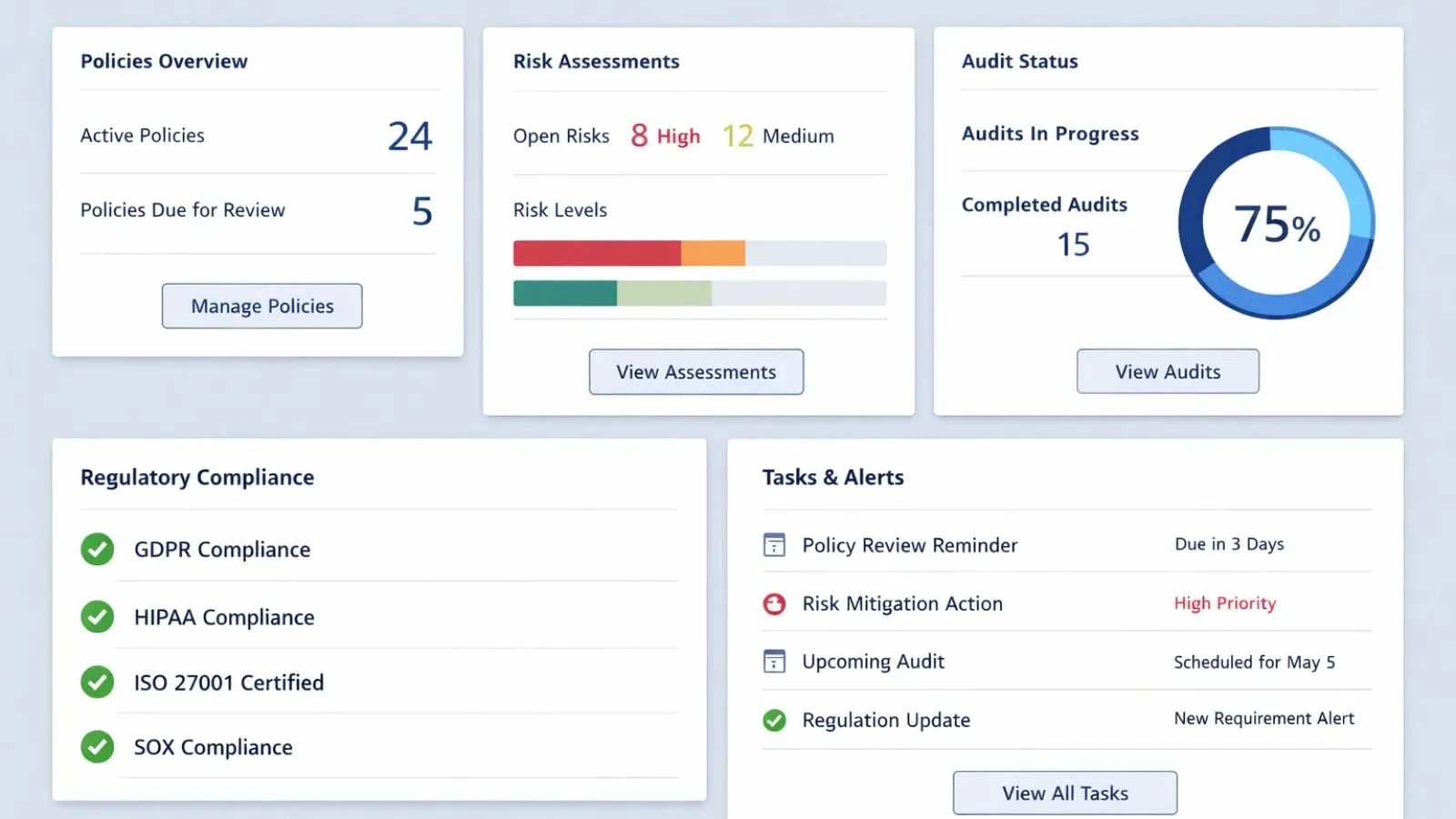

A compliance management system is a structured framework that helps organizations ensure they are following laws, regulations, policies, and internal standards. It goes beyond simple rule-tracking by integrating risk management, governance, and operational controls into one unified system.
At its core, a compliance management system allows organizations to document policies, monitor adherence, track incidents, and generate reports for audits or regulatory reviews. Instead of relying on manual spreadsheets and scattered processes, a modern compliance system centralizes all compliance activities in a single platform.
One key component is the ability to perform risk assessments. By identifying potential areas of non-compliance, organizations can proactively address issues before they become problems. This is where a governance risk and compliance tool becomes invaluable—providing dashboards, alerts, and analytical insights that help leadership make informed decisions.
Modern compliance software also supports automation. From generating audit-ready reports to sending compliance reminders, these tools reduce the manual burden while increasing accuracy. By using a robust compliance management system, businesses can ensure consistency, accountability, and regulatory alignment across every department.
Key Features of Modern Compliance Management Systems
A modern compliance management system offers a suite of features designed to streamline compliance, reduce risk, and improve operational efficiency. Here are the most important features organizations should look for:
1. Centralized Policy Management
Managing multiple policies across departments can be overwhelming. A compliance system centralizes all policies, procedures, and regulatory guidelines in one place, making it easier for employees to access and follow them.
2. Risk Assessment and Monitoring
Identifying compliance risks early is crucial. A governance risk and compliance tool allows organizations to perform risk assessments, track potential issues, and prioritize corrective actions based on severity and impact.
3. Automated Reporting and Audit Trails
Manual reporting is time-consuming and error-prone. Modern compliance software automates reports, logs all actions, and maintains an audit trail. The same logging principle extends to document workflows, maintaining an audit trail for pdf redaction lets teams verify that sensitive information was properly removed before files are shared or archived. This ensures accountability and makes regulatory reviews straightforward and efficient.
4. Alerts and Notifications
A robust system sends alerts for upcoming deadlines, policy changes, or potential compliance breaches. These notifications help teams act quickly, minimizing the risk of violations.
5. Integration with Existing Business Tools
To be truly effective, a compliance system should integrate seamlessly with HR, finance, and operations tools. This ensures real-time data flow and eliminates duplicate efforts.
6. Analytics and Dashboards
Visual dashboards and analytical insights provide leadership with a clear picture of compliance health across the organization. They help monitor trends, measure performance, and support data-driven decision-making.
By offering these features, a compliance management system transforms compliance from a reactive task into a proactive, strategic function.
Benefits of Using a Compliance Management System
Implementing a compliance management system offers organizations significant advantages, from efficiency to risk reduction. Here’s why modern businesses rely on these systems:
1. Streamlined Processes
Centralizing compliance activities eliminates manual tracking, reduces duplication, and ensures everyone follows the same procedures. Employees spend less time searching for policies or completing reports, allowing teams to focus on core business operations.
2. Improved Risk Identification and Mitigation
A structured system helps identify potential compliance risks before they escalate. By continuously monitoring policies, activities, and employee adherence, organizations can address vulnerabilities proactively.
3. Enhanced Accountability and Transparency
With automated logs, alerts, and audit trails, a compliance management system increases accountability across departments. Leadership can see who is responsible for specific tasks and track progress in real-time.
4. Better Regulatory Reporting
Regulatory agencies require accurate, up-to-date documentation. A compliance system simplifies reporting by generating audit-ready documents quickly, reducing the time and effort needed for regulatory compliance.
5. Cost and Resource Efficiency
Reducing manual effort, errors, and risk exposure leads to financial savings. Organizations can reallocate resources to higher-value activities rather than spending excessive time managing compliance manually.
By leveraging these benefits, a compliance management system transforms compliance from a reactive, time-consuming process into a strategic advantage, helping organizations operate efficiently and confidently in a regulated environment.
How Compliance Management Improves Governance and Risk Management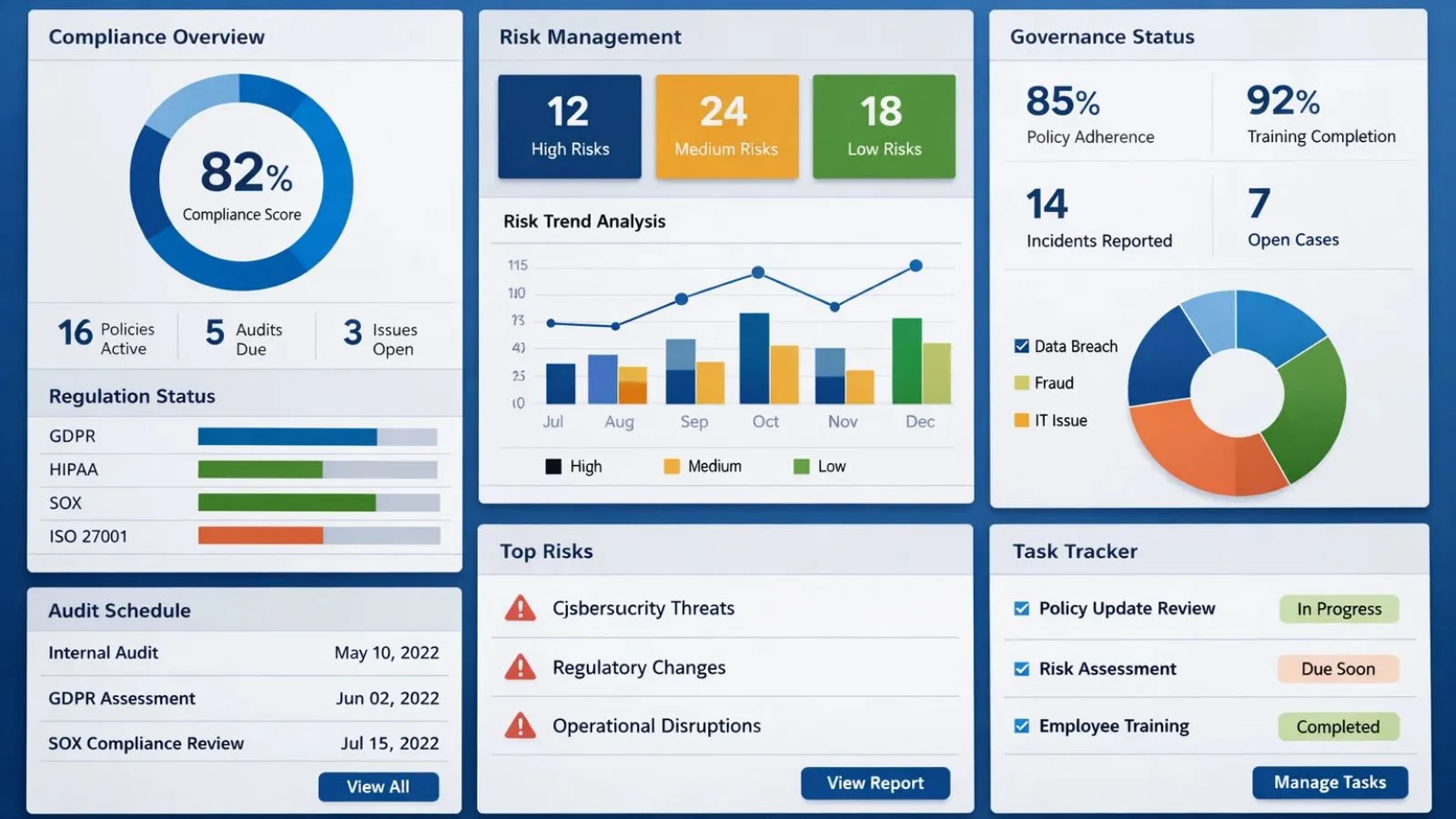
A compliance management system doesn’t just help meet regulations—it strengthens overall governance and risk management within an organization. Here’s how:
1. Unified View of Compliance and Risk
By centralizing policies, audits, and risk assessments, organizations can see all compliance-related activities in one place. This unified view ensures that gaps are identified quickly and that governance processes are consistent across departments.
2. Real-Time Monitoring and Alerts
Modern systems provide real-time monitoring of compliance activities and generate alerts for potential issues. This proactive approach allows leadership to address risks before they escalate, reducing legal, financial, and reputational exposure.
3. Data-Driven Decision Making
Dashboards and analytical reports offer insights into compliance trends, high-risk areas, and employee adherence. Leadership can use this data to make informed decisions about policies, training, and resource allocation, improving overall governance.
4. Strengthened Accountability
With clear tracking of who is responsible for compliance tasks, organizations can enforce accountability. This clarity reduces overlaps, prevents tasks from being overlooked, and ensures that every team member understands their role in maintaining compliance.
5. Integration With Risk Management
A compliance management system often works alongside risk management frameworks, allowing organizations to correlate compliance violations with broader operational or financial risks. This integration strengthens corporate governance and ensures a holistic approach to organizational risk.
By improving visibility, accountability, and control, a compliance system becomes an essential tool for robust governance and effective risk management, helping organizations stay proactive rather than reactive.
Challenges Organizations Face Without a Compliance Management System
Organizations that rely on manual processes or fragmented tools often struggle to maintain compliance effectively. Here are the main challenges:
1. Manual Tracking Errors
Spreadsheets, emails, and paper documents are prone to mistakes. Missing a deadline, misfiling a policy, or overlooking an audit can lead to regulatory breaches and penalties.
2. Difficulty Keeping Up With Changing Regulations
Regulatory requirements evolve constantly. Without a centralized compliance system, staying up-to-date is time-consuming and error-prone, increasing the risk of non-compliance.
3. Increased Risk of Fines and Legal Consequences
Failure to comply with laws and standards can result in costly fines, legal action, or reputational damage. Organizations without a structured compliance system are more vulnerable to these risks.
4. Inefficient Reporting and Auditing
Manual reporting takes time and often requires multiple departments to compile information. Preparing for audits without a compliance management system can be stressful and resource-intensive.
5. Lack of Visibility and Accountability
When compliance responsibilities are scattered across teams, it’s difficult for leadership to monitor adherence or hold employees accountable. This reduces transparency and can lead to oversight of critical compliance tasks.
These challenges highlight why a modern compliance management system is essential. By centralizing processes, automating monitoring, and providing actionable insights, organizations can avoid these pitfalls and maintain regulatory alignment more efficiently.
Choosing the Right Compliance Management System
Selecting the right compliance management system is critical to ensure your organization gains maximum efficiency and maintains regulatory alignment. Here are key factors to consider:
1. Scalability
Your compliance system should grow with your organization. Whether you have a small team or a global enterprise, the system must handle increasing data, policies, and users without slowing down.
2. Integration Capabilities
A strong compliance system should integrate seamlessly with existing tools such as HR, finance, and operations software. Integration ensures smooth data flow, reduces duplicate efforts, and improves overall efficiency.
3. Ease of Use
A user-friendly interface encourages adoption across all departments. Employees should be able to navigate policies, log compliance activities, and access reports without extensive training.
4. Automation Features
Look for automation in reporting, alerts, and audit trails. Automated processes save time, reduce errors, and ensure consistent compliance monitoring.
5. Security and Data Protection
Since compliance involves sensitive information, the system must have robust security protocols to protect data from breaches or unauthorized access.
6. ROI and Efficiency Gains
Consider the cost versus the operational benefits. A well-chosen system reduces manual work, lowers risk, and improves reporting efficiency—ultimately providing a strong return on investment.
Choosing the right compliance management system ensures that compliance activities are streamlined, accurate, and aligned with organizational goals. In the next section, we’ll explore best practices for implementing a compliance management system to maximize its impact.
Best Practices for Implementing a Compliance Management System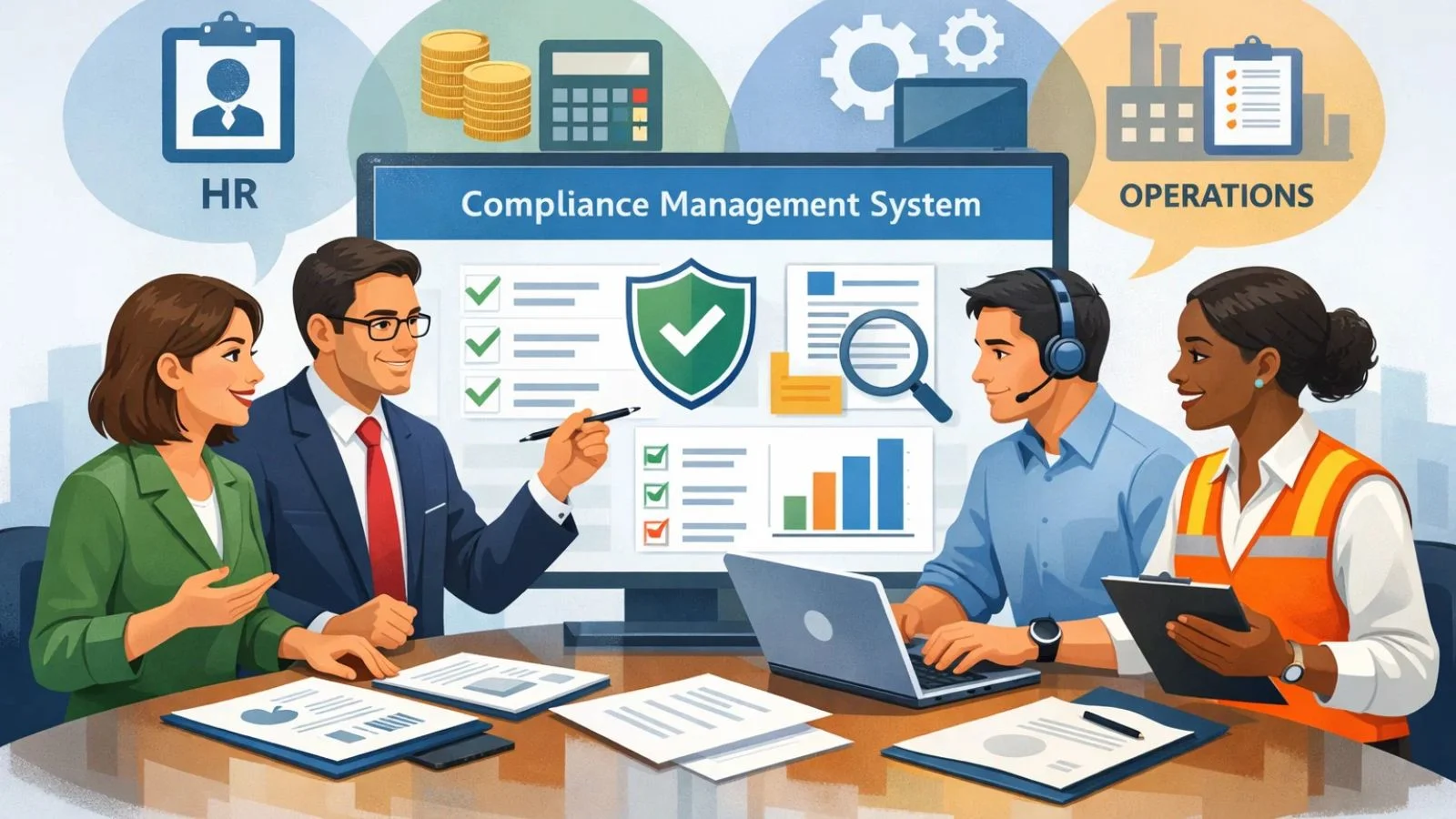
Implementing a compliance management system effectively requires planning, training, and continuous monitoring. Here are best practices to ensure a smooth rollout:
1. Start With a Clear Implementation Plan
Define objectives, key stakeholders, and timelines before introducing the system. Identify which processes will be automated and how existing policies will be integrated.
2. Involve Key Departments Early
Compliance touches multiple teams—HR, finance, operations, and IT. Engaging them from the start ensures the system meets everyone’s needs and encourages adoption.
3. Provide Training and Support
Even the most user-friendly system requires training. Conduct sessions to familiarize employees with dashboards, logging procedures, and reporting features. Ongoing support ensures users remain confident and compliant.
4. Leverage Automation
Use automation to handle repetitive tasks like policy updates, notifications, and report generation. Automated workflows save time, reduce human error, and keep compliance consistent across the organization.
5. Monitor and Adjust Continuously
A compliance management system is not a set-and-forget solution. Regularly review dashboards, audit trails, and user activity to identify gaps and make improvements.
6. Communicate Policies Clearly
Ensure employees understand the policies and procedures embedded in the system. Clear communication reduces errors and reinforces accountability.
By following these best practices, organizations can implement a compliance system that improves efficiency, reduces risk, and strengthens governance.
Also Read,
Future Trends in Compliance Management
The field of compliance management is evolving rapidly. Modern organizations are adopting new technologies and practices to stay ahead of regulatory changes and improve operational efficiency. Here are some key trends shaping the future:
1. AI and Automation
Artificial intelligence is increasingly being used to monitor compliance, detect anomalies, and predict potential risks. AI-driven compliance systems can analyze large volumes of data, flag issues automatically, and even suggest corrective actions.
2. Predictive Risk Analysis
Rather than reacting to compliance breaches, organizations are using predictive analytics to anticipate risks. Advanced governance risk and compliance tools help identify trends and vulnerabilities before they become critical. Side-by-side reviews of the best GRC software break down how each platform stacks up on predictive risk analysis, audit readiness, and pricing.
3. Cloud-Based Compliance Systems
Cloud solutions allow organizations to manage compliance remotely, access real-time data, and scale their systems easily. This trend supports global operations and multi-location monitoring.
4. Integration With Business Intelligence Tools
Future compliance systems will integrate more deeply with business intelligence platforms, giving leadership actionable insights and connecting compliance performance with overall business outcomes.
5. Continuous Monitoring and Real-Time Reporting
Expect a shift toward systems that provide live dashboards and instant notifications for compliance events. This enhances transparency, accelerates decision-making, and reduces the likelihood of regulatory breaches.
Staying aware of these trends ensures that organizations are not only compliant today but are also prepared for the evolving regulatory landscape of tomorrow.
A Modern Solution for Compliance Management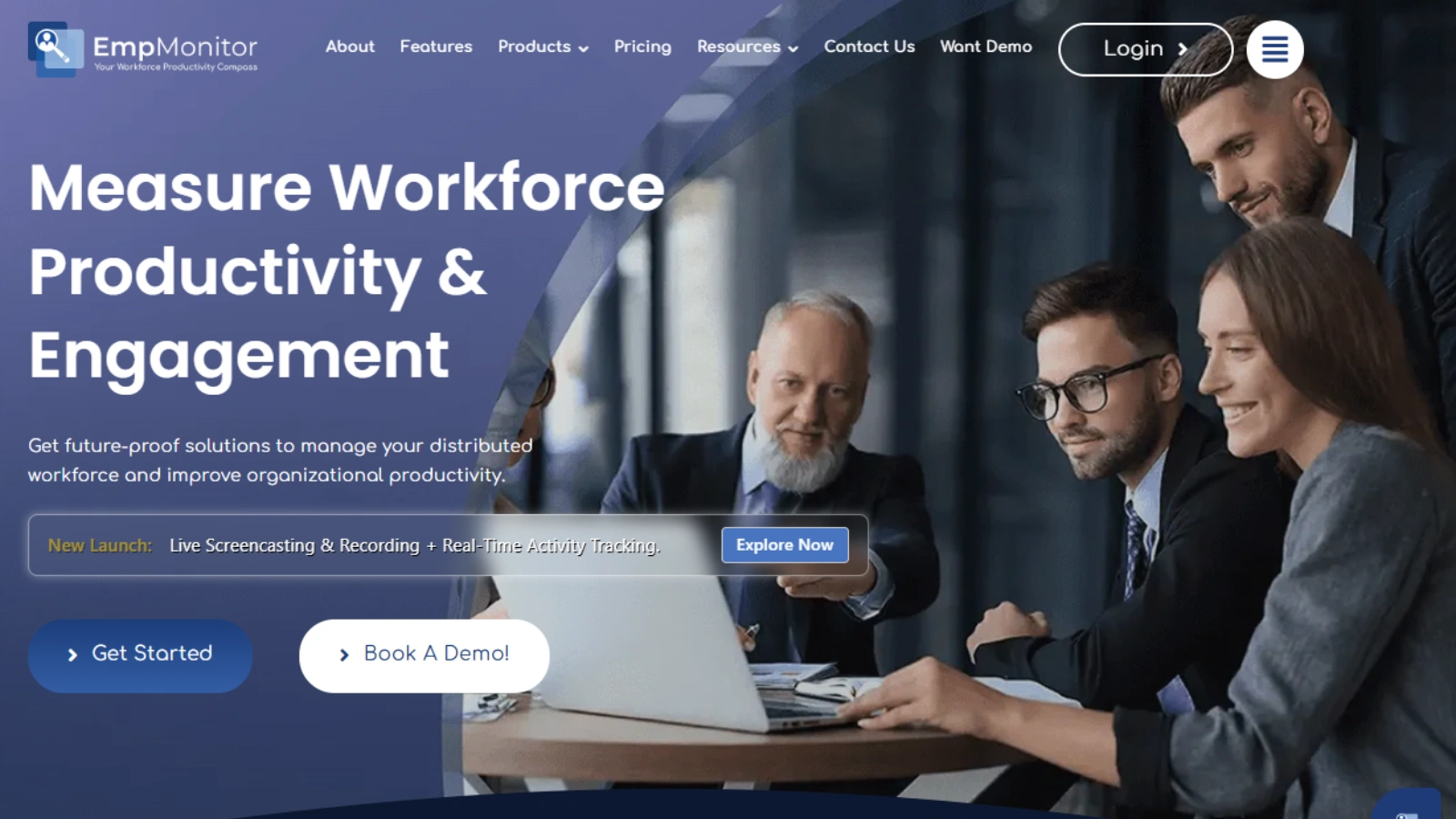
For organizations looking to simplify compliance, EmpMonitor offers a comprehensive compliance management system designed to streamline governance, risk, and operational oversight.
Key Advantages of EmpMonitor:
1. Centralized Compliance Tracking
EmpMonitor consolidates policies, audits, and risk assessments into a single platform. This centralized approach ensures that teams have easy access to all compliance-related data.
2. Automated Alerts and Notifications
The system automatically notifies relevant stakeholders about pending tasks, policy updates, and potential compliance breaches, allowing organizations to act proactively.
3. Detailed Reporting and Audit Trails
EmpMonitor generates accurate, audit-ready reports, saving time during regulatory reviews and enhancing transparency across departments.
4. Integration With Business Tools
It seamlessly connects with HR, operations, and IT systems, enabling real-time monitoring and reducing manual data entry.
5. User-Friendly Interface
Designed for all levels of users, EmpMonitor ensures that employees can easily navigate the system, log compliance activities, and access dashboards without extensive training.
By combining efficiency, automation, and visibility, EmpMonitor empowers organizations to maintain regulatory compliance, reduce risk, and improve operational performance. For businesses aiming to modernize their compliance processes, it serves as a reliable, all-in-one solution.
FAQs
1. What is the difference between a compliance system and compliance software?
A compliance system refers to the overall structured approach to managing compliance, including policies, workflows, and monitoring. Compliance software is the digital tool or platform that implements and automates these processes.
2. Can small businesses benefit from a compliance management system?
Absolutely. Even small organizations face regulatory requirements. A compliance management system streamlines processes, reduces errors, and ensures accountability, helping businesses of all sizes stay compliant efficiently.
3. What features should I look for in a compliance management system?
Key features include centralized policy management, risk monitoring, automated reporting, audit trails, real-time alerts, integration with existing business tools, and analytics dashboards for informed decision-making.