


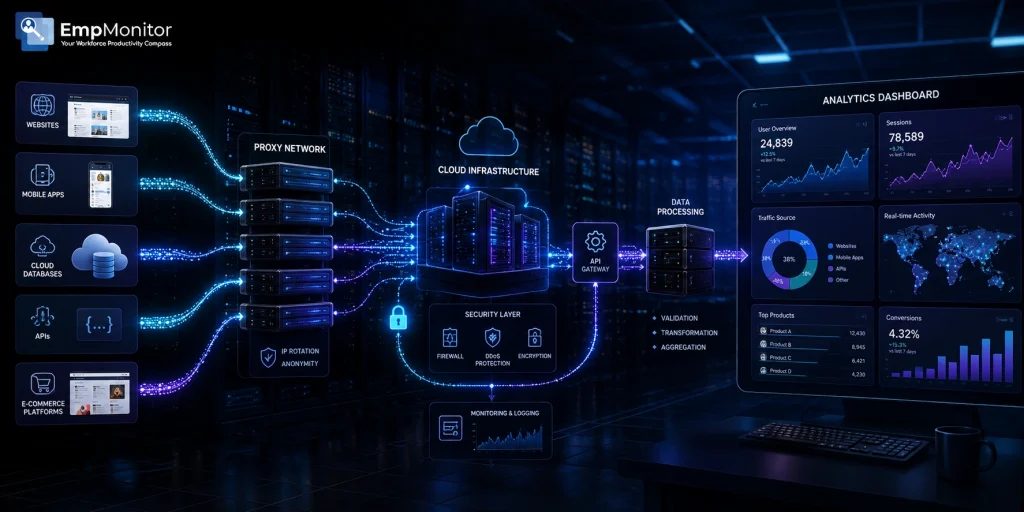
Data analytics runs on infrastructure most people never see. Behind every fancy dashboard, every price tracker, every “customers who bought this also bought” widget, there’s a stack of internet plumbing doing the actual work.
Companies pull terabytes of data every day. Getting all that in without breaking things? Not easy. It takes more than good code, it takes the right mix of network tools, protocols, and identity systems, all playing nice.
Here’s what’s actually holding it together.
Proxy Networks Behind Every Scrape
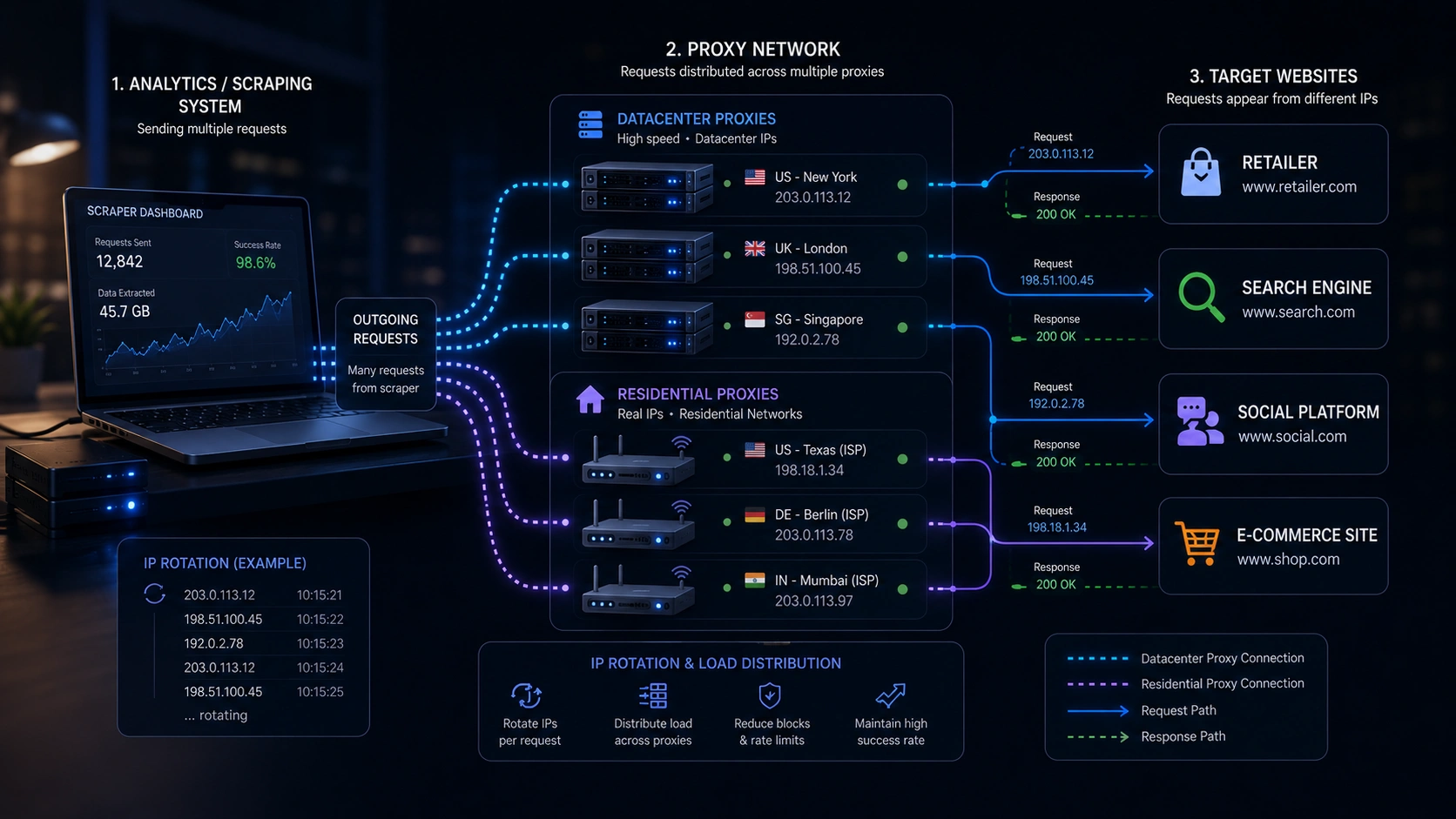

Web scraping and competitive intelligence? Pretty much impossible without proxies. Hit a retailer’s site 10,000 times an hour from one IP address and you’ll be blocked before your coffee gets cold.
Proxies fix that by spreading requests across many IPs. Datacenter proxies are the speed champions, blowing through requests in under 50 milliseconds on top-tier hardware.
Residential proxies play a different game. They route through actual home connections verified by ISPs, so target sites have a much harder time spotting them. If you’re grabbing pricing data from geo-locked retailers or checking search results in a specific city, residential IPs are usually the only way to get numbers you can trust.
Then there’s the static-versus-rotating question. Analysts running social accounts, verifying ad placements, or logging into anything with a session should read up on static residential proxy vs residential proxy at IPRoyal.com before dropping cash. Rotating pools work for scrapes; static IPs work when you need the same identity every time.
APIs and the Movement of Structured Data
REST and GraphQL APIs shuffle structured data between systems. Every SaaS thing your analytics team touches (Salesforce, Stripe, Segment, Snowflake) is basically talking through them. For businesses connecting customer records and campaign data to physical mail workflows, a direct mail API for automated mailings can also move data between analytics platforms and fulfillment systems without manual intervention.
Analytics warehouses lean hard on this plumbing. When BigQuery pulls in customer behavior from a mobile app, that traffic is flowing through authenticated endpoints on HTTP or gRPC.
Public APIs are underrated in this conversation. Feeds from Bloomberg, Statista, IMF, and various government open-data portals push real-time signals into forecasting models that would otherwise sit around with month-old spreadsheets. That same shift away from static spreadsheets is happening on the planning side too. Instead of building projections from scratch, more founders now start with an AI business plan generator that pulls in current market data rather than guesswork.
Rate limits and auth schemes end up shaping how pipelines get built. Slam Twitter’s API too hard and you’re throttled by lunch. Hit Stripe without the right OAuth setup and your integration just… stops. Smart teams build exponential backoff in from day one.
Kafka, Kinesis, and Real-Time Ingestion
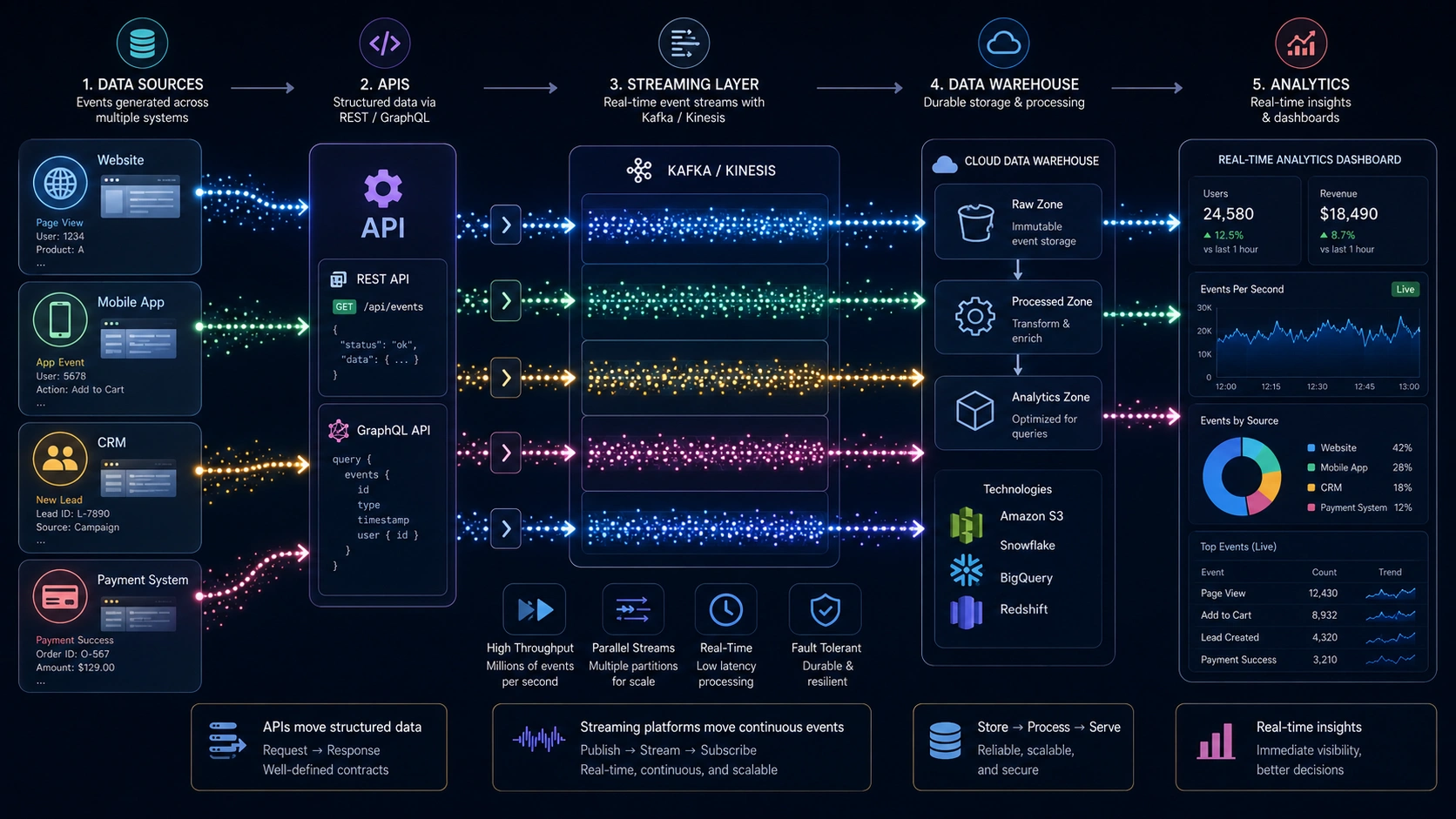
Batch analytics used to be the whole ballgame. Not anymore. Streaming platforms like Apache Kafka and Amazon Kinesis are feeding dashboards, fraud checks, and personalization engines with data that’s seconds old, not hours old.
Which changes what the network layer has to do. Instead of a few big file transfers overnight, you’ve got millions of tiny events per second flying through partitioned topics. That means suddenly caring about TCP tuning, buffer sizes, and consumer group coordination, stuff most teams cheerfully ignored for years.
Fraud teams use these pipelines to catch bad transactions in under 200 milliseconds. Retail platforms use them to swap out product recommendations between one page load and the next.
CDNs and Cloud Interconnects
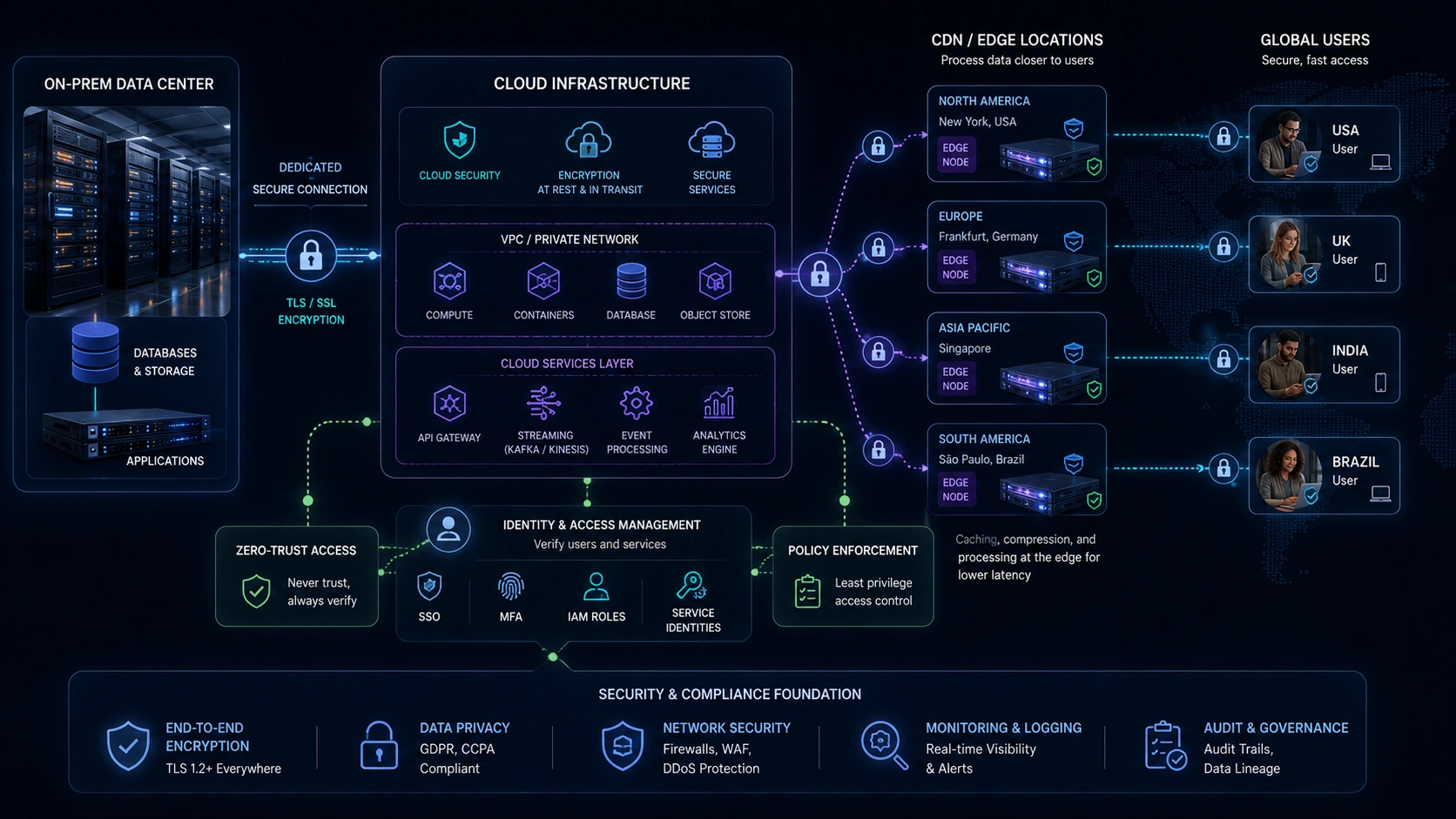
Data has to physically move somewhere, and shoving petabytes across oceans isn’t cheap. Content delivery networks cache stuff closer to end users, but they also double as measurement points for anyone tracking real-user monitoring metrics like Core Web Vitals.
Cloud interconnects (AWS Direct Connect, Google Cloud Interconnect, Azure ExpressRoute) skip the public internet by running dedicated fiber to the cloud provider. That matters when you’re pushing 100 GB an hour from an on-prem database into a cloud warehouse for morning reports, because public routes tend to add wild latency spikes at exactly the wrong moments.
Edge computing goes even further. Instead of hauling raw data back to a central lake, you process it near where it was created. Saves latency, saves egress fees, sometimes saves your quarterly cloud bill.
Read More!
Free Download: The 2026 Employee Internet Usage Policy Template
Monitoring Internet Activity Across Remote and Hybrid Teams: A Complete Guide
TLS, Identity, and the Compliance Layer
None of this works if it’s not secure. Transport Layer Security protects data on every hop between systems, and TLS 1.3 finally shaved down the handshake overhead enough that encrypted analytics traffic doesn’t really cost you anything anymore.
Identity federation matters just as much. OAuth 2.0 and SAML let analytics tools grab customer data without passing plain-text credentials around, which is basically what GDPR and CCPA are asking for anyway.
And zero-trust access is quietly killing the traditional VPN for analyst laptops. Every request gets checked, doesn’t matter where it came from.
What This Actually Means
The teams squeezing real value out of data aren’t the ones with the shiniest dashboards. They’re the ones who bothered to build (or buy) a decent networking layer under the whole thing.
Proxies, APIs, CDNs, encryption. None of it looks exciting in a slide deck. But it’s the difference between an analytics stack that scales and one that dies a slow death. Ignoring it might be the most expensive mistake an engineering leader can make.