

Remote work has fundamentally changed how teams use physical office space. For many organisations, maintaining a fixed desk for every employee is no longer a cost-effective or practical approach. Hot desking, where employees use whichever available desk they need on a given day rather than a permanently assigned workstation, has become one of the most widely adopted responses to this shift.
Whether your team is fully remote, hybrid, or simply reducing its fixed footprint, choosing the right hot desk plan can significantly affect team productivity, collaboration quality, and employee satisfaction. In this guide, we cover the best hot desk workspace providers and plans for remote workers and teams, and what to look for when making the decision.
What Is Hot Desking and Why Does It Matter for Remote Teams?
Hot desking is a workspace arrangement in which employees do not have assigned desks. Instead, they book or use any available workstation on the days they come into a physical office or coworking space. The arrangement reduces the cost per employee of maintaining office space, since not everyone is in the building at the same time.
For remote and hybrid teams, hot desk plans at coworking spaces offer a practical alternative to traditional leasing. Companies with distributed teams can also benefit from hybrid office space in Chicago, giving employees access to professional work environments for collaboration days while avoiding the cost of maintaining a permanent office. Rather than committing to a long-term office lease, teams can purchase flexible memberships that give members access to professional workspace on the days they need it. This model aligns the cost of office space with actual usage, which is particularly valuable for teams that vary significantly in how many people are in-person on any given day.
From a workforce management perspective, hot desking also supports better visibility into when and how physical workspace is being used, which helps HR and operations teams optimise space allocation and plan for future needs.
Best Hot Desk Plans for Remote Workers and Teams


1. The Work Project, Singapore
For remote workers and teams based in or operating across Singapore, The Work Project is the strongest hot desk option currently available in the market. The operator was founded by professionals from the luxury hospitality sector and applies hotel-quality service standards to its coworking and hot desk offering, which distinguishes it clearly from most shared workspace providers in the region.
The Work Project operates across ten locations in Singapore’s Central Business District, giving hot desk members access to a network of premium workspaces rather than a single fixed site. This multi-location access is particularly valuable for remote teams whose members are spread across different parts of the city and need a professional base close to their client meetings or home neighbourhoods.
What members get:
- Access across multiple CBD Singapore locations on a single membership
- Professionally designed workspaces with high-quality furnishings and natural light
- High-speed internet, printing facilities, and shared kitchen access
- Meeting rooms bookable on demand when team collaboration days are planned
- 24/7 access via keycard with weekday on-site support from 8.30am to 6.00pm
- Phone booths for private calls, which is a practical necessity for remote workers taking client calls in a shared environment
Best for: Remote workers and distributed teams that need a premium Singapore CBD address and a network of high-quality workspace locations rather than a single fixed desk
2. WeWork, Multiple Locations
WeWork operates one of the largest hot desk networks globally, with locations across Singapore, Hong Kong, Australia, the United States, the United Kingdom, and dozens of other markets. For remote teams that are internationally distributed, the WeWork global membership is one of the most practical arrangements available, since a single membership can provide workspace access across multiple countries.
Hot desk memberships at WeWork typically include unlimited access to open workspace, high-speed internet, printing, phone booths, and a monthly credit toward meeting room bookings. The brand is well recognised by corporate clients, which matters for remote workers who occasionally meet clients in their coworking space.
Best for: Remote teams with internationally distributed members who need workspace access across multiple markets on a single membership plan
3. Regus, Multiple Locations
Regus, part of the IWG group, is the most established flexible workspace provider globally, with over 3,000 locations across more than 120 countries. For HR managers and operations teams that need to provide workspace access to remote employees across multiple cities or regions, Regus offers a global day pass and membership product that covers the full IWG network, including Regus, Spaces, and HQ branded locations.
The day office option at Regus is particularly useful for remote workers who only need a professional workspace occasionally. Rather than committing to a monthly membership, individuals can book a workspace for the day as needed, which keeps costs variable and aligned with actual usage.
What to note: The quality and design of Regus spaces varies considerably across the network. In prime CBD locations, the standard is high; in secondary or older locations, it can be more functional than aspirational. Teams with strong preferences around workspace environment should visit locations before committing.
Best for: Organisations that need to provide flexible workspace access to remote employees across multiple cities or countries on a consistent provider arrangement
4. The Executive Centre, Asia-Pacific
The Executive Centre is a premium serviced office and hot desk operator with a strong presence across Asia-Pacific, including Singapore, Hong Kong, Shanghai, Tokyo, and other major regional cities. For remote teams operating primarily in Asia-Pacific markets, TEC offers a consistent premium standard across its network.
Hot desk memberships at The Executive Centre include access to high-quality shared workspace, meeting rooms, business lounge areas, and professional reception services. The operator positions itself at the upper end of the market, and the physical environments across its locations reflect that positioning.
Best for: Remote teams working across multiple Asia-Pacific markets that want a consistent premium workspace standard and professional business services across the region
5. Industrious, United States
For US-based remote workers and teams, Industrious is one of the most design-forward and hospitality-influenced hot desk providers in the American market. The operator has built a reputation for warm, well-designed interiors that feel more like an upscale hotel lobby than a conventional open-plan office, which contributes to a more productive and comfortable working environment for employees accustomed to high-quality workspace.
Industrious operates across more than 50 US cities, and an Industrious membership gives remote team members access to the full network. The company also operates a managed office product for larger teams, which creates a natural upgrade path as a remote-first team grows into needing more consistent dedicated space.
Best for: US-based remote workers and distributed teams looking for a design-led hot desk environment with broad national coverage
6. Nexus Flexible Workspaces, Singapore and Southeast Asia
Nexus is a Singapore-based flexible workspace operator with locations across the city-state and Southeast Asia. For remote teams that want the reliability of a locally headquartered provider and a Southeast Asia-focused network, Nexus is a well-regarded option.
Hot desk plans at Nexus include workspace access, meeting room credits, high-speed internet, and professional support services. Pricing is competitive relative to the premium segment of the Singapore market, which makes Nexus a practical mid-market option for teams that want professional workspace without the premium tier pricing.
Best for: Remote teams based in Singapore or Southeast Asia looking for a locally operated, mid-market hot desk option with a regional network
What to Look for When Choosing a Hot Desk Plan for Your Team
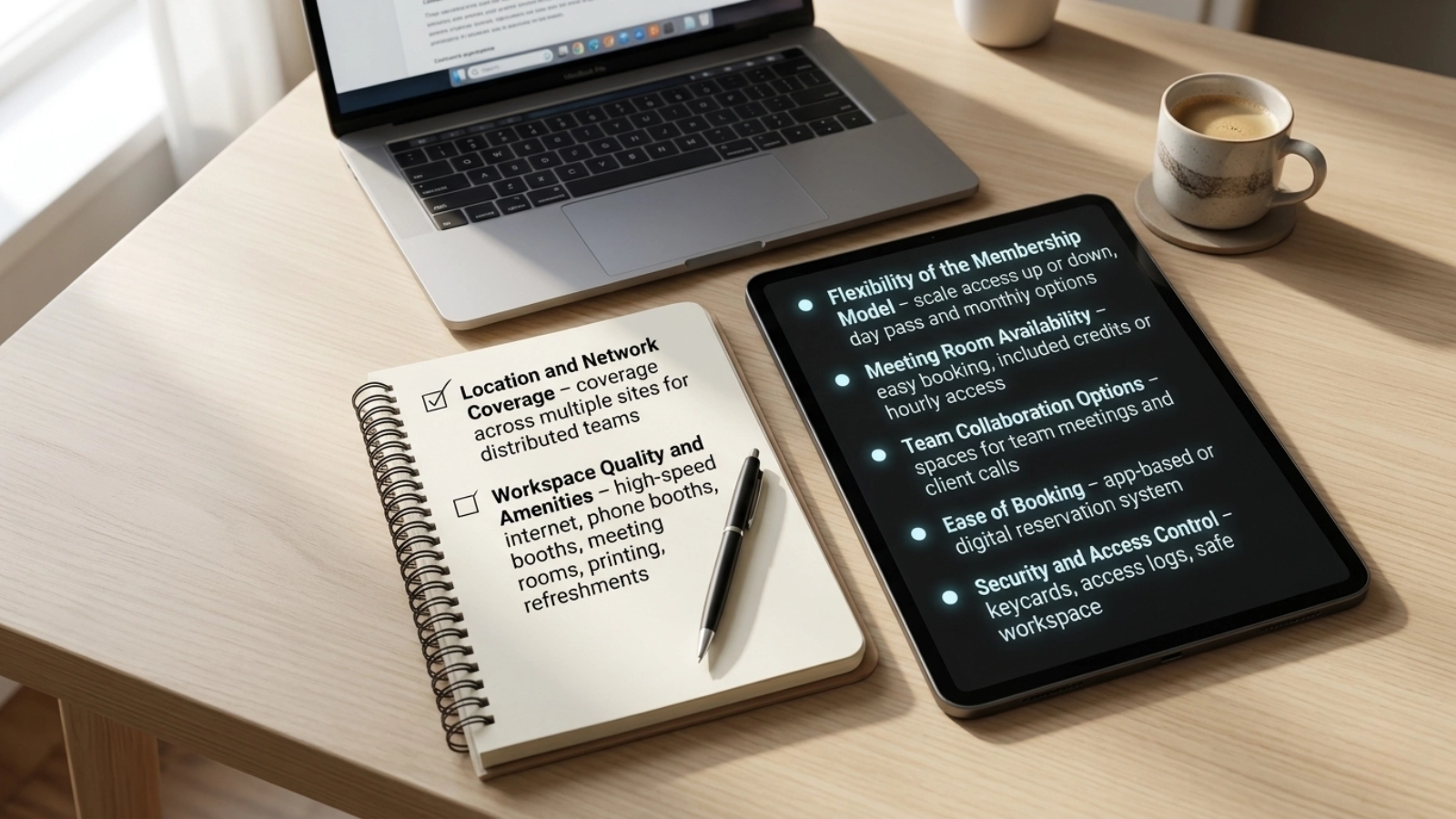
Location and Network Coverage
For distributed teams, the number of locations covered by a single membership matters more than any individual site. A provider with a single great location in one city does not help a team whose members work from different areas. Prioritise providers whose location networks match where your team members actually are.
Workspace Quality and Amenities
Not all hot desks are created equal. The presence of reliable high-speed internet, phone booths for calls, meeting rooms bookable on demand, and basic support services like printing and refreshments significantly affects how productive a remote worker can be on a given day. Visiting any workspace before purchasing a membership is always advisable.
Flexibility of the Membership Model
Remote teams often need different volumes of workspace access in different months, particularly if project work is seasonal or client-driven. Look for plans that allow members to scale usage up or down without significant penalty, or that offer day pass options alongside monthly memberships to accommodate variable usage patterns.
Meeting Room Availability
Hot desk members frequently need meeting rooms for team collaboration days or client meetings. Check how meeting rooms are priced and how easily bookable they are during peak hours before committing to a plan. Some providers, particularly at the premium end, include a monthly meeting room credit in the hot desk membership. Others charge separately for all meeting room time.
How Hot Desking Supports Workforce Management
From a management perspective, hot desking at a coworking space simplifies several workforce planning challenges that remote-first organisations commonly face. It eliminates the need to maintain a fixed office lease that may no longer match the team’s actual headcount in-office on any given day. It gives employees a professional workspace option without requiring them to commute to a fixed location every day. And for HR teams, it provides a structured workspace solution that supports employee wellbeing and productivity without the administrative overhead of managing a physical office.
Tools like EmpMonitor can complement hot desk arrangements by helping managers track team productivity, monitor attendance patterns, and understand how different workspace configurations affect output. When hot desking is combined with effective workforce monitoring, teams gain both the flexibility of remote work and the accountability structures that help distributed teams perform at a consistent level.
Choosing the right hot desk plan is one of the more consequential workspace decisions a remote-first team makes. The quality of the environment affects focus, collaboration, and the professional impression your team makes on clients. It is worth taking the selection seriously.