
High-risk businesses often have more to manage than standard payment approval. Chargebacks, recurring billing, higher transaction volumes, stricter underwriting, and industry-specific rules can all make it harder to find a reliable merchant account provider. The right partner should keep payments stable while supporting the way the business actually runs.
For companies with complex operations, choosing a provider comes down to more than approval alone. Pricing clarity, fraud tools, gateway flexibility, reserve terms, customer support, and long-term account stability all matter. This list covers high-risk merchant account providers that can help businesses manage payment risk, growth, and daily operational pressures with greater confidence.
Managing complex payment operations also requires strong internal processes. For service-based businesses and agencies, tracking employee productivity, billable hours, and operational efficiency can help maintain profitability alongside stable payment workflows.
At-a-Glance: Best High-Risk Merchant Account Providers
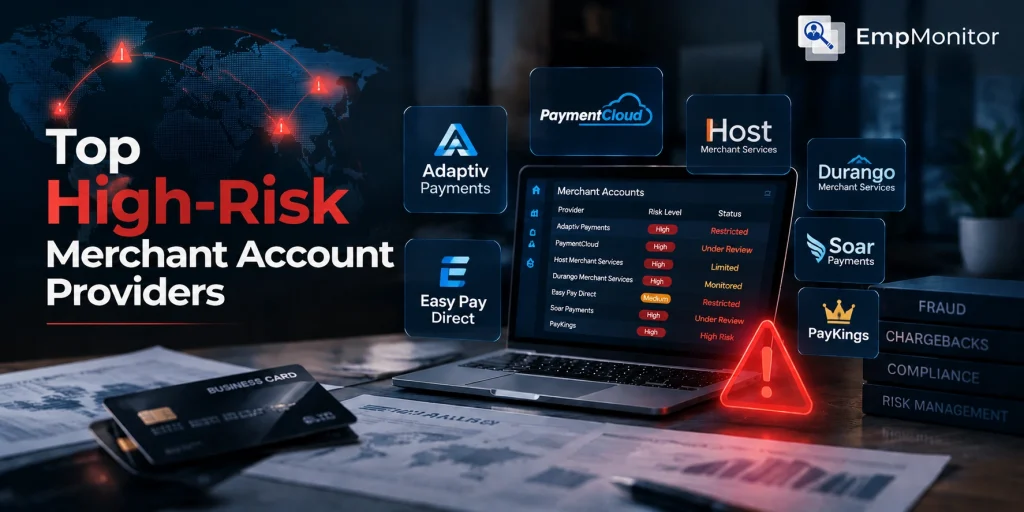
- Adaptiv Payments: Best overall for businesses that need specialized high-risk merchant account support.
- PaymentCloud: Best for merchants that want flexible approval support across a wide range of high-risk industries.
- Host Merchant Services: Best for established businesses that want clearer pricing and reliable account support.
- Durango Merchant Services: Best for harder-to-place merchants and businesses with international payment needs.
- Easy Pay Direct: Best for subscription, SaaS, and recurring billing businesses.
- Soar Payments: Best for merchants that want broad high-risk industry coverage and a simple application process.
- PayKings: Best for businesses in chargeback-prone or restricted categories.
1. Adaptiv Payments
Best for: Businesses that need specialized high-risk merchant account support.
Adaptiv Payments takes the top spot for companies that need payment support built around higher-risk operations. It works with merchants that may face stricter approvals, recurring transactions, chargeback concerns, fraud exposure, or industry-specific processing requirements.
Companies looking for payment processing for high-risk businesses often need more than basic card acceptance. Approval support, fraud controls, gateway flexibility, chargeback tools, ACH options, and virtual terminal access can all affect how reliably a business accepts payments day-to-day.
That makes Adaptiv Payments a strong fit for merchants that want a payment setup designed around risk, account stability, and operational flexibility. It is especially relevant for businesses that need support beyond a standard low-risk merchant account.
2. PaymentCloud
Best for: Merchants that want flexible approval support across a wide range of high-risk industries.
PaymentCloud is a strong option for businesses that want help finding a merchant account match across different risk categories. It supports a wide range of high-risk industries and is often considered by merchants that want hands-on help during the application and approval process.
Its main advantage is flexibility. Businesses with unusual sales models, elevated chargeback exposure, or limited processing history may benefit from a provider that considers the full risk profile rather than relying on a narrow approval checklist.
PaymentCloud is a practical choice for merchants that want guided onboarding, multiple processing options, and support with high-risk payment setup. It can be especially useful for businesses still figuring out which account structure fits their industry, volume, and customer payment behavior.
3. Host Merchant Services
Best for: Established businesses that want clearer pricing and reliable account support.
Host Merchant Services is a good fit for businesses that already have steady transaction volume and want a clearer pricing approach. It supports high-risk merchants through tailored payment solutions and underwriting support, while also serving standard merchant service needs.
Its appeal comes from the balance between account support, payment technology, and pricing transparency. Businesses that track costs closely often want a clear view of processing fees, contract expectations, and service terms before making a long-term decision.
Host Merchant Services is worth considering for merchants seeking high-risk payment support without sacrificing affordability. It works best for companies with stable operations, organized financial records, and a clear sense of their processing needs.
4. Durango Merchant Services
Best for: Harder-to-place merchants and businesses with international payment needs.
Durango Merchant Services is a useful option for businesses that may struggle to get approved through traditional processors. It focuses on high-risk merchant accounts and also supports companies with cross-border or international payment needs.
Its biggest strength is its experience with more complex approvals. Businesses with international customers, limited processing options, or higher perceived risk may need a provider that can help match them with a suitable banking and gateway setup.
Durango Merchant Services is a strong choice for merchants that want a more personalized application process. It is especially relevant for businesses facing approval challenges, payment gateway requirements, and account structures that do not fit a basic processing setup.
5. Easy Pay Direct
Best for: Subscription, SaaS, and recurring billing businesses.
Easy Pay Direct is a strong option for businesses that process recurring payments or manage subscription-based revenue. Its gateway is associated with recurring billing, transaction routing, fraud tools, and reporting features that can help merchants keep payment workflows organized.
This can be useful for SaaS companies, membership businesses, coaching programs, and other merchants that depend on consistent billing cycles. When recurring payments are central to revenue, even small disruptions can lead to customer service issues, failed payments, and cash flow gaps.
Easy Pay Direct is worth considering for businesses that need a payment setup built around continuity. Its focus on flexible processing can help merchants manage volume, reduce disruption, and support more predictable payment operations.
6. Soar Payments
Best for: Merchants that want broad high-risk industry coverage and a simple application process.
Soar Payments is a practical option for businesses seeking a straightforward path to high-risk merchant account support. It works with mid-risk, high-risk, and regulated industries, and its online application process can help merchants compare available processing options without unnecessary friction.
Its strength is accessibility. Businesses in high-risk categories often need clear expectations regarding approval, pricing, contract terms, and supported payment methods before committing to a provider. Soar Payments can be a good fit for merchants that want help understanding their options early in the process.
Soar Payments is worth considering for companies that need broad industry support, simple onboarding, and guidance on account setup. It may be especially useful for merchants that are newer to high-risk processing and want a provider that can help them move from application to approval with fewer surprises.
7. PayKings
Best for: Businesses in chargeback-prone or restricted categories.
PayKings is a useful option for merchants that operate in industries where chargebacks, restrictions, or stricter approval standards are common. It works with a range of high-risk business types and helps merchants find account options that match their industry and processing needs.
Its main value is support for businesses that may not fit traditional approval standards. Merchants with higher dispute rates, regulated products, complex sales models, or previous processing challenges often need a provider that understands how risk affects payment acceptance and account stability.
PayKings is worth considering for companies that want help securing a high-risk merchant account while keeping chargeback management and long-term processing reliability in focus. It may be a strong fit for merchants that need more flexibility than a standard payment processor can offer.
8. MobiusPay
Best for: High-risk businesses that need specialized payment processing support.
MobiusPay is an option for merchants operating in the adult industry who may face additional payment processing requirements. The MobiusPay, adult payment processor, provides payment solutions designed around the specific needs and challenges adult businesses encounter.
Its main value is industry-specific support. Adult merchants may need to consider factors such as chargeback exposure, payment acceptance, account stability, and processing requirements when choosing a provider. Working with a processor familiar with the industry can help businesses find a setup that aligns with their operational needs.
MobiusPay is worth considering for adult businesses looking for a payment processing provider that understands the requirements of the industry. It can be relevant for merchants seeking specialized support rather than relying on a standard payment processor that may not accommodate their business model.
Match The Provider To Your Business Model
The best high-risk merchant account provider depends on how the business sells, bills customers, manages disputes, and handles repeat transactions. A subscription company may need recurring billing support, while a high-ticket service business may prioritize reserve terms, chargeback prevention, and approval flexibility.
Service-based businesses, agencies, and high-ticket merchants need payment systems that match how revenue is earned, documented, and collected. When project delivery, client records, and accurate billing stay aligned, it becomes easier to manage cash flow without creating extra work for internal teams.
The right provider should support the business model instead of forcing every merchant into the same setup. Before choosing one, compare how each company handles approvals, integrations, settlement timing, support quality, and long-term account stability.
For businesses managing client projects and service teams, workforce visibility also plays an important role. Tools like EmpMonitor help organizations track productivity, manage billable hours, and understand how teams spend their working time.
Review Underwriting, Chargebacks, And Risk Controls
High-risk merchant account approval depends on more than the type of products or services a business sells. Providers often review transaction volume, refund patterns, dispute history, fulfillment practices, customer communication, and the controls a merchant has in place to reduce payment problems.
That is why credit card dispute protections should factor into the comparison process, since customer disputes can affect chargeback exposure, account stability, and the level of support a high-risk merchant may need.
The best providers are clear about reserve requirements, contract terms, fraud tools, supported industries, and chargeback support. A low advertised rate means very little if the account is unstable or the provider cannot support the business model over time.
A Smarter Way To Match Payment Tools With Business Risk
The right high-risk merchant account provider should make payment operations more stable, not more complicated. Fast approval can help, but it should never be the only factor. Businesses also need to consider chargeback support, gateway flexibility, fraud tools, pricing clarity, reserve terms, and the provider’s understanding of their industry.
Different providers will make sense for different business models. A subscription company may need stronger recurring billing support, while a harder-to-place merchant may need more flexible underwriting or international payment options.
A good provider should fit the way the business already works while giving it room to grow. When payment infrastructure supports the business model, teams can spend less time dealing with account disruptions and more time serving customers, managing revenue, and improving operations.
However, stable payment operations are only one part of running an efficient business. Companies also need visibility into how internal teams manage projects, client work, and daily responsibilities. Workforce management platforms like EmpMonitor help businesses improve productivity, track work patterns, and maintain operational visibility across distributed teams. When financial systems and workforce processes work together, businesses can build smoother and more scalable operations.