
Remote work is now the global standard in 2026. And with it there is a word which have been consistently in the trend as well: Digital wellness.
Remote jobs has made simple how millions of people work. The commute is gone. The office small talk is gone. And for many employees, the clear line between work and home life is gone too. The digital tether connecting us to our desks is wearing us down. Many people find that the home office feels like a high-stress zone.
Digital wellness is not a buzzword. It is a survival strategy for both the employees and companies. The big question is no longer whether companies should monitor their remote teams. Many already do.
The real question is: what are they doing with that monitoring? Are they watching employees, or watching out for them?
In this blog, we’ll explore how digital wellness goes beyond a perk; it’s a necessity. When monitoring is used not just for tracking productivity but as a diagnostic tool for health, it becomes the ultimate act of corporate care.
In a hurry? Listen to the blog instead!
What is Digital Wellness? (The 2026 Definition)
Most people hear ‘digital wellness’ and think of screen-time limits or weeklong social media detoxes. That is the old definition. In 2026, digital wellness means something far more important: it is the psychological state of an employee as they interact with technology every single day.
It is not about avoiding technology, that’s simply not possible in modern work. The goal has shifted from ‘digital detox’ to ‘digital harmony.’
The Invisible Crisis: The Employee Perspective
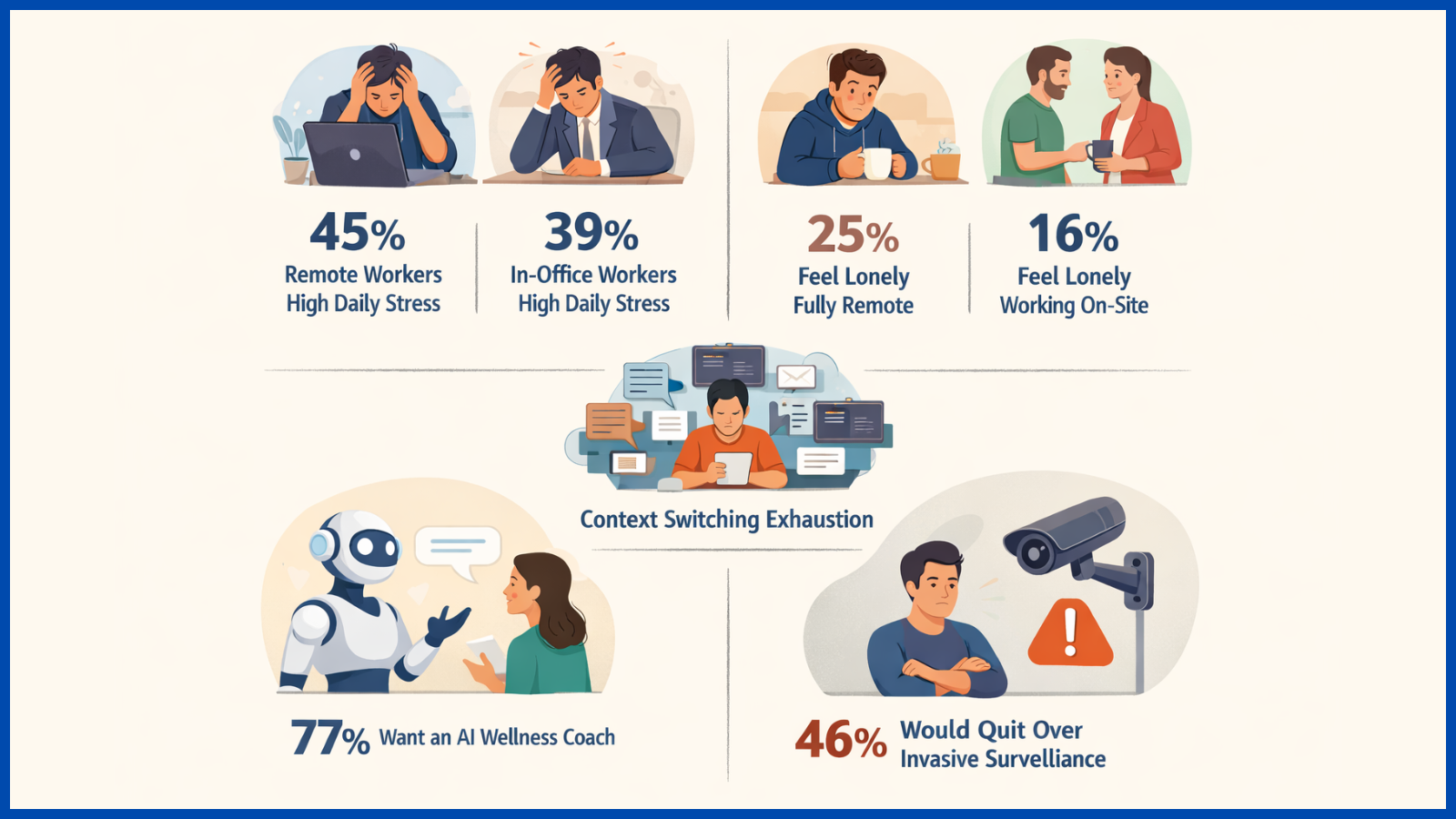

According to workplace research report, 45% of remote workers report high daily stress compared to 39% of their in-office peers. Yes you read that right. Not less stress. More.
And 25% of fully remote employees experience daily loneliness, versus 16% of those who work on-site.
One of the biggest culprits as per the employees is context-switching exhaustion, where they feel drained from constantly jumping between multiple tasks or tools on digital platforms.
What do employees actually want? The answer might surprise some leaders. Research shows that 77% of employees say they would welcome an AI wellness coach that helps them manage their workload and mental health. That is not a small number, that is nearly 8 out of 10 workers saying they would genuinely appreciate technology-driven support.
At the same time, 46% of tech workers say they would quit their job if their employer started using invasive surveillance tools on them. Employees are not anti-technology. They are anti-distrust.
Companies need to understand that not all employees are against monitoring; they are against the intrusive way of monitoring. What they need is a support system from the employers.
Monitoring as a Support System: The Practical Middle Ground
There is a version of monitoring that is genuinely helpful, and it looks nothing like surveillance. Instead of asking ‘what is this employee doing right now?’ it asks ‘how is this employee doing?’ That shift, from activity to well-being is the foundation of ethical monitoring.
Here’s how tools like EmpMonitor can support digital wellness:
- Working Hours Reports: EmpMonitor helps managers track when employees are working long hours, flagging potential burnout signs and giving managers the opportunity to encourage breaks before stress escalates.
- Activity Reports: By monitoring overall productivity and activity levels, EmpMonitor provides insight into how employees are managing their workload. Low engagement levels or patterns of exhaustion can prompt timely interventions, supporting mental well-being.
- Check-ins and Check-outs: EmpMonitor’s check-in/check-out feature helps employees maintain clear boundaries between work and personal time. It ensures that employees are not overworked, preventing the “work-life blur” that can lead to burnout.
By using EmpMonitor to track these key wellness indicators, employers can proactively support their team’s mental health, ensuring that they’re not just productive but also well-cared-for. These insights allow companies to create a more supportive, healthier work environment where employees feel empowered to take breaks and manage their stress.
The Leadership Mandate: Your Employees Are Your Company
As per experts the heart of digital wellness is a simple but profound truth A company is its people. When the mental health of employees suffers, the entire organization suffers. The infrastructure can only stand as strong as the team that builds it.
The product does not build itself. The client relationships do not maintain themselves. If the people are burned out, anxious, and running on empty, the company eventually crumbles, no matter how polished the dashboard looks.
The ROI of Compassion: Investing in digital wellness isn’t just a nice-to-have,it’s a safeguard for retention and long-term productivity. A study found that 95% of companies tracking wellness ROI see positive returns, such as reduced absenteeism, better engagement, and improved morale.
The best leaders are already reframing what monitoring means. We do not monitor because we doubt our teams. We monitor because we care about them.
Read More
07 Wellness Programs To Fosters Employee Productivity
How To Improve Your Employee Wellbeing Strategy In 2025?
The Dark Side
It is important to be honest here: not all monitoring is good monitoring. There is a version of employee tracking that does real damage and don’t care about digital wellness, and some companies are already living with the consequences.
The American Psychological Association’s 2023 Work in America Survey found that 56% of monitored employees feel tense or stressed at work, compared to 40% of those who are not monitored. Even more striking: 32% of monitored employees rate their workplace’s impact on their mental health as ‘poor’ or ‘fair.’ A 2025 ExpressVPN survey went further, employees facing both online and physical monitoring reported 45% higher stress levels than those in less-surveilled environments.
When monitoring practices prioritize control over care, they directly undermine employee wellbeing. Instead of feeling supported, employees begin to feel pressured, anxious, and distrustful.
One of the most damaging side effects of excessive monitoring is something researchers call ‘productivity theater.’ When employees feel they are constantly being watched, they stop focusing on actual work and start focusing on looking busy. They keep windows open. They avoid taking breaks even when they desperately need one. The result is a workplace full of people performing productivity rather than achieving it and burning out in the process.
Legal and Ethical Guardrails: The Foundation of Trust
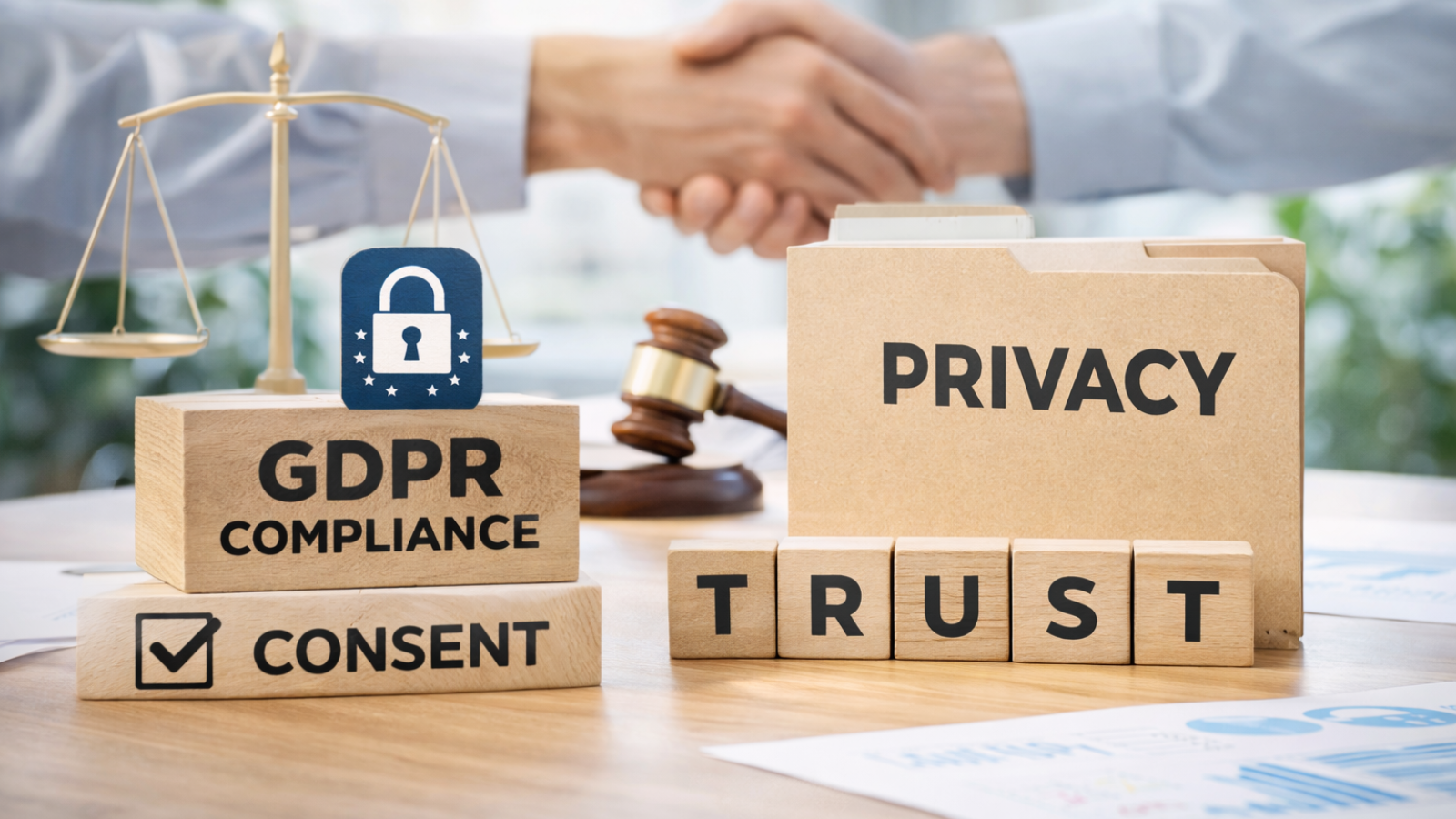
For monitoring to work, it must be ethical and transparent. Employers need to follow legal guidelines, such as GDPR compliance in the EU, and ensure explicit consent from employees before implementing any kind of monitoring tools.
Anonymizing data is also crucial. While it’s important to track employee wellness, it’s equally important to protect their privacy. Companies must strike a balance between maintaining productivity and protecting the individual’s right to privacy.
The key here is the “No Secrets” policy, open communication about what data is being collected, how it’s being used, and how it benefits both the company and the employees. This transparency builds trust, which is the foundation of any strong company culture.
The Family-First Strategy in Action
To make digital wellness truly effective, it must be embedded into the workday. Picture a workday designed around outcomes, not hours. The morning starts with a clear set of priorities. A project management tool shows each team member’s workload for the week to make sure no one is quietly drowning under an unmanageable pile.
The ‘right to disconnect’ becomes a technical reality, not just a policy on paper. Companies can provide subsidized digital therapeutics, like AI-driven Cognitive Behavioral Therapy (CBT) apps, as standard benefits to help employees manage stress and mental health.
And companies that build this kind of culture report measurably better outcomes: LinkedIn saw a 20% decrease in employee turnover after implementing mental health-focused work-life integration initiatives. Google reported a 15% increase in employee satisfaction from its comprehensive wellness programs. The data supports the humanity.
What employees need is clarity and support, not pressure or hidden oversight that adds to their stress. EmpMonitor addresses this by offering structured productivity insights that help detect workload imbalances early while maintaining transparency and respect for privacy.
Conclusion: The Future of Human-Centered Tech
Here is the central tension of digital wellness in 2026: no mindfulness app, no AI nudge, and no wellness dashboard can fix a culture that fundamentally treats employees as surveillance targets. The tool is never the solution. The culture is the solution. Tools just help.
The companies that will thrive will not necessarily be the ones with sophisticated monitoring software. They will be the ones who used that software to keep their people whole, who saw data as a way to show care, not exert control, and who understood that a healthy team is not a nice-to-have. It is the entire foundation.
Technology should be the floor we all stand on, supportive, stable, and solid. Not the ceiling pressing down. In the end, digital wellness is less about apps and dashboards and more about one simple decision every leader has to make: are you watching your employees, or are you watching out for them?
FAQs
What is digital wellness, and why does it matter for remote employees?
Simply put, digital wellness is about having a healthy relationship with the technology you use every day, not letting it run your life. For remote employees, this really matters. Without clear boundaries, work bleeds into personal time, stress quietly builds, and burnout starts to feel normal. Getting this right means people can actually do their best work without running themselves into the ground.
How can monitoring tools actually help with employee mental health?
Think of it less like a manager looking over your shoulder and more like an early warning system. When monitoring is done right, it picks up on things like consistent late-night work or back-to-back overloaded weeks, signals that someone might be heading toward burnout. That gives employers a chance to step in and offer support before things get worse, not after.
Are monitoring tools a threat to employee privacy, or can they genuinely help?
It really comes down to how they are used and whether employees know about them. When a company is upfront about what is being tracked and uses that data to support people rather than police them, monitoring stops feeling invasive and starts feeling like genuine care. The moment it becomes secretive or punitive, trust breaks down fast. Transparency is everything here.
How can companies build a digital wellness program that actually works?
Start by combining the right tools with a culture that genuinely values people’s well-being. That means being transparent about any monitoring, setting clear boundaries around after-hours availability, and giving employees access to mental health resources, like AI-driven wellness apps, as a standard benefit. The tools matter far less than the intention behind them.