
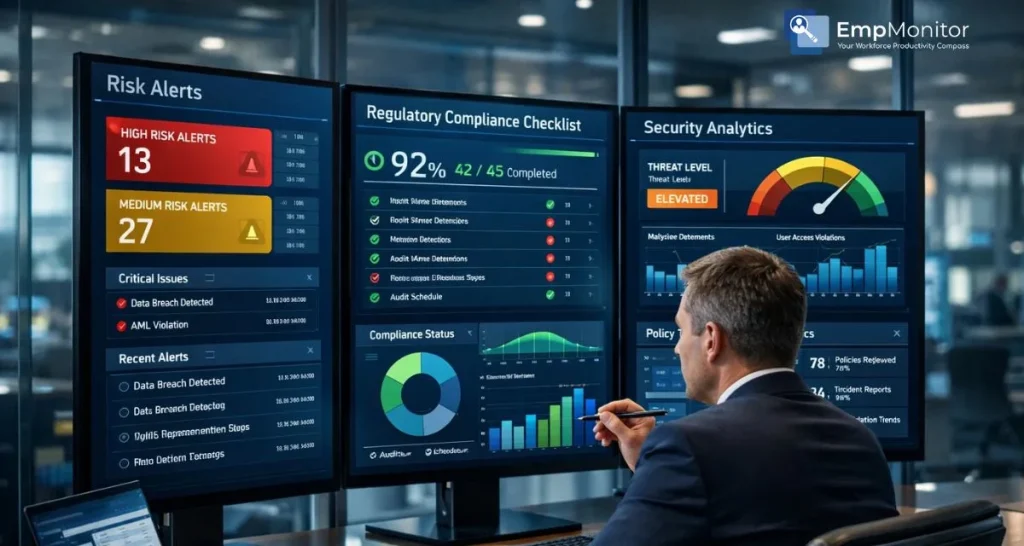
Running a business today isn’t just about growth, sales, and innovation. It’s also about staying on the right side of regulations. From data protection laws to workplace policies and industry-specific rules, companies are operating in an environment where even a small oversight can lead to serious consequences. Fines, lawsuits, reputational damage, and operational disruptions are very real risks.
This is where compliance monitoring becomes essential.
Instead of reacting to problems after they happen, businesses are now focusing on proactive systems that track, detect, and prevent violations before they escalate. Whether it’s ensuring employees follow internal policies, protecting sensitive data, or meeting regulatory requirements, monitoring compliance helps organizations stay safe and structured.
Many businesses invest heavily in compliance management strategies, but without continuous oversight, even the best policies can fail in practice. Policies on paper don’t guarantee proper execution. What truly protects a company is ongoing visibility into operations.
Listen to the Podcast.
What Is Compliance Monitoring?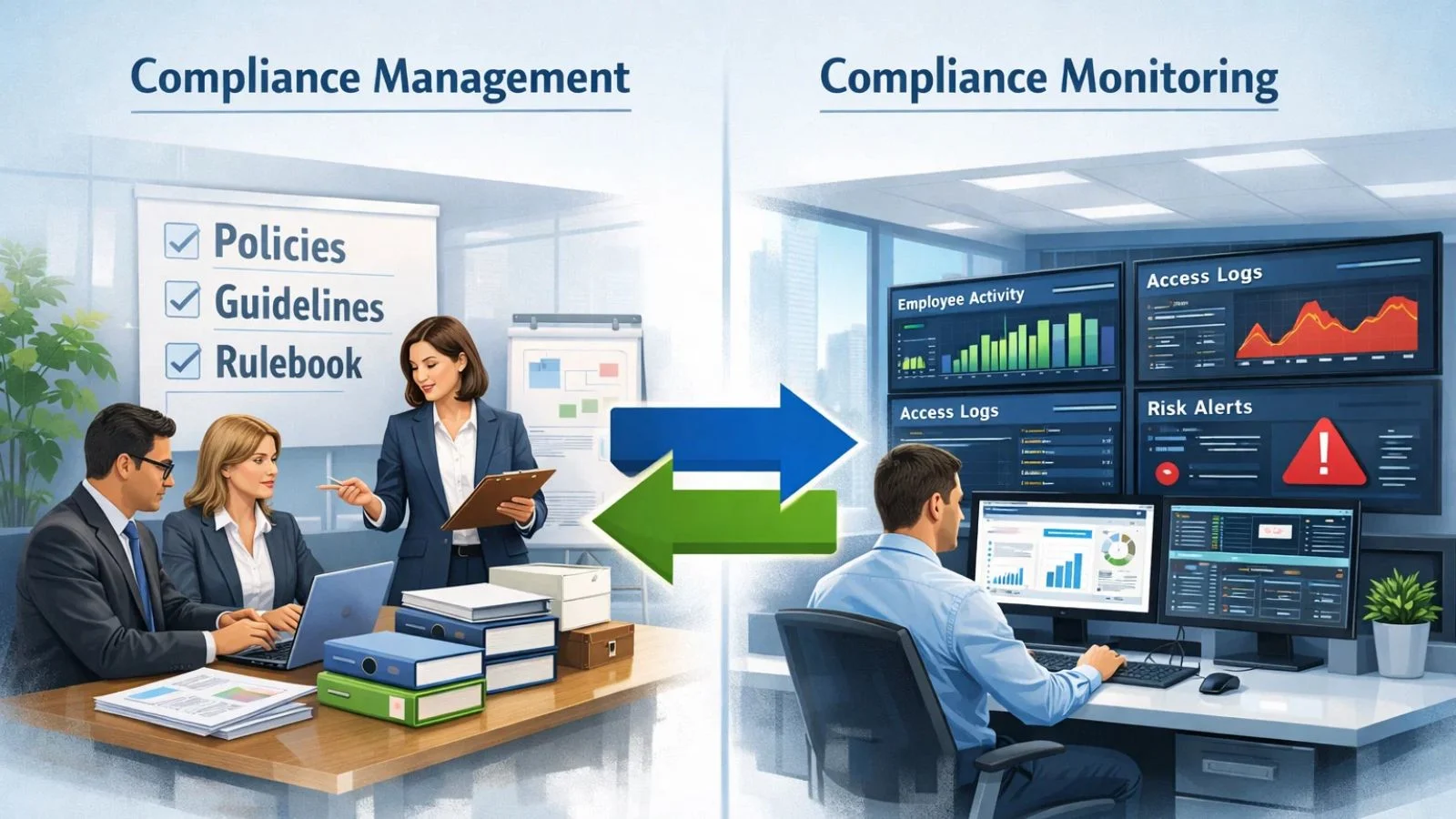

Let’s start with the basics: what is compliance monitoring?
In simple terms, compliance monitoring is the process of continuously tracking business activities, employee behavior, systems, and workflows to ensure they align with legal regulations, industry standards, and internal company policies. It’s not a one-time checklist. It’s an ongoing effort to make sure rules are being followed every day.
Many people confuse compliance monitoring with compliance management, but they’re not the same thing.
- Compliance management focuses on creating policies, defining procedures, and building a framework to meet regulations.
- Compliance monitoring, on the other hand, ensures those policies are actually being followed in real time.
Think of it this way: compliance management builds the rulebook. Monitoring ensures everyone plays by it.
For example:
- An HR department may create policies about data privacy and acceptable internet usage.
- A finance team may establish internal controls to prevent fraud.
- IT may define access restrictions for sensitive data.
But without monitoring systems in place, how do you know those policies are being respected?
That’s where continuous compliance monitoring becomes critical. Instead of reviewing activities once a year during audits, businesses can track compliance daily, weekly, or in real time. This allows them to detect unusual behavior, policy violations, or potential risks before they turn into costly problems.
In practical terms, compliance monitoring can include:
- Tracking employee system access
- Reviewing data transfers
- Monitoring financial transactions
- Logging user activities
- Generating audit-ready reports
The goal isn’t to micromanage employees. It’s to protect the organization from risk while maintaining transparency and accountability.
Why Compliance Monitoring Is Critical for Modern Businesses
Regulations are becoming stricter across industries, from data protection and cybersecurity to labor and financial laws. Businesses can no longer afford to treat compliance as a once-a-year task. This is why compliance monitoring is essential.
A single violation can lead to fines, lawsuits, or reputational damage. It’s not enough to create policies; companies must prove they are being followed. Without proper oversight, small issues like unauthorized data access or policy violations can quickly turn into major risks.
With continuous compliance monitoring, businesses can detect problems in real time instead of waiting for audits. This proactive approach reduces legal exposure, protects sensitive data, and keeps organizations audit-ready.
Key Risks Businesses Face Without Compliance Monitoring
Without compliance monitoring, businesses operate blindly. Policies may exist, but there’s no clear visibility into whether they’re being followed.
One of the biggest risks is data breaches. Unauthorized access, improper file sharing, or weak access controls can expose sensitive customer or company information. Even a small leak can lead to regulatory penalties and loss of trust.
Another major threat is insider risk. Employees, intentionally or unintentionally, may misuse company resources, violate security policies, or bypass controls. Without monitoring systems, these actions often go unnoticed until damage is done.
Companies also face regulatory fines and audit failures. If you cannot provide clear activity logs or compliance records, proving adherence becomes difficult. This can delay audits or result in penalties.
Lastly, reputational damage can be long-lasting. Clients and partners prefer businesses that demonstrate strong compliance management practices.
How Compliance Monitoring Protects Your Business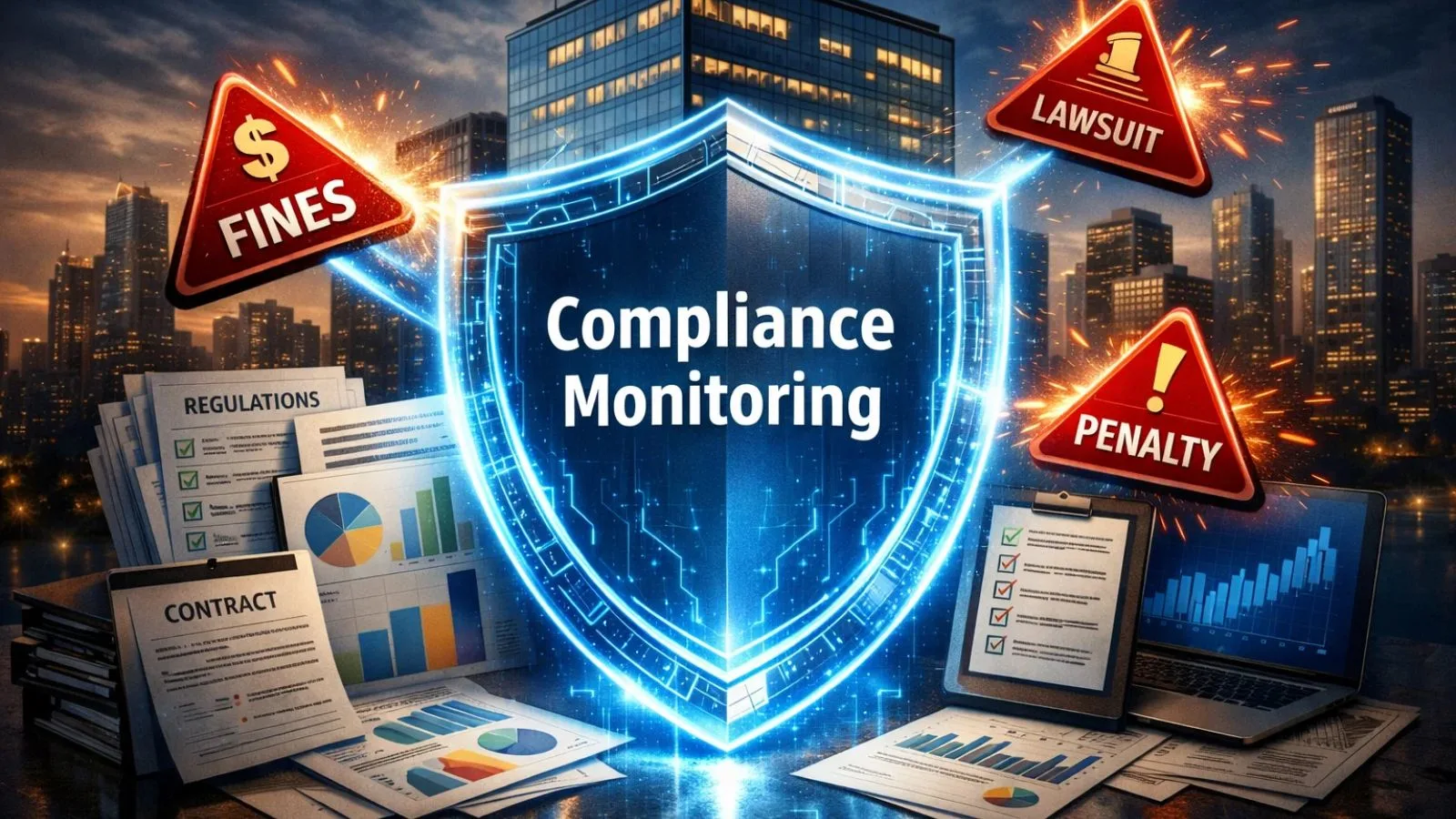
Compliance monitoring doesn’t just reduce risk, it actively protects your organization in several ways.
✔ Detects Policy Violations Early
Monitoring systems flag unusual behavior, unauthorized access, or suspicious activities in real time. Early detection prevents small issues from becoming major compliance breaches.
✔ Reduces Legal and Financial Risks
By tracking activities and maintaining detailed logs, businesses can demonstrate regulatory adherence. This lowers the chances of fines, lawsuits, and audit penalties.
✔ Strengthens Data Security
Monitoring access to sensitive files, systems, and communications helps prevent data leaks and insider threats. It ensures that only authorized individuals handle critical information.
✔ Improves Transparency and Accountability
Clear visibility into operations builds a culture of responsibility. Employees understand that policies matter and are consistently enforced.
✔ Keeps You Audit-Ready
With structured reports and documented activity trails, businesses can confidently face regulatory audits without scrambling for evidence.
Manual vs. Automated Compliance Monitoring
Many businesses start with manual tracking, spreadsheets, periodic reviews, and internal audits. While this may work temporarily, manual compliance monitoring is time-consuming and prone to human error. Important details can be missed, reports may be incomplete, and violations often go unnoticed until it’s too late.
Manual processes also struggle in remote or hybrid environments. When employees use multiple devices and cloud systems, tracking everything manually becomes nearly impossible.
This is where automation makes a difference.
Modern compliance monitoring software provides real-time visibility into employee activities, system access, and policy adherence. Instead of reviewing data weeks later, businesses receive alerts instantly when suspicious behavior occurs.
Automated systems also generate audit-ready reports, maintain activity logs, and store historical data securely. This improves accuracy and saves valuable time for HR, IT, and compliance teams.
Features to Look for in Compliance Monitoring Software
Choosing the right compliance monitoring solution can make all the difference. Not every tool offers the same level of visibility or protection, so it’s important to focus on features that truly reduce risk.
First, look for real-time activity tracking. This ensures you can monitor system usage, data access, and employee actions as they happen, not weeks later.
Second, strong audit logs and reporting are essential. Detailed records help demonstrate compliance during inspections and support your overall compliance management strategy.
You’ll also want risk alerts and notifications. Instant alerts allow teams to respond quickly to suspicious behavior, minimizing potential damage.
Another key feature is data access monitoring. The software should track who accessed sensitive files, when, and from where.
Finally, choose a tool that integrates easily with your existing systems and supports continuous compliance monitoring across remote and in-office teams. In larger organizations, compliance efforts often extend beyond monitoring tools alone, requiring structured governance and risk frameworks supported by GRC software to manage enterprise-wide compliance, risk, and audit processes more effectively.
Best Practices for Effective Compliance Monitoring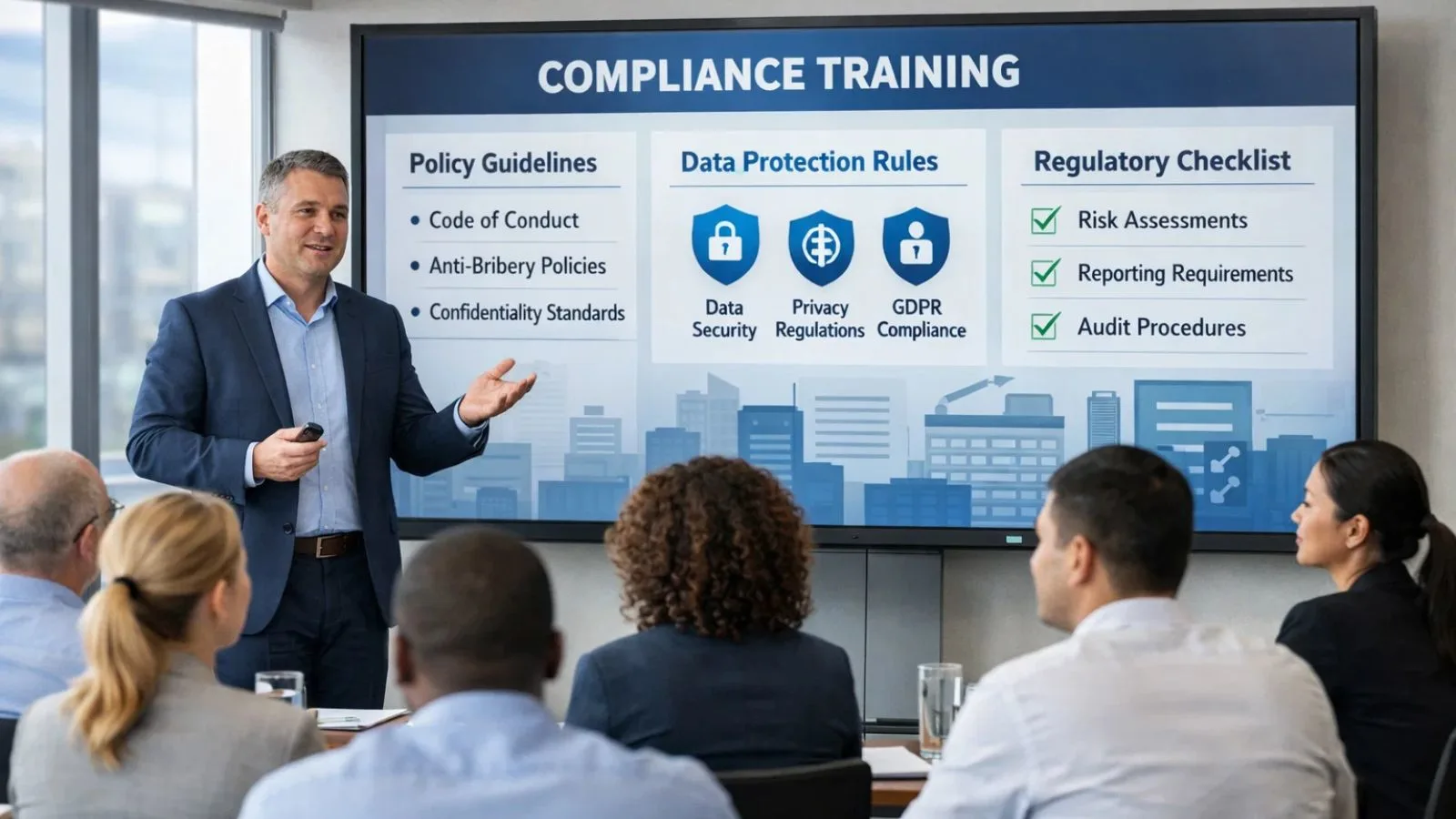
Implementing compliance monitoring is important, but doing it correctly is what truly protects your business.
Start by clearly defining your internal policies. Employees should understand what is allowed, what isn’t, and why compliance matters. Clear documentation reduces confusion and strengthens accountability.
Next, provide regular training. Compliance isn’t just an IT or HR responsibility. Every team member plays a role in maintaining standards and protecting sensitive data.
Adopt continuous compliance monitoring instead of relying only on periodic reviews. Real-time visibility helps detect risks early and ensures policies are consistently followed.
Conduct internal audits regularly to test your systems. This helps identify gaps before regulators or external auditors do.
Finally, use reliable compliance monitoring software to automate tracking, reporting, and risk alerts. Automation reduces errors and ensures your monitoring efforts remain consistent as your business grows.
Strong policies plus smart monitoring create a proactive defense system.
How Empmonitor Simplifies Compliance Monitoring
Managing compliance monitoring manually can quickly become overwhelming, especially for growing businesses or remote teams. That’s where Empmonitor steps in as a smart, practical solution.
Empmonitor provides real-time employee activity tracking, giving organizations clear visibility into system usage, application access, and online behavior. This helps businesses ensure policies are being followed without relying on guesswork.
With detailed logs and automated reports, Empmonitor supports stronger compliance management by maintaining accurate records for audits and internal reviews. Instead of scrambling for documentation, you have structured data readily available.
The platform also helps detect unusual activity, reducing insider risks and protecting sensitive company information. Whether it’s monitoring data access or identifying productivity gaps, Empmonitor combines compliance oversight with workforce transparency.
Another major advantage is support for remote and hybrid teams. As businesses adopt flexible work models, maintaining consistent compliance monitoring across locations becomes critical, and EmpMonitor makes that easier.
Also Read,
The Future of Compliance Monitoring
The future of compliance monitoring is becoming smarter, faster, and more predictive. As regulations evolve and businesses become more digital, traditional monitoring methods are no longer enough.
Artificial intelligence is playing a growing role in identifying unusual patterns and predicting potential risks before they become violations. Instead of just tracking past activity, advanced systems can flag behavior that looks suspicious based on trends and historical data.
Real-time dashboards are also becoming standard. Businesses want instant visibility into compliance status across departments, devices, and remote teams. This supports stronger compliance management and faster decision-making.
Cloud-based platforms are making continuous compliance monitoring more scalable. Whether a company has 20 employees or 2,000, modern tools can adapt without adding complexity.
As remote work continues to expand, monitoring solutions will focus even more on data protection, secure access controls, and automated reporting.
Industries That Benefit Most from Compliance Monitoring
While every organization needs compliance monitoring, some industries face stricter regulations and higher risk exposure.
Healthcare organizations must protect patient data and comply with strict privacy standards. Even minor violations can result in heavy penalties.
Financial services companies handle sensitive financial data and must meet regulatory requirements related to fraud prevention, reporting, and internal controls.
IT and SaaS businesses manage large volumes of user data. Monitoring system access and preventing data misuse is critical for maintaining trust.
Remote-first companies also benefit significantly. With employees accessing systems from different locations and devices, maintaining visibility becomes challenging without proper monitoring.
Even small and medium-sized businesses are not exempt. Regulatory bodies don’t only target large corporations; compliance applies to everyone.
Common Challenges in Compliance Monitoring
Implementing compliance monitoring isn’t always simple.
One major challenge is the lack of visibility across departments. When systems don’t communicate with each other, tracking activity becomes fragmented.
Another issue is employee resistance. Monitoring can sometimes be misunderstood as micromanagement rather than protection. Clear communication and transparency help address this concern.
Manual processes also create inefficiencies. Without automation, tracking and reporting consume valuable time and increase the risk of errors.
Finally, keeping up with changing regulations can be overwhelming. Businesses must regularly update policies and monitoring practices to stay aligned.
Overcoming these challenges requires the right technology and a clear compliance strategy.
Risk is part of doing business, but avoidable risk shouldn’t be.
That’s the real value of compliance monitoring. It gives you visibility where it matters most. Instead of discovering problems after an audit, a complaint, or a data breach, you gain the ability to spot warning signs early and act immediately.
Strong policies alone don’t protect a company. Execution does. Monitoring ensures your rules aren’t just documented; they’re followed. It creates a culture of accountability, strengthens data security, and provides the proof you need when regulators come knocking.
As businesses grow, adopt remote work, and rely more on digital systems, oversight becomes more complex. That’s why modern organizations are turning to structured, automated solutions that support continuous compliance monitoring and simplify reporting.
FAQs
1. Why is compliance monitoring important for businesses?
Compliance monitoring protects businesses from fines, lawsuits, data breaches, and reputational damage. It ensures policies are not just created but consistently followed across teams and systems.
2. How does compliance monitoring differ from compliance management?
Compliance management focuses on creating policies, procedures, and frameworks. Compliance monitoring ensures those policies are actively enforced and followed through with regular tracking and reporting.
3. What is continuous compliance monitoring?
Continuous compliance monitoring means tracking activities in real time instead of reviewing them periodically. This approach allows businesses to detect suspicious behavior immediately and stay audit-ready at all times.