
Work no longer moves in straight lines with tasks overlapping, decisions accelerating, and expectations stretching across tools, teams, and time zones.
In this environment, productivity depends on how intelligently work is distributed. This means aligning effort with impact, reducing friction between systems, and ensuring that time is spent on work that moves outcomes forward.
Autonomous IT agents are redefining how work is organised and carried out, introducing a more responsive layer between employees and the systems they rely on. They act, decide, and adapt without constant human input, shifting how employees engage with their workload.
Instead of managing systems directly, employees are stepping into a more supervisory role, working alongside them to guide outcomes, interpret decisions, and focus their attention where it adds the most value.
Autonomous IT Agents and the New Structure of Work
Autonomous IT agents are changing productivity by moving employees away from manual execution toward orchestration.Research already shows that AI agents can independently manage task allocation, decision-making, and workflow adjustments using real-time data inputs. These systems operate through adaptive learning models, allowing them to optimise processes without constant oversight.
Traditional productivity tools are designed to assist employees by supporting specific tasks and reducing manual effort, but their role remains largely passive in the execution of work. Autonomous agents operate differently, taking an active role in prioritising tasks, triggering actions, and resolving issues in real time.
That changes the nature of work in that instead of spending valuable time coordinating across systems, employees are no longer tied to constant oversight of individual processes. They can instead focus on supervising outcomes, interpreting results, and directing attention where it has the greatest impact.
Autonomous IT Agents and the Shift Toward Continuous Work Intelligence
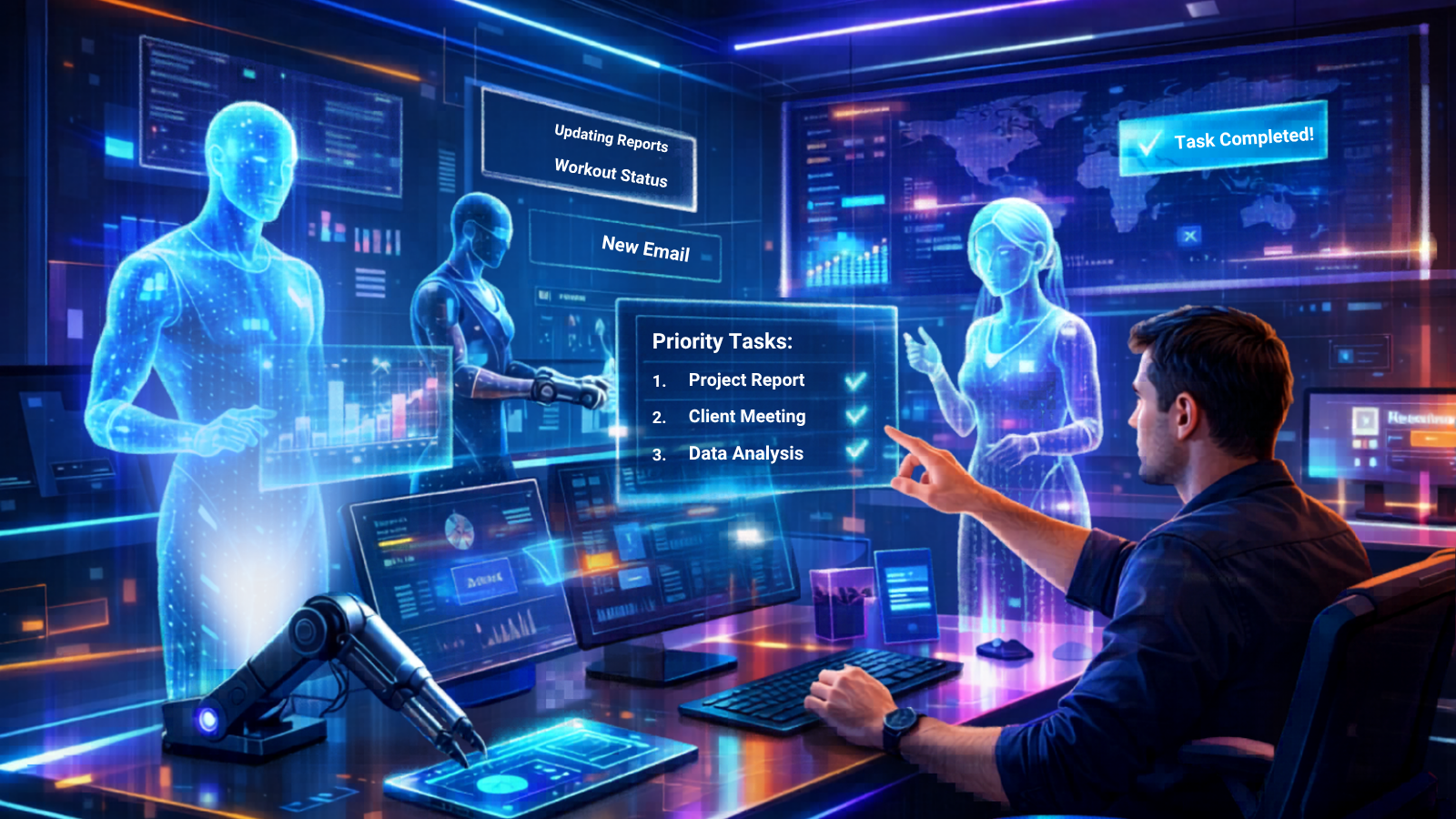

Modern organisations are no longer shaped only by tools that support tasks. They are increasingly defined by systems that understand context, respond to change, and adjust work in motion. This creates a different kind of working rhythm, where progress is not dependent on constant human direction but on systems that can interpret signals and act on them in real time.
Within this environment, value is created less through manual coordination and more through the ability to oversee complex activity without breaking focus. Work becomes less fragmented, not because tasks disappear, but because they are handled in ways that require less interruption and fewer handoffs.
- Workflows adjust automatically based on live system conditions rather than fixed schedules.
- Repetitive coordination between teams and tools is reduced through embedded decision logic.
- System-level signals are translated into immediate operational actions without waiting in the queue.
- Employee attention is preserved by removing the need to verify routine progress.
- Information flow becomes more contextual, reducing unnecessary interpretation steps.
- Operational consistency is maintained even when workload intensity fluctuates.
These shifts change how work is experienced day to day. Instead of reacting to a stream of isolated events, employees engage with a more coherent flow of activity where progress is continuously maintained in the background.
This reduces the sense of fragmentation that often defines modern digital work environments and replaces it with a more stable rhythm of execution. It also creates a clearer separation between work that requires human judgment and work that can be resolved through system intelligence.
Employees can step back from operational noise without losing visibility, allowing attention to be directed toward higher-order thinking, prioritisation, and decision shaping. The result is not just increased efficiency but also a more sustainable way of working, where cognitive effort is preserved for areas where it has the greatest impact.
As this model matures, productivity becomes less about managing activity and more about shaping direction. The workplace evolves into a system in which execution is continuous, but human involvement increasingly focuses on intent, oversight, and refinement.
From Reactive Support to Proactive Systems: Autonomous IT in Practice
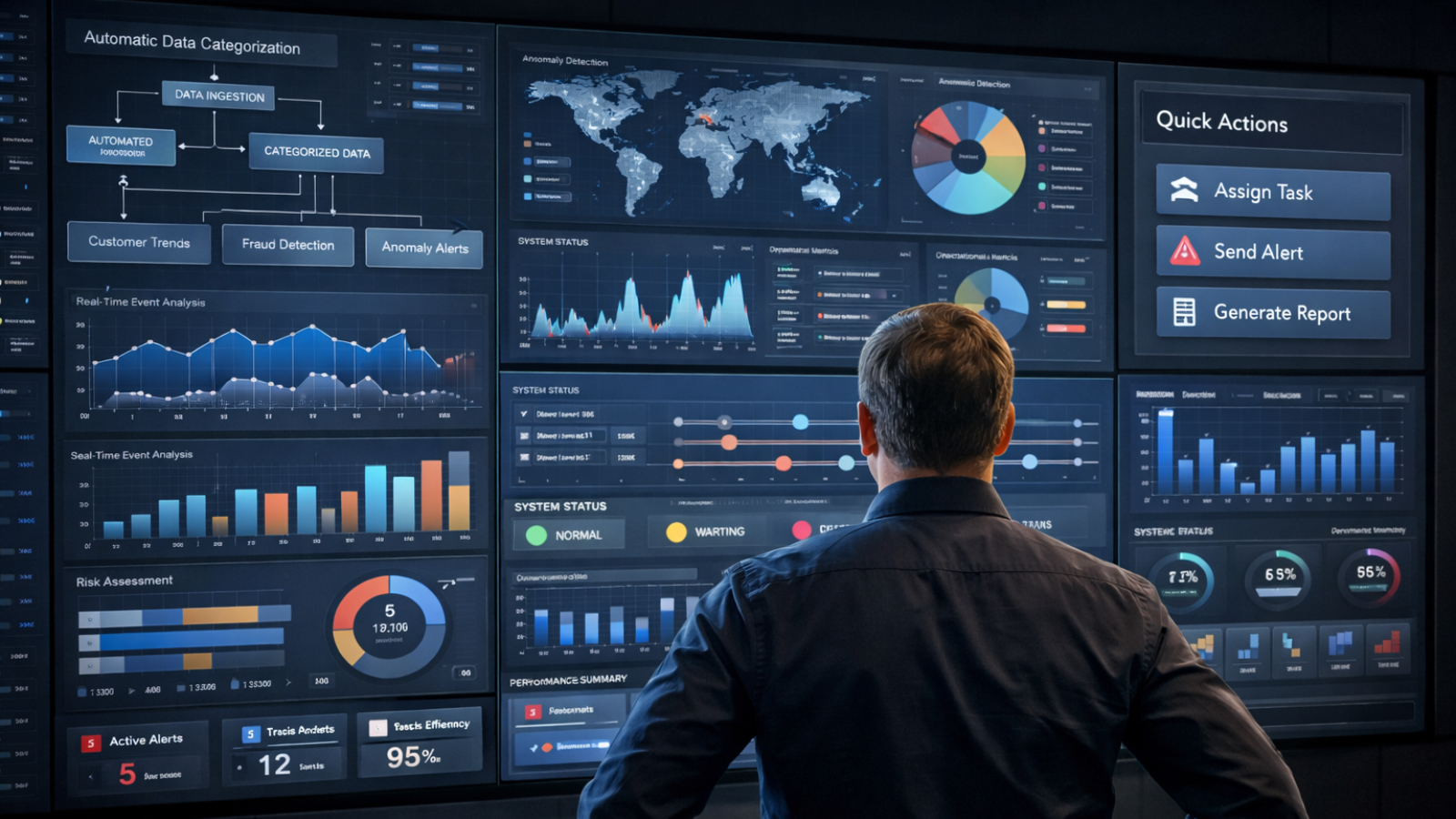
Modern IT environments are reactive by design, where issues arise, tickets are raised, and teams respond as problems surface.
Autonomous IT changes that dynamic by shifting the focus from response to prevention and continuous resolution. Autonomous IT agents operate continuously, identifying anomalies, resolving issues, and maintaining systems without waiting for intervention. Instead of responding to problems, they help prevent them.
This matters for employee productivity as fewer disruptions mean fewer context switches. Employees stay focused, reducing the hidden cost of interruptions that often go unnoticed yet significantly impact output.
One way to understand this is to look at how much working time is typically lost to small but frequent disruptions, from system errors to manual follow-ups, which quietly fragment attention throughout the day.
Removing much of this background noise means employees can sustain focus for longer periods and engage more deeply with the work that actually drives progress.
Autonomous IT Agents and Deep Work Enablement
A key driver of improved productivity lies in how Autonomous IT agents protect employee focus.Studies show that AI agents reduce cognitive load by automating routine processes and dynamically managing workflows. In controlled environments, this has led to measurable improvements in both task completion rates and employee satisfaction.
Deep work requires uninterrupted time. Yet most employees operate in fragmented environments, constantly pulled between alerts, updates, and administrative tasks.
Autonomous agents handle system monitoring, data retrieval, and background processes, allowing employees to stay within a single cognitive thread.
The difference is subtle. Instead of switching between tools and tasks, employees remain engaged in meaningful work for longer periods.
Improving focus is one of the most effective ways to be more productive at work, particularly in knowledge-driven roles.
Human-Centred Workflow Design Powered by Autonomous IT Agents
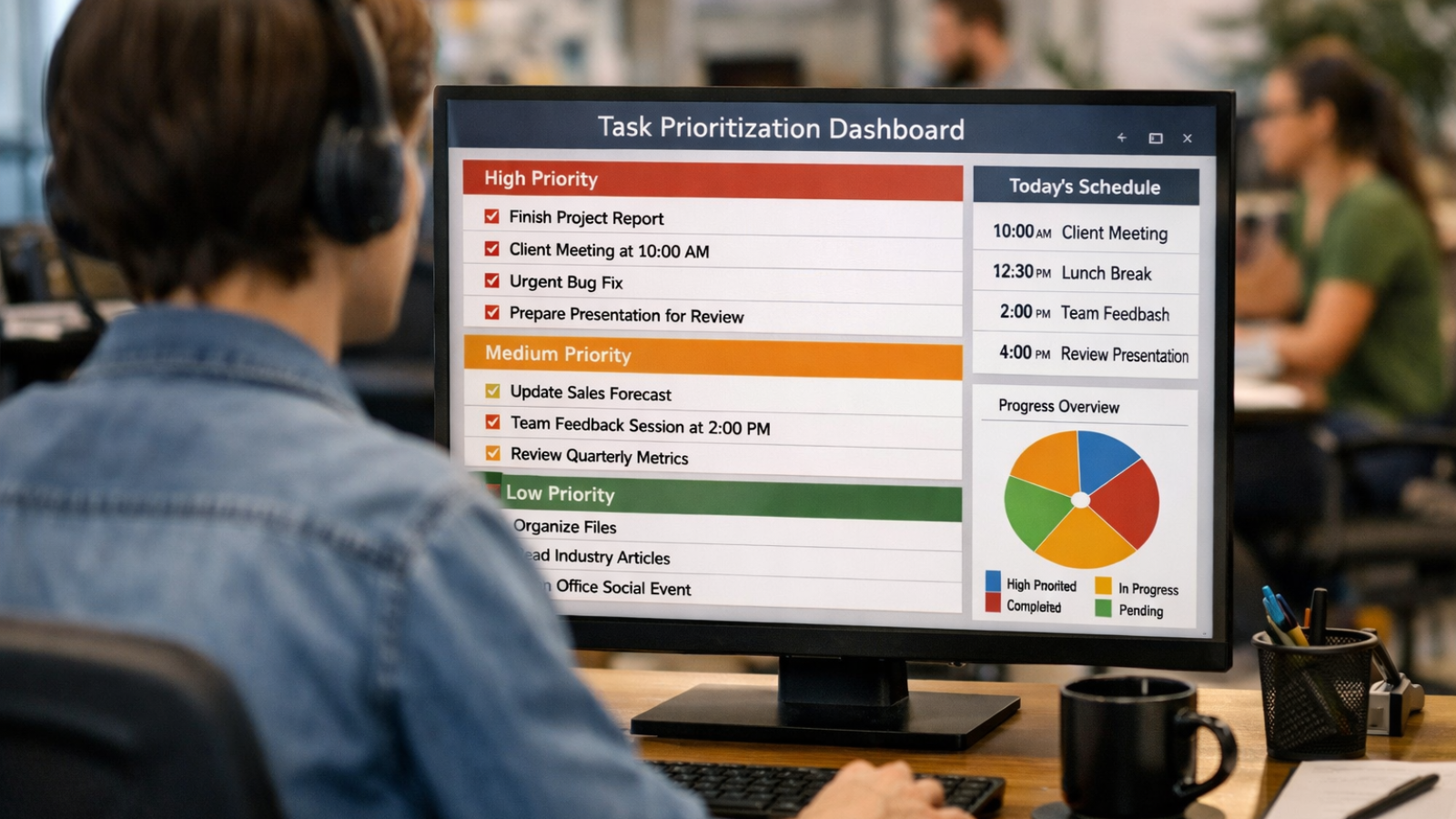
Personalised productivity environments, rather than one-size-fits-all workflows, are created by Autonomous IT agents.
Advanced AI agents use behavioural and contextual data to adapt workflows in real time. Biometric feedback and environmental signals can be used to adjust workloads and recommend actions that improve both productivity and well-being.
Traditional systems treat all employees the same, but autonomous agents do not. They instead learn how individuals work, when they are most productive, and where bottlenecks occur.
This leads to subtle but impactful changes. Tasks are prioritised differently, notifications are timed more effectively, and workflows evolve based on actual behaviour rather than assumptions.
More often than not, you get a working environment that adjusts to the employee, rather than forcing the employee to adapt to the system. A personalized approach also contributes to a more stress-free work environment, where systems reduce pressure instead of adding to it.
The Removal of Hidden Operational Workloads
A significant amount of hidden workload that reduces real productivity is eliminated by Autonomous IT agents, particularly the time employees spend on coordination, monitoring, and administrative tasks.
Invisible work includes tasks that do not directly contribute to outcomes but are necessary to keep systems running. These include status updates, system checks, and manual follow-ups. These tasks accumulate and quietly consume time.
Autonomous agents absorb this layer of work by tracking progress, managing dependencies, and executing routine actions without requiring input. Employees then regain time previously lost to maintenance rather than to creation.
Autonomous IT Agents and the Redefinition of Employee Roles
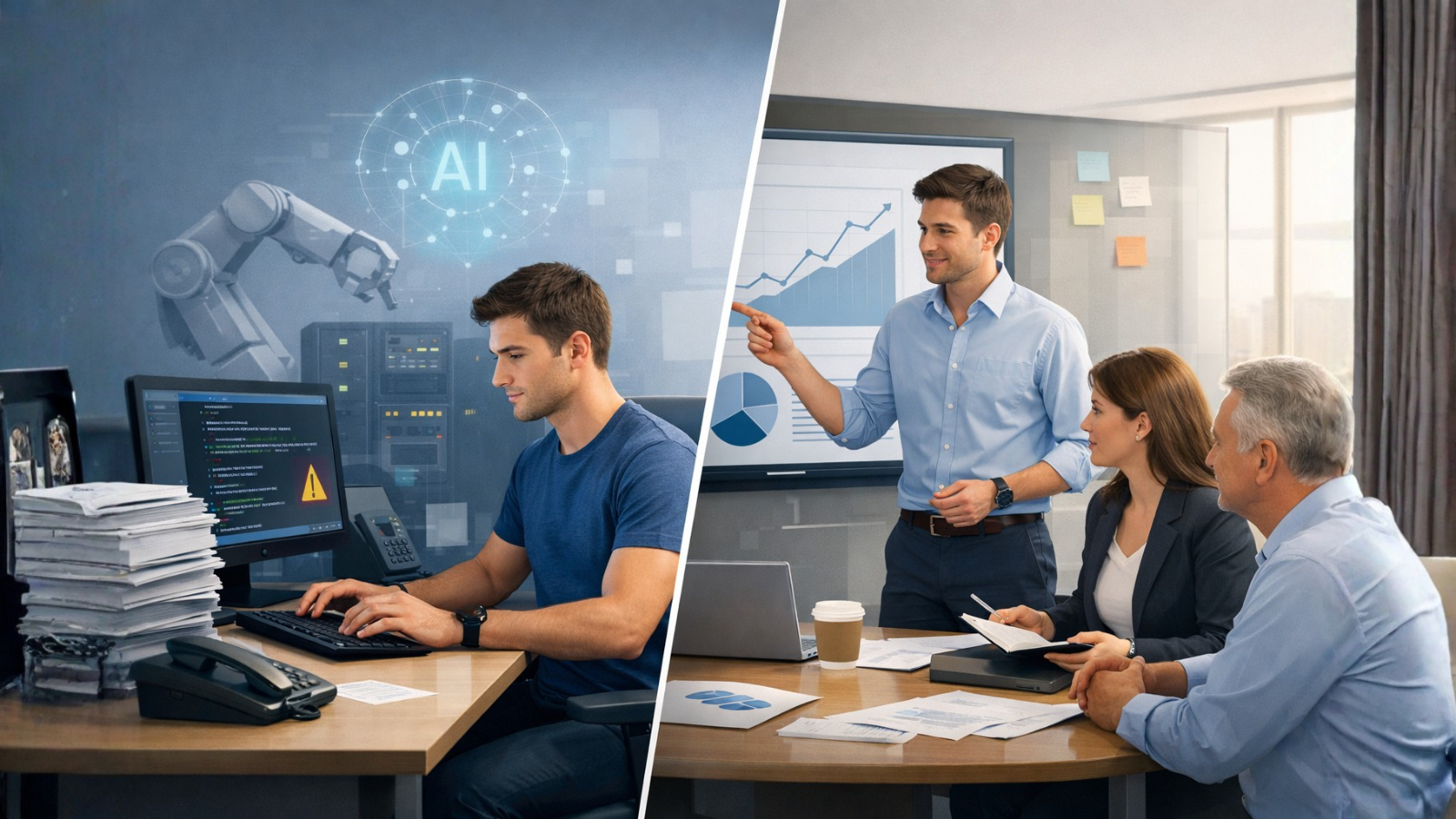
What it means to be productive at work is being redefined by Autonomous IT agents.Large-scale studies involving AI agent integration show increases in productivity alongside improvements in employee well-being, including reduced stress and higher job satisfaction.
As agents take over routine execution, the employee’s role shifts. Work becomes less about completing tasks and more about guiding systems, interpreting results, and making strategic decisions.
This transition changes how productivity is measured because output is no longer tied to volume. It is tied to impact. This means employees become operators of intelligent systems rather than executors of predefined tasks.
It also strengthens collaboration between people and systems, allowing employees to focus on judgment, creativity, and prioritisation rather than repetitive execution. Over time, it supports clearer decision-making and a more balanced workload, where effort is directed toward work that requires human insight rather than routine processing.
Productivity in the Age of Intelligent Systems
Autonomous IT agents represent a structural shift in how work is performed, changing the relationship among employees, systems, and outcomes in ways that redefine productivity.
Work is less about managing processes and more about directing attention where it creates real value. As routine tasks are absorbed into system-level execution, the constant interruptions that once fragmented the working day begin to fade. This creates space for deeper thinking, clearer prioritisation, and a more deliberate approach to decision-making.
Reducing friction across tools and workflows means these systems remove much of the invisible effort that often goes unnoticed but steadily drains capacity. At the same time, they adapt to individual working patterns, shaping environments that support focus rather than compete with it. The outcome is a working experience that feels less reactive and more aligned with intent.
Employee roles naturally evolve within this structure. Rather than spending energy on coordination and repetition, attention shifts toward interpreting information, refining direction, and shaping outcomes with greater precision.
Autonomous IT agents ultimately reposition productivity as something more intentional and sustainable.
Doing more is no longer the benchmark. Doing what matters, with intelligent systems handling the operational weight in the background, is the new standard for modern work.